


A single hard-boiled egg contains about 77 calories. Understanding the nutritional value of boiled eggs is crucial for making informed dietary choices. Including boiled eggs in your meals can provide numerous benefits, such as high-quality protein and essential vitamins that support overall health.
Key Takeaways
A hard-boiled egg contains about 77 calories, making it a nutritious option for meals or snacks.
Egg whites are low in calories and high in protein, providing about 4 grams of protein per egg white.
Boiled eggs are rich in essential vitamins and minerals, including choline, which supports brain health.
Calories in Hard-Boiled Eggs

Calories from Egg White
The egg white of a standard large hard-boiled egg contains approximately 17 to 18 calories. This part of the egg is low in calories and rich in protein. Here’s a quick breakdown of the macronutrient content in the egg white:
Macronutrient | Amount |
|---|---|
Calories | 17 kcal |
Protein | 4 g |
Fat | 0.1 g |
Carbohydrates | 0.2 g |
You can see that the egg white is primarily composed of protein, making it a great option for those looking to increase their protein intake without adding many calories. In fact, about 90% of the calories in egg whites come from protein, with minimal amounts of carbohydrates and fat.
Calories from Egg Yolk
The yolk of a hard-boiled egg contains more calories than the white. A single yolk has about 55 to 60 calories. Most of the fat in a hard-boiled egg is found in the yolk, contributing to its higher caloric content. Here are some key points about the yolk:
One large egg yolk contains about 186 mg of cholesterol.
Depending on the size of the egg, a yolk can have between 215 mg to 275 mg of cholesterol.
In total, a hard-boiled egg has around 4.5 to 5 grams of fat, with the yolk containing all of it. The yolk also provides essential nutrients, including vitamins A, D, E, and K, along with important minerals like iron and phosphorus.
When you consider the total caloric content of a hard-boiled egg, you get approximately 77 calories, combining both the egg white and yolk. This makes hard-boiled eggs a nutritious option for breakfast or a snack, offering a good balance of protein, healthy fats, and essential vitamins.
Egg Nutrition Facts
Protein and Fats
Boiled eggs are an excellent source of high-quality protein. A single large hard-boiled egg contains about 6.3 grams of protein. This protein is essential for building and repairing tissues in your body. It also plays a crucial role in producing enzymes and hormones. The protein in eggs is considered complete, meaning it contains all nine essential amino acids that your body cannot produce on its own.
In terms of fats, a hard-boiled egg contains approximately 5.3 grams. Most of this fat is healthy unsaturated fat, which can support heart health. Here’s a quick breakdown of the fat content:
Type of Fat | Amount (g) |
|---|---|
Total Fat | 5.3 |
Saturated Fat | 1.64 |
Monounsaturated Fat | 2.04 |
The presence of healthy fats in boiled eggs can help you feel full longer, making them a great addition to your meals or snacks.
Vitamins and Minerals
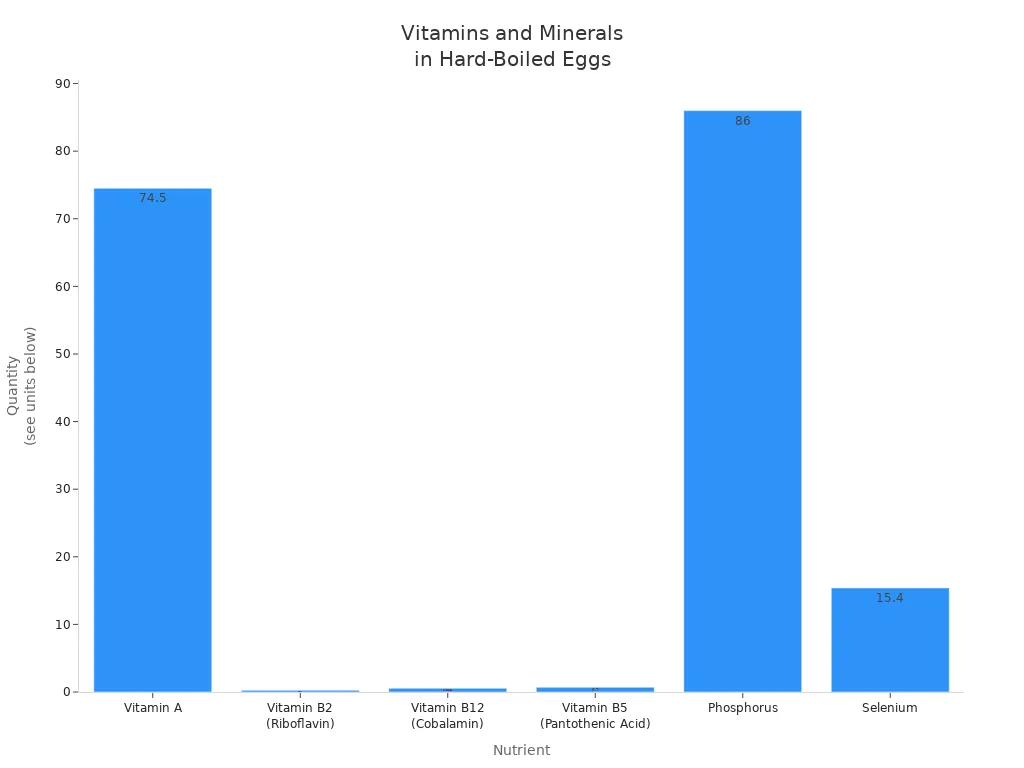
Boiled eggs are packed with essential vitamins and minerals that contribute to your overall health. Here’s a summary of the key nutrients found in a hard-boiled egg:
Nutrient | Quantity |
|---|---|
Calories | 77.5 kcal |
Carbohydrates | 0.56 g |
Total Fat | 5.3 g |
Cholesterol | 186 mg |
Protein | 6.3 g |
Vitamin A | 74.5 mcg RAE |
Vitamin B2 (Riboflavin) | 0.257 mg |
Vitamin B12 (Cobalamin) | 0.555 µg |
Vitamin B5 (Pantothenic Acid) | 0.7 mg |
Phosphorus | 86 mg |
Selenium | 15.4 µg |
The low carbohydrate content of boiled eggs, approximately 0.48 grams per egg, makes them suitable for low-carb diets. This characteristic allows you to enjoy eggs without worrying about excessive carbohydrate intake. Low-carb diets can help promote weight loss and improve metabolic health.
In addition to protein and healthy fats, boiled eggs provide significant amounts of choline, which is vital for brain health. One egg contains about 147 mg of choline, contributing to 27% of the daily recommended intake. This nutrient supports memory and cognitive function, making eggs a smart choice for your diet.
Overall, the nutritional profile of boiled eggs makes them a powerhouse of nutrition. They offer a balanced mix of protein, healthy fats, vitamins, and minerals, making them a valuable addition to your meals.
Health Benefits and Risks of Boiled Eggs

Benefits of Hard-Boiled Eggs
Boiled eggs offer several health benefits that make them a smart choice for your diet. Here are some key advantages:
Health Benefit | Description |
|---|---|
Weight loss | Hard-boiled eggs are a great source of lean protein, helping to keep you full with fewer calories. |
Prenatal bone strength | The protein and vitamin D in hard-boiled eggs support prenatal development, aiding in the growth of teeth and bones. |
Nutritious snack | One large hard-boiled egg provides essential nutrients like protein, calcium, iron, and potassium. |
Source of choline | Hard-boiled eggs are a top source of choline, which is vital for brain development and memory. |
Eye protection | Contains lutein and zeaxanthin, which help maintain eye health through their antioxidant properties. |
Increased mental energy | The combination of protein and choline in eggs boosts brain function, especially after breakfast. |
The protein in hard-boiled eggs is complete, meaning it contains all essential amino acids. This protein supports muscle growth and repair, making it beneficial for those who exercise regularly.
Risks to Consider
While boiled eggs are nutritious, some risks exist. Individuals with high cholesterol should monitor their intake. A hard-boiled egg contains about 1.6 grams of saturated fat. Research shows that saturated fat can raise LDL cholesterol levels more than dietary cholesterol.
The American Heart Association suggests limiting egg yolk intake to four per week for those with high cholesterol.
It is essential to consider other sources of saturated fat in your diet when consuming eggs.
Additionally, some people may have allergies or intolerances to eggs. Those with egg allergies should avoid boiled eggs to prevent allergic reactions. If you experience digestive issues after eating eggs, you may have an intolerance and should limit your intake.
Boiled eggs are a nutrient-rich food that offers numerous health benefits. They provide high-quality protein, essential vitamins, and minerals. You can enjoy boiled eggs as part of any meal, making them a versatile option. Most healthy individuals can safely consume up to seven eggs per week. Remember to avoid high-calorie ingredients when preparing egg dishes. Consider adding boiled eggs to your diet for a nutritious boost!
FAQ
How many boiled eggs can I eat in a week?
You can safely consume up to seven boiled eggs per week for most healthy individuals.
Are boiled eggs good for weight loss?
Yes, boiled eggs are low in calories and high in protein, helping you feel full and satisfied.
Can I eat boiled eggs if I have high cholesterol?
You should limit your intake to four yolks per week if you have high cholesterol. Always consult your doctor for personalized advice.