

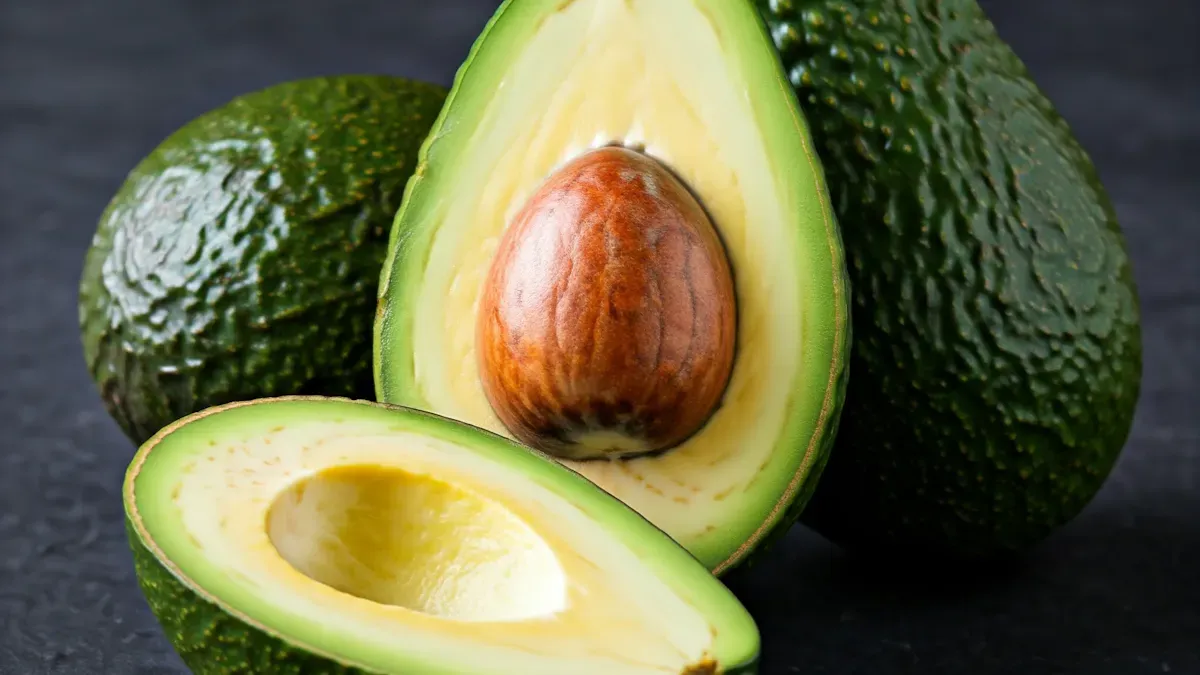
Heart health is crucial for your overall well-being. With cardiovascular diseases affecting millions globally, it’s vital to prioritize what you eat. Avocado benefits are numerous, as these fruits have gained popularity due to their rich nutrition. But how do avocados specifically support heart health? Let’s explore their incredible benefits.
Key Takeaways
Avocados are rich in monounsaturated fats, which can lower bad cholesterol and boost good cholesterol, promoting heart health.
Including avocados in your diet can help manage cholesterol levels and stabilize blood sugar, reducing the risk of heart disease and diabetes.
Avocados provide essential nutrients like potassium and antioxidants, which support blood pressure regulation and protect against heart disease.
Avocado Benefits: Healthy Fats

Monounsaturated Fats
Avocados are rich in monounsaturated fats, which play a vital role in promoting heart health. These healthy fats can lower your LDL (bad) cholesterol levels while boosting HDL (good) cholesterol. Research shows that a diet high in monounsaturated fats can lead to significant improvements in cholesterol profiles. For example, studies indicate that such diets can reduce LDL cholesterol by up to 17.9% while slightly decreasing HDL cholesterol.
Here’s a quick comparison of monounsaturated fat content:
Food Item | Monounsaturated Fat Content |
|---|---|
Avocado (per 100 g) | 9.8 g |
Olive Oil | ~73% MUFA (oleic) |
Incorporating avocados into your meals can enhance your overall nutrition and support your heart.
Omega-3 Fatty Acids
While avocados are not the richest source of omega-3 fatty acids, they do contain a small amount of ALA (alpha-linolenic acid). This type of omega-3 is essential for heart health, but it’s important to note that avocados lack EPA and DHA, which are found in fatty fish like salmon. Here’s how avocados compare to other sources:
Food Source | Omega-3 Content (g) | Type of Omega-3 |
|---|---|---|
Avocado | 0.162 | ALA |
Salmon | High | EPA, DHA |
Walnuts | Moderate | ALA |
Including avocados in your diet can still contribute to your omega-3 intake, especially when combined with other sources like walnuts or fish.
Avocado Benefits: Dietary Fiber

Cholesterol Management
Avocados are an excellent source of dietary fiber, containing approximately 14 grams per fruit. This amount provides nearly half of your daily recommended fiber intake. Fiber plays a crucial role in managing cholesterol levels. It helps lower LDL cholesterol, which is often referred to as “bad” cholesterol. Research shows that individuals who consume avocados regularly have higher HDL cholesterol levels and lower risks of metabolic syndrome.
Here’s a summary of some studies on avocado and cholesterol:
Study | Findings |
|---|---|
Dreher 2013, Fulgoni 2013 | Avocado consumers had higher HDL-C levels and lower risk of metabolic syndrome compared to non-consumers. |
Mahmassani 2018 | Avocado consumption increased HDL-C but did not improve LDL-C, total cholesterol, or triglyceride levels. |
Peou 2016 | Substituting fats with avocado reduced total cholesterol by −18.8 mg/dL and LDL-C by −16.5 mg/dL. |
Blood Sugar Regulation
Dietary fiber from avocados also plays a significant role in regulating blood sugar levels. A study involving adults with insulin resistance found that daily avocado consumption for 12 weeks improved post-meal blood glucose and insulin levels. Regularly eating avocados can help you manage blood sugar levels and reduce the risk of developing type 2 diabetes.
Incorporating avocados into your meals not only enhances flavor but also supports your heart health by managing cholesterol and stabilizing blood sugar levels.
Avocado Benefits: Potassium for Heart Health
Blood Pressure Control
Potassium plays a crucial role in regulating blood pressure. This mineral helps your body balance sodium levels, which is essential for maintaining healthy blood pressure. Research shows that increasing your potassium intake can lower blood pressure. Avocados are a great source of potassium, containing about 487 mg per half fruit. This amount exceeds the potassium found in bananas and is comparable to potatoes. Here’s a quick comparison:
Food | Potassium Content (mg) | % Daily Value (DV) |
|---|---|---|
Banana | 422 | 9% |
Potato | 610 | 17% |
Avocado (1/2) | 487 | 12% |
Studies indicate that higher dietary potassium correlates with lower blood pressure levels. Avocados help promote sodium excretion and relax blood vessel walls, making them beneficial for your heart health.
Heart Rhythm Regulation
Potassium is vital for maintaining normal heart rhythm. It supports the function of muscle and nerve cells, which are essential for a healthy heartbeat. Low potassium levels can lead to serious heart issues, including arrhythmias. The recommended daily intake of potassium is 4,700 mg. Keeping your potassium levels within the optimal range can help you avoid heart rhythm problems.
Incorporating avocados into your diet can significantly support your heart health by managing blood pressure and ensuring proper heart function.
Avocado Benefits: Antioxidants and Nutrients
Vitamin E
Avocados are a great source of vitamin E, an essential antioxidant. This vitamin helps protect your cells from damage caused by free radicals. Free radicals can contribute to heart disease and other health issues. By consuming avocados, you increase your intake of vitamin E, which supports your cardiovascular health. Studies show that higher levels of vitamin E in your diet can lead to better heart health outcomes.
Folate and Phytochemicals
Folate is another important nutrient found in avocados. It plays a key role in cell function and tissue growth. Adequate folate intake can help reduce the risk of heart disease. Avocados also contain various phytochemicals, including carotenoids like lutein and beta-carotene. These compounds have antioxidant properties that protect your heart.
Here’s a quick summary of the antioxidants in avocados:
Carotenoids: Lutein, α-Carotene, and β-Carotene
Vitamins: C and E, known for their antioxidant effects
Phenolic Compounds: Contribute to improved heart health
Research indicates that a higher intake of antioxidants from avocados is linked to better cognitive function and heart health. Including avocados in your diet not only enhances your nutrition but also supports your overall well-being.
Avocado Benefits: Anti-Inflammatory Properties
Reducing Inflammation
Avocados contain several compounds that help reduce inflammation in your body. These include flavonoids, phenolic compounds, terpenoids, and saponins. These substances work together to lower the levels of inflammatory markers. For example, avocados inhibit the NF-κB signaling pathway. This action reduces the expression of inflammatory cytokines like TNF-α, IL-1β, and IL-6. Additionally, avocados activate the Nrf2 antioxidant pathway, which increases your body’s antioxidant enzymes. This process helps lower inflammation and oxidative stress.
Research shows that avocado seeds also have anti-inflammatory properties. A study from Pennsylvania State University found that extracts from avocado seeds can inhibit the production of pro-inflammatory proteins in immune cells. This means that including avocados in your diet can help you manage inflammation effectively.
Cardiovascular Disease Prevention
Avocados play a significant role in preventing cardiovascular diseases. Studies indicate that people who consume at least two servings of avocado weekly have a 16% lower risk of cardiovascular disease. They also show a 21% lower risk of coronary heart disease compared to those who rarely eat avocados. Replacing unhealthy fats, like margarine or butter, with avocado can lower your risk of cardiovascular events by 16% to 22%.
Here’s a quick summary of findings related to avocados and cardiovascular health:
Finding | Description |
|---|---|
Lower Risk | Regular avocado consumers have a significantly lower risk of heart disease. |
Substitution Benefit | Swapping unhealthy fats for avocado reduces cardiovascular risks. |
Incorporating avocados into your meals not only enhances flavor but also supports your heart health by reducing inflammation and lowering your risk of cardiovascular diseases.
Avocado Benefits: Weight Management
Satiety and Fullness
Avocados can help you feel full and satisfied. Their unique combination of healthy fats and fiber plays a significant role in promoting satiety. Here’s how avocados work to keep you feeling full:
Mechanism | Description |
|---|---|
Gastric Emptying | Avocados slow gastric emptying due to their fat content, prolonging the sensation of fullness. |
Fiber Composition | They contain 10 to 13 grams of dietary fiber, which helps regulate blood sugar and hunger signals. |
Hormonal Modulation | Consumption triggers the release of satiety hormones (GLP-1 and PYY) that suppress appetite. |
Including avocados in your meals can help you manage your weight effectively.
Healthy Snacking Options
Choosing avocados as a snack can support your weight management goals. Research shows that people who eat avocados tend to feel more satisfied. For example, a breakfast study found that participants who consumed a whole avocado felt more satisfied and less hungry compared to those who had a similar calorie breakfast without avocado.
Here’s a summary of findings related to avocados as healthy snacks:
Study Description | Findings |
|---|---|
Breakfast Study | Participants who consumed a whole avocado felt more satisfied and less hungry compared to those who had a similar calorie breakfast without avocado. |
2019 Avocado Study | Daily avocado consumption led to a reduction in abdominal fat in participants, while those not consuming avocado showed no change. |
2024 Dietary Guidelines Study | A study of 1,008 adults indicated that daily avocado consumption improved adherence to dietary guidelines. |
Incorporating avocados into your diet not only enhances your nutrition but also helps you manage your weight effectively. This can lead to better heart health and lower cholesterol levels, reducing cardiometabolic risk factors.
Avocado Benefits: Endothelial Function
Improving Circulation
Endothelial function is crucial for heart health. The endothelium is a thin layer of cells lining your blood vessels. It helps regulate blood flow and supports overall body stability. Healthy endothelial function ensures that your blood vessels remain flexible and can respond to changes in blood flow. Research shows that consuming avocado pulp can enhance cardiovascular recovery after exercise. This improvement leads to better heart rate variability and quicker heart rate recovery, which positively influences your heart health.
Study Focus | Outcome | Duration |
|---|---|---|
Postprandial endothelial function | Improved flow-mediated dilation (FMD) by 4% to 5% with avocado in meals | Short-term |
Long-term vascular function | No significant improvement in FMD after 6 months of daily avocado intake | Long-term |
Overall vascular health | No harm to vascular function noted with daily avocado consumption | N/A |
Reducing Arterial Plaque
Avocados also help reduce arterial plaque. They contain healthy monounsaturated fats that lower bad cholesterol (LDL). A randomized controlled study found that eating one avocado daily led to lower levels of oxidized LDL, which is linked to plaque buildup in arteries. This reduction is significant for maintaining cardiovascular health.
Avocados provide fiber that improves blood lipid profiles. This helps reduce the risk of heart disease and arterial plaque buildup.
Incorporating avocados into your diet can significantly support your heart health by improving circulation and reducing arterial plaque.
Avocados offer numerous benefits for heart health. They provide healthy fats, fiber, potassium, and antioxidants. These nutrients work together to lower bad cholesterol, reduce inflammation, and support overall heart health. Consider adding avocados to your meals for better nutrition. Share your avocado experiences with us!
FAQ
What is the best way to eat avocados for heart health?
You can enjoy avocados in salads, smoothies, or on toast. Pair them with whole grains and lean proteins for a balanced meal.
How many avocados should I eat per week?
Aim for 2 to 4 avocados weekly. This amount can help you reap their heart health benefits without excessive calorie intake.
Are there any side effects of eating avocados?
Most people tolerate avocados well. However, some may experience digestive issues if they consume too much fiber at once.