


Brain health is vital for your overall well-being. Good nutrition plays a crucial role in maintaining cognitive function. Salmon, a nutrient-rich food, is packed with impressive Salmon Nutrition Facts that can significantly enhance your brain’s performance.
Did you know that the global prevalence of mild cognitive impairment (MCI) among adults over 60 years ranges from 6.7% to 25.2%? As the elderly population grows, understanding how nutrition impacts brain health becomes increasingly important. How does salmon specifically support your cognitive abilities? What nutrients, highlighted in the Salmon Nutrition Facts, does it offer that can help you maintain a sharp mind?
Key Takeaways
Salmon is rich in omega-3 fatty acids, which enhance memory and cognitive function.
Regularly eating salmon can lower the risk of depression and improve mood regulation.
Salmon provides essential nutrients like vitamin D and B vitamins that support brain health.
Incorporate salmon into your diet at least twice a week for optimal brain benefits.
Use healthy cooking methods like baking or poaching to preserve salmon’s nutrients.
Omega-3 Benefits

Brain Function
Omega-3 fatty acids play a crucial role in maintaining brain health. These essential nutrients support various cognitive functions, including memory and reasoning. Research shows that regular consumption of omega-3 fatty acids can enhance your overall brain health. Here are some key points about omega-3s and their impact on brain function:
Omega-3 fatty acids are essential nutrients linked to improved memory and reasoning.
Salmon is a rich source of omega-3 fatty acids, beneficial for cognitive functions.
Regular consumption of omega-3 fatty acids supports overall brain health.
Salmon stands out among fish for its high omega-3 content. In fact, it contains more omega-3 than many other commonly consumed fish. The table below compares the omega-3 content in various fish types:
Fish Type | Omega-3 Content Level |
|---|---|
Salmon | High |
Mackerel | High |
Herring | High |
Sardines | High |
Bass | Low |
Tilapia | Low |
Cod | Low |
Mood Regulation
Omega-3 fatty acids also play a significant role in mood regulation. Clinical trials have shown that these nutrients can help treat depression, especially certain subtypes. They may enhance the effectiveness of antidepressant medications by reducing brain inflammation linked to depression. Additionally, omega-3s support the production of serotonin and dopamine, two neurotransmitters that influence mood.
Countries with higher fish consumption often report lower depression rates. Studies indicate that consuming at least one serving of fish per week or 500 mg of omega-3s daily can lower the risk of depression, particularly in women. Here are some findings from recent studies:
Study Type | Findings |
|---|---|
2016 meta-analysis of 26 studies | Found a 17% lower risk of depression with higher fish intake. |
2015 Cochrane Review | Insufficient evidence for omega-3s’ benefits in major depressive disorder, but noted a small-to-modest beneficial effect on depressive symptoms. |
Review of 10 studies | Consuming at least 1 serving of fish per week or 500 mg of omega-3s per day linked to lower depression risk, especially in women. |
Small study (23 young adults) | Omega-3 supplementation led to significant improvements in depression symptoms after 21 days. |
Salmon Nutrition Facts
Key Nutrients
Salmon is not just delicious; it is also a powerhouse of nutrients. When you look at the salmon nutrition facts, you will find that it contains a variety of essential vitamins and minerals that support brain health. Here are some key nutrients found in salmon:
Omega-3 Fatty Acids: These are crucial for brain function and mood regulation. They help reduce inflammation and improve cognitive abilities.
Vitamin D: This vitamin plays a vital role in mood regulation and supports serotonin synthesis, which can enhance your overall mental well-being.
B Vitamins: Vitamins B6 and B12 are essential for producing neurotransmitters that affect mood and cognitive function.
Selenium: This mineral acts as an antioxidant, protecting your brain from oxidative stress.
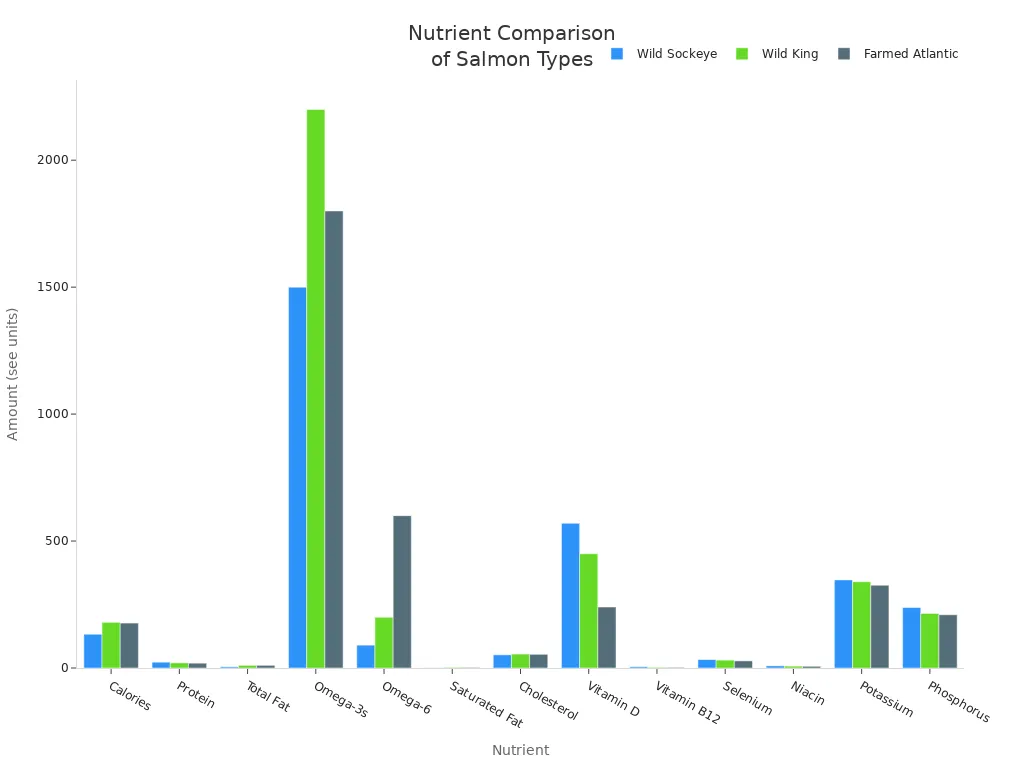
To give you a clearer picture, here’s a comparison of the nutritional profiles of different types of salmon:
Nutrient | Wild Sockeye | Wild King | Farmed Atlantic |
|---|---|---|---|
Calories | 133 | 180 | 177 |
Protein | 23 g | 20 g | 19 g |
Total Fat | 4.7 g | 10.4 g | 10.5 g |
Omega-3s (EPA+DHA) | 1,500 mg | 2,200 mg | 1,800 mg |
Vitamin D | ~570 IU (95% DV) | ~450 IU (75% DV) | ~240 IU (40% DV) |
Vitamin B12 | 4.9 mcg (204% DV) | 2.7 mcg (113% DV) | 2.4 mcg (100% DV) |
Caloric Content
When considering your diet, knowing the caloric content of salmon is essential. A typical serving of salmon contains around 206 calories. This makes it a great option for those looking to maintain a healthy weight while still getting plenty of nutrients. Here’s a breakdown of the caloric content and other nutritional values in a standard serving of salmon:
Nutrient | Amount |
|---|---|
Calories | 206 kcal |
Protein | 22 g |
Fat | 12 g |
Saturated Fat | 2.1 g |
Omega-3 (EPA + DHA) | 1.5 g |
Cholesterol | 60 mg |
Vitamin B12 | 2.6 mcg |
Vitamin D | 570 IU |
Selenium | 40 mcg |
In comparison to other protein sources, salmon provides a balanced mix of protein and healthy fats without excessive calories. This makes it an excellent choice for a nutritious meal.
Protect Brain Health

Reducing Inflammation
Salmon plays a vital role in protecting brain health by helping to reduce inflammation. Inflammation in the brain can lead to various cognitive issues, including mood disorders. The omega-3 fatty acids found in salmon produce anti-inflammatory molecules called resolvins and protectins. These compounds help combat inflammation and support overall brain function.
Additionally, salmon contains astaxanthin, a powerful antioxidant that provides extra protection against oxidative stress. This nutrient works alongside selenium, which supports your body’s antioxidant systems. Epidemiological studies show that countries with higher fish consumption, including salmon, report lower rates of depression. This suggests a strong link between omega-3 fatty acids and reduced brain inflammation, which is increasingly recognized as a contributing factor to mood disorders.
Mechanism | Description |
|---|---|
Omega-3s | Produce anti-inflammatory molecules called resolvins and protectins. |
Astaxanthin | Provides additional antioxidant protection. |
Selenium | Supports the body’s antioxidant systems. |
Cognitive Function
Regular consumption of salmon can also enhance cognitive function. Research indicates that omega-3 fatty acids, particularly docosahexaenoic acid (DHA), are crucial for maintaining brain health. The Framingham Heart Study found that higher levels of DHA correlate with a significantly lower risk of dementia. Participants with the highest plasma DHA levels experienced a 47% reduction in dementia risk.
Moreover, omega-3s may help prevent inflammation, which can lead to cognitive decline. Studies show that higher fish consumption is linked to slower cognitive decline, especially in episodic memory, an early marker of Alzheimer’s disease. By incorporating salmon into your diet, you can support your brain health and potentially delay cognitive decline.
Finding | Description |
|---|---|
Risk Reduction | Higher fish consumption correlates with a lower risk of cognitive impairment, dementia, and Alzheimer’s disease. |
Global Cognition | Greater fish intake is associated with a slower rate of global cognitive decline. |
Salmon Health Benefits
Nutritional Advantages
Salmon offers numerous health benefits that make it a valuable addition to your diet. It is packed with protein, providing about 20-25 grams per 100 grams. This high-quality protein supports muscle growth and repair. Additionally, salmon is rich in omega-3 fatty acids, which are essential for brain health and development. These nutrients help reduce inflammation and lower the risk of heart disease. Here are some key nutritional advantages of salmon:
Cardiovascular Health: Eating salmon can reduce the risk of heart disease. Studies show that fish eaters have nearly half the risk of death from coronary heart disease compared to those who do not consume fish.
Antioxidant Properties: Astaxanthin, an antioxidant found in salmon, helps reduce inflammation and may lower plaque buildup in arteries.
Cognitive Function Improvement: DHA in salmon is linked to improved cognitive function in older adults. Regular fish consumption leads to less cognitive decline.
Overall Well-Being
Incorporating salmon into your meals can enhance your overall well-being. Regular consumption of salmon is associated with lower rates of depression and other mental health disorders. Higher omega-3 intake contributes to better mood regulation. Moreover, salmon provides essential vitamins and minerals, including vitamin D and selenium, which support various bodily functions.
Eating salmon at least twice a week is recommended for optimal health benefits. This practice not only supports heart health but also promotes cognitive function and mental well-being. By making salmon a staple in your diet, you can enjoy its many health benefits while savoring its delicious flavor.
Incorporating Salmon
Cooking Methods
You can enjoy salmon in many delicious ways. Here are some healthy cooking methods that preserve its beneficial nutrients:
Pan-seared: This method gives salmon a crispy exterior while keeping it moist inside.
Oven-baked in foil: Wrapping salmon in foil helps retain moisture and flavor.
Poached: Cooking salmon gently in water or broth keeps it tender and juicy.
Broiled on a cedar plank: This method adds a smoky flavor and enhances the taste.
Oven-baked in a pan: A simple way to cook salmon evenly without much fuss.
Cooking methods like poaching and oven baking require little to no added fats. These techniques help preserve the heart-healthy omega-3 fatty acids found in salmon. Avoid deep-frying, as it can diminish the nutritional value.
Meal Ideas
Incorporating salmon into your meals can be both easy and enjoyable. Here are some meal ideas that support cognitive functions and improve mental health:
Mediterranean Salmon Bowls: Combine salmon with fresh vegetables and chickpeas for a nutritious, gluten-free meal.
Stuffed Avocado with Salmon: This dish is rich in omega-3 fatty acids and pairs well with antioxidant-rich ingredients like avocado.
Raspberry Balsamic Glazed Salmon: A quick and flavorful option that takes about thirty minutes to prepare.
Teriyaki Salmon Rice Bowl: This tender dish is perfect for those with dietary restrictions and is gluten-free.
Honey Garlic Baked Salmon: Simple and quick to make, this recipe requires minimal ingredients.
Health experts recommend eating salmon about two times a week. Each serving should be around 4 ounces. For optimal brain health, aim for 8–12 ounces of salmon weekly, divided into two or three meals. By adding salmon to your diet, you can boost brainpower and promote heart health while enjoying its delicious flavor.
Incorporating salmon into your diet offers numerous health benefits for your brain. Here are eight reasons to consider:
Salmon improves cognitive function, especially in memory and learning.
It is high in vitamin D, crucial for mental health.
Adequate DHA intake reduces the risk of age-related cognitive decline.
Omega-3 fatty acids help build brain cells and regulate mood.
Regular fish consumption lowers the risk of depression and neurological diseases.
DHA protects neurons and aids in neurotransmitter production.
Omega-3 fats support brain development in children and adults.
Eating salmon can enhance overall brain health and function.
Including salmon in your meals can significantly support your brain health. Try to enjoy it at least twice a week. Explore various recipes to find your favorites. Make salmon a regular part of your diet for a healthier mind!
FAQ
What are the health benefits of eating salmon?
Eating salmon provides numerous health benefits. It supports brain health, improves mood, and reduces inflammation. Salmon is rich in omega-3 fatty acids, which are essential for cognitive function and overall well-being.
How often should I eat salmon for optimal brain health?
For optimal brain health, aim to eat salmon at least twice a week. Each serving should be around 4 ounces. This frequency helps you gain the maximum benefits from its nutrients.
Can I eat farmed salmon instead of wild salmon?
Yes, you can eat farmed salmon. While wild salmon generally has higher omega-3 levels, farmed salmon still provides essential nutrients. Both types can contribute to your overall health.
Is salmon safe for everyone to eat?
Most people can safely eat salmon. However, pregnant women and young children should limit their intake due to potential mercury levels. Always consult your doctor if you have specific dietary concerns.
How can I prepare salmon to retain its nutrients?
To retain nutrients, try cooking methods like baking, poaching, or grilling. Avoid frying, as it can diminish the health benefits of salmon. Simple seasoning enhances flavor without compromising nutrition.