

Rice stands as a vital staple food for over half of the world’s population. It plays a significant role in diets across various cultures. Understanding rice calories helps you make informed choices for your meals. More than 50% of people globally rely on rice, consuming it daily for energy and nutrition.
Country | Rice Consumption (kg/person) |
|---|---|
Myanmar | 278.97 |
Comoros | 274.51 |
Gambia | 256.4 |
Cambodia | 247.54 |
Bangladesh | 246.85 |
Vietnam | 228.13 |
Laos | 226.86 |
Philippines | 194.48 |
Sri Lanka | 193.12 |
Indonesia | 185.22 |
Understanding the calorie content of rice can significantly impact your dietary choices and health outcomes.
Key Takeaways
Understanding rice calories helps you make informed dietary choices. Different rice types have varying caloric content, impacting your nutrition.
Brown rice is a healthier option than white rice. It contains more fiber, protein, and essential nutrients, supporting better health.
Pair rice with vegetables or lean proteins to enhance its nutritional value. This combination helps stabilize blood sugar and adds essential vitamins.
Rice Calories Overview
Understanding rice calories is crucial for making informed dietary choices. Different types of rice offer varying caloric content, which can impact your overall nutrition. Here’s a closer look at the caloric content of popular rice varieties.
Caloric Content of Rice Types
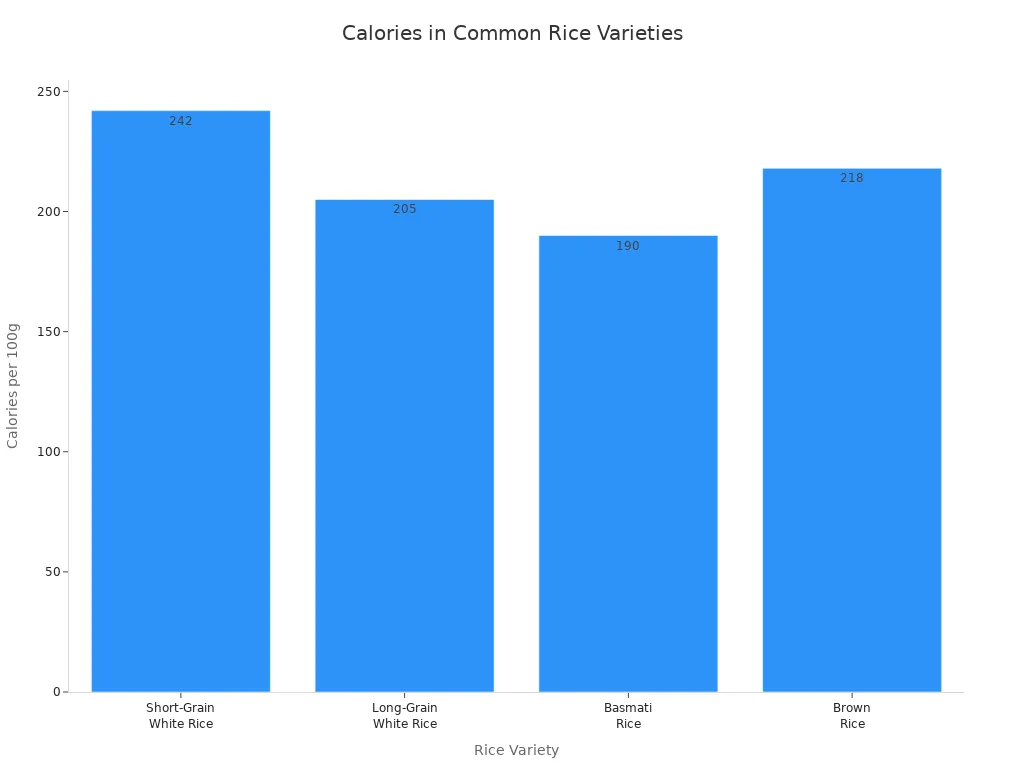
The caloric content of rice varies significantly among different types. Here’s a breakdown of some common varieties:
Type of Rice | Calories (per 100g) |
|---|---|
Short-Grain White Rice | 242 |
Long-Grain White Rice | 205 |
Basmati Rice | 190 |
Brown Rice | 218 |
You can see that short-grain white rice has the highest calorie count, while basmati rice is the lowest among these options. This nutritional comparison of rice varieties helps you choose the best option for your dietary needs.
Serving Sizes and Calories
When considering rice in your meals, serving size plays a significant role in caloric intake. A standard serving size of cooked rice is typically 1 cup, which weighs about 158 grams. This serving contains approximately 205 calories. Here’s a quick reference for different serving sizes:
Serving Size | Calories |
|---|---|
1 oz, dry, yields | 112 |
100 g | 129 |
1 cup cooked | 204 |
1 cup, dry, yields | 735 |
Monitoring the amount per serving helps you manage your caloric intake effectively. For example, if you prefer brown rice, it contains about 112 calories per 100 grams when cooked.
You should also consider how rice fits into your daily caloric intake. Pairing rice with vegetables or lean proteins can enhance its nutritional value while keeping your meals balanced.
Nutritional Value of Rice
Healthiest Way to Eat Rice
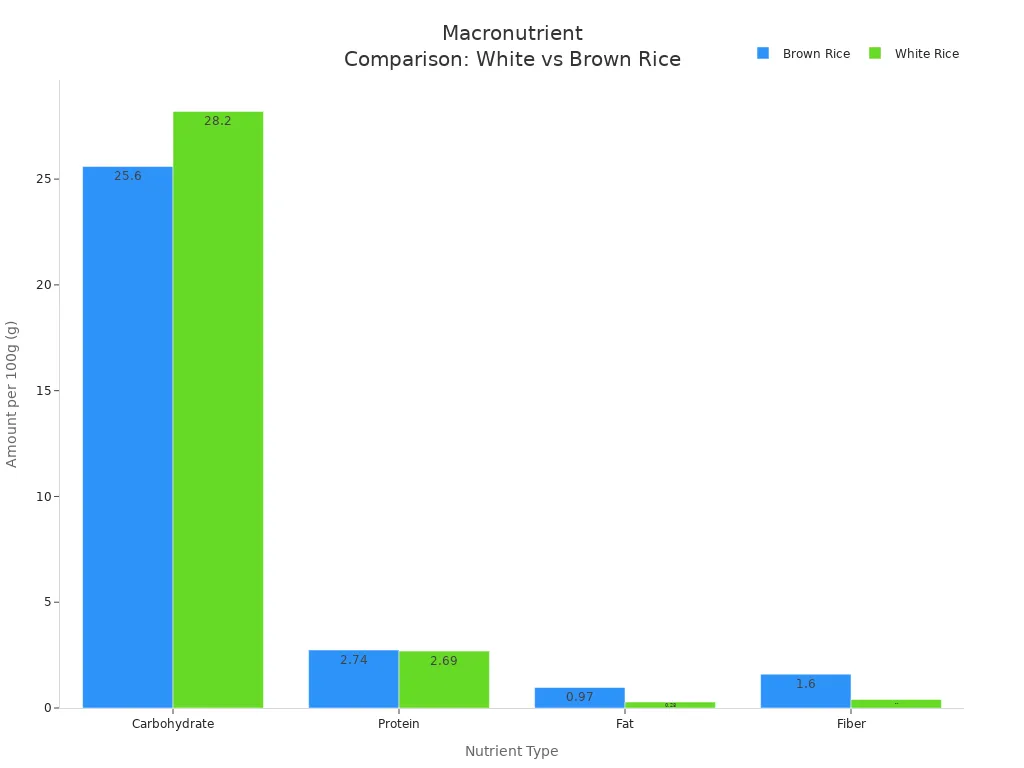
Rice provides essential nutrients that contribute to your overall health. Understanding its macronutrient breakdown helps you make better dietary choices. Here’s a comparison of brown rice and white rice:
Nutrient type | Brown Rice (100g) | White Rice (100g) |
|---|---|---|
Carbohydrate | 25.6 g | 28.2 g |
Protein | 2.74 g | 2.69 g |
Fat | 0.97 g | 0.28 g |
Fiber | 1.6 g | 0.4 g |
Brown rice retains its bran and germ, making it richer in fiber, protein, and micronutrients compared to white rice, which is a refined grain. This difference in nutritional value can significantly impact your health.
When you consume a typical serving of cooked rice, you get approximately:
Nutrient | Amount |
|---|---|
Carbohydrates | 45 g |
Protein | 4 g |
Fat | 0.4 g |
These macronutrients provide energy and support bodily functions. The carbohydrates in rice serve as a primary energy source, while protein aids in muscle repair and growth.
In addition to macronutrients, rice contains various vitamins and minerals. Brown rice is particularly high in magnesium, phosphorus, and B vitamins. These nutrients play vital roles in energy production, bone health, and metabolic processes.
To maximize the health benefits of rice, consider these tips for the healthiest way to eat rice:
Soak the Rice: Soaking rice before cooking can enhance its nutritional value. This process reduces anti-nutrients like lectins and oxalates, which can hinder digestion.
Cool and Reheat: Cooling cooked rice before reheating can lower its glycemic impact. Cooled rice contains resistant starch, which is harder to digest and helps control blood sugar levels.
Pair with Vegetables: Combining rice with vegetables or lean proteins boosts its nutritional profile. This pairing adds fiber, vitamins, and minerals to your meal.
By following these practices, you can enjoy rice while maximizing its health benefits.
Incorporating Rice into a Balanced Diet
You can easily include rice in various diets, such as vegetarian, vegan, and gluten-free options. Here are some effective ways to do this:
Combine rice with beans for a complete protein source. This combination provides essential amino acids and adds fiber to your meal.
Enhance your rice dishes with toppings like guacamole, salsa, or roasted vegetables. These additions boost flavor and nutrition.
Pairing rice with low-sugar foods can significantly benefit your health. Here are some advantages of this practice:
Reduced Blood Sugar Spikes: Pairing white rice with vegetables and lean proteins helps stabilize blood sugar levels. This combination limits the rapid increase in glucose after meals.
Resistant Starch Formation: Cooking and cooling rice before eating creates resistant starch. This type of starch is harder to digest, which can help control blood glucose levels.
Incorporating high-fiber rice varieties, such as brown rice, can also enhance your diet. Here are some benefits of high-fiber rice:
Benefit | Description |
|---|---|
Weight Management | High-fiber rice helps you feel full, leading to reduced calorie intake and supporting weight loss. |
Cholesterol Reduction | Dietary fiber in high-fiber rice may help lower LDL (bad) cholesterol, reducing heart disease risk. |
Improved Glycemic Control | High-fiber rice helps regulate blood sugar levels, beneficial for those with diabetes. |
By making these simple adjustments, you can enjoy rice while maintaining a balanced diet that supports your health goals.
Understanding rice calories is essential for making healthy meal choices. Different rice types offer various nutritional benefits. You can enjoy rice in moderation while pairing it with vegetables and lean proteins. This approach helps you maintain a balanced diet and supports your overall health.
FAQ
What is the best type of rice for managing diabetes?
Brown rice is better for managing diabetes. It has more fiber and nutrients, which help control blood sugar levels.
How can I reduce the glycemic impact of rice?
You can cool cooked rice before reheating. This process creates resistant starch, which lowers its glycemic impact.
Can I eat rice if I have type 2 diabetes?
Yes, you can eat rice. Choose whole grain options and pair them with vegetables or proteins to balance your meal.