

The right flour changes everything in a recipe, from a tender cake crumb to a chewy pizza base with those signature leopard-spotted bubbles. Home bakers juggling dietary needs, sourdough experiments, and weeknight pancakes quickly learn that “flour” is not one thing, and the wrong bag can sink an otherwise good bake. This roundup cuts through the wall of options with ten bags worth your pantry space, each chosen for a specific kitchen reality and skill level.
The Leading Options At A Glance

Mulino Caputo 00 Pizzeria Flour 1kg (Pack of 4)

Bob’s Red Mill Gluten Free 1-to-1 Flour 22oz (4 Pack)
King Arthur 00 Pizza Flour 3 lb Bag


Antimo Caputo Chef’s Flour Case of 10

Bob’s Red Mill Self-Rising Flour 3 lb

Bob’s Red Mill All Purpose High Fiber Flour 3 lb

Fairhaven Mill Whole Wheat Bread Flour 5 lbs

Fairhaven Mill Whole Grain Barley Flour 5 lbs

Fairhaven Mill Organic Buckwheat Flour 5 lbs
The Strengths Of Each Pick
Pulling a Neapolitan-style pie from a 900°F oven starts with the flour, and this Caputo Pizzeria bag is milled specifically for that job. The “00” grind is far finer than standard American all-purpose, which translates into a dough that stretches thin without tearing and blisters into those signature leopard spots at high heat.
For a household running Friday pizza nights, a four-pack of 1-kilo bags keeps you covered for a couple of months without the flour going stale. In our view, this is the benchmark Italian 00 for a home oven setup.
Advantages To Know
- Ultra-fine “00” grind stretches into thin Neapolitan crusts without snapping back.
- Four-bag pack suits regular pizza nights and reduces the chance of running out mid-rise.
- Built specifically for high-heat ovens, so you can chase authentic pizzeria char at home.
- Long-fermentation friendly, so a cold 24 to 48 hour rise develops flavor without breaking down.
Practical Considerations
- Specialized for pizza, so it underperforms in tender cakes or cookies that need a softer crumb.
- Once opened, transfer to a sealed container to keep humidity from aging the bag prematurely.
Whose Pantry It Belongs On
Home pizzaiolos chasing a Neapolitan-style result will get the most out of this bag.
Swap It Out When
If you mostly bake soft sandwich loaves, the Fairhaven Mill Whole Wheat Bread Flour is a more versatile everyday pick.
Gluten-free baking often means rebuilding recipes from scratch, but this Bob’s Red Mill blend behaves like a cup-for-cup swap for wheat flour. The mix combines rice flour, starches, and xanthan gum, which gives batters the structure they normally get from gluten development.
For celiac households or anyone cutting wheat, the 22-ounce four-pack keeps your pantry stocked through cookies, pancakes, and quick breads without juggling specialty bags. Compared to the Caputo Pizzeria above, this is the soft, sweet-baking counterpart.
Where It Helps
- Designed as a one-to-one wheat replacement, so most standard recipes translate without rework.
- Four-bag pack size is practical for families baking several gluten-free items per week.
- Works across a wide range of bakes, from cookies to muffins to pancakes.
Where It May Fall Short
- Not suited for yeasted breads that demand real gluten structure, like crusty sourdough boules.
- Some bakers find the xanthan gum leaves a faint aftertaste in very simple recipes, like shortbread.
Right Fit For
Who Should Grab It
Gluten-free households tired of adapting every recipe will appreciate the drop-in convenience.
Look Elsewhere When
For a naturally gluten-free ancient grain profile, Fairhaven Mill Organic Buckwheat Flour brings more character to pancakes and soba noodles.
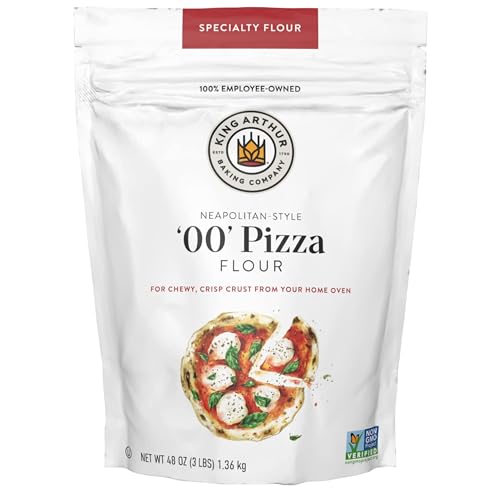
King Arthur leans into its American sourcing with this 00 pizza flour milled entirely from U.S.-grown wheat. The fine grind still delivers the chewy, well-developed crumb you’d expect from a true 00, while the non-GMO sourcing reassures shoppers who track ingredient origin.
For cooks who want a Neapolitan result but prefer to keep their pantry stocked with domestic ingredients, this bag sits between the Italian Caputo and a generic all-purpose. The 3-pound size is a comfortable middle ground for households baking pizza weekly but not daily.
Notable Upsides
- Milled from 100% American-grown wheat for traceable, domestic sourcing.
- Fine “00” texture still delivers stretchy, blistered Neapolitan-style crusts.
- Non-GMO Project Verified, which matters for shoppers watching ingredient certifications.
- 3-pound bag is easier to finish before staleness than a 5-kilo block.
Trade-Offs To Consider
- Not as widely available in retail stores as the Caputo, so restocking usually means online orders.
- Pizza-specific profile, so it isn’t the right tool for tender baked goods or pastries.
Best Suited To
Made For
Home bakers who want pizzeria-style pizza from American-grown wheat without imported sourcing.
Consider Something Else When
For larger-batch pizza operations, the Antimo Caputo Chef’s Flour case of 10 is a stronger pantry-stocking option.
Cake flour exists to do one job, and that’s producing a tender, airy crumb in delicate bakes. This Bob’s Red Mill version is milled extra fine, which helps batters stay smooth and gives sponge, chiffon, and angel food cakes the lift they need.
For bakers who keep a rotation of layer cakes and cupcakes on the weekend, a 3-pound bag is enough for a few bakes before freshness becomes a worry. The honest read is that this is a quiet workhorse: no flashy claims, just consistent tender results.
Real Benefits
- Super-fine milling produces silky batters and even crumb structure.
- Ideal for sponge, chiffon, and angel food cakes that demand low protein.
- 3-pound size finishes comfortably within a couple of months for most home bakers.
Points To Note
- Low protein means it can’t sub in for bread flour in any yeasted bake.
- Not interchangeable with all-purpose in a 1:1 swap for cookies that need a bit more chew.
Perfect Match For
Bakers who specialize in tender layered cakes and delicate chiffons will get the most out of this bag.
A Better Fit Elsewhere
For an all-purpose flour that handles both cakes and breads, Bob’s Red Mill Self-Rising Flour offers more flexibility for quick bakes.
When pizza night turns into pizza weekend, or a small pizzeria needs steady inventory, a case of 10 two-pound bags totaling 22 pounds keeps the dough rolling. This Antimo Caputo Chef’s Flour uses soft wheat, which makes it forgiving for long fermentation and gentle on stand mixers during extended kneading.
For high-volume home bakers or small food businesses, the case format trims the per-pound cost compared to single bags. Compared to the four-pack of Caputo Pizzeria earlier, this is the bulk-buy cousin aimed at serious throughput.
Good Reasons To Consider
- Case of 10 two-pound bags suits weekly pizza nights or small commercial operations.
- Soft wheat formulation handles long, cold fermentation for developed flavor.
- Italian-milled 00 supports authentic Neapolitan and Roman pizza styles.
Some Limits To Know
- Bags are not resealable, so you’ll want a few airtight containers on hand to keep flour fresh.
- Bulk size only makes sense if you’ll actually use 22 pounds before it ages out.
Feature Snapshot
Built With In Mind
Small pizzeria operators and high-volume home pizza makers benefit most from the bulk format.
Not Your Match When
For a single household that bakes pizza only occasionally, the Mulino Caputo 00 Pizzeria four-pack is easier to finish.
Self-rising flour is the weeknight baker’s shortcut, with the leavening and salt already mixed in. This Bob’s Red Mill version simplifies biscuit and pancake mornings to a single scoop, measure, and stir routine.
For busy households that don’t want to dig through three different containers at 7 a.m., the all-in-one blend cuts real time. It’s the kind of pantry staple you forget is there until you need it.
Notable Gains
- Pre-mixed leavening and salt eliminate measuring steps for quick bakes.
- Reliable lift for biscuits, pancakes, and muffins without extra ingredients on hand.
- 3-pound size is manageable for most kitchens without going stale.
Potential Drawbacks
- Built-in leavening loses potency over time, so older bags may underperform.
- Not suited for recipes that need a specific salt level or leavening control.
Who Will Love This
Busy home cooks who want a one-scoop solution for biscuits, pancakes, and quick muffins will appreciate the convenience.
Reach For A Different Pick When
For yeasted bakes that need more structure, the Fairhaven Mill Whole Wheat Bread Flour is the more capable option.
For bakers who want extra fiber without abandoning familiar recipes, this Bob’s Red Mill blend adds resistant starch, a prebiotic fiber that feeds beneficial gut bacteria, to a wheat-flour base. The result behaves like all-purpose in most batters while boosting the nutrition profile.
It drops easily into muffins, flatbreads, and pancakes, so families that bake together don’t have to overhaul their rotation. Compared to the cake flour earlier, this is a more nutritionally focused all-purpose option.
Positive Points
- Resistant starch delivers 6 grams of fiber per serving without changing routine recipes.
- Behaves like standard all-purpose in muffins, flatbreads, and pancakes.
- Prebiotic fiber supports gut health in everyday baked goods.
Worth Bearing In Mind
- Slightly higher fiber can lead to denser results in delicate recipes like angel food cake.
- Best used within a few months, since the resistant starch can degrade in long storage.
Who Should Grab It
Nutrition-minded bakers who want more fiber without switching to whole wheat will appreciate the swap.
Where A Sibling Pick Shines
For genuine whole-grain depth, the Fairhaven Mill Fine Ground Whole Wheat Bread Flour carries more bran character.
Whole wheat bread flour lives in a different world from cake or pizza flour, and this Fairhaven Mill bag is built for hearty loaves. Milled from hard red wheat, it carries the protein levels bread needs to develop strong gluten, and the fine grind keeps doughs manageable rather than gritty.
For sourdough bakers chasing an open crumb or anyone tired of dense whole wheat bricks, the 5-pound bag offers enough flour for several loaves. You may find the soft, even crumb noticeably better than coarser grocery-store whole wheat.
What It Does Well
- Hard red wheat base develops strong gluten for tall, well-structured loaves.
- Fine grind keeps the texture smooth and the dough easier to handle.
- 5-pound size is a good value for frequent bread bakers.
Honest Caveats
- Whole wheat absorbs more liquid than white flour, so recipes often need hydration tweaks.
- Higher oil content in the germ means the bag benefits from cool, dry storage to prevent rancidity.
Quick Facts
The Right Fit
Active sourdough and yeast bakers who want real whole-wheat depth in their loaves benefit most from this bag.
Skip It When
For a lighter, neutral flour suited to everyday pancakes and cookies, Bob’s Red Mill Self-Rising Flour is the easier all-purpose option.
Barley flour rarely takes center stage, but it makes a powerful supporting player in multigrain loaves, pancakes, and quick breads. This Fairhaven Mill version is milled from whole barley berries, retaining the bran and germ that bring nutty depth and beta-glucan fiber to bakes.
For bakers who like to blend a few flours for complexity, the 5-pound bag gives plenty of room to experiment. Depending on the recipe, swapping in 15 to 25 percent barley flour adds flavor without overwhelming the structure.
Benefits That Matter
- Whole-grain milling preserves the bran, germ, and natural beta-glucans.
- Nutty, slightly sweet flavor enhances pancakes, quick breads, and blended loaves.
- 5-pound pack supports regular multigrain baking rather than one-off recipes.
Points To Keep In Mind
- Barley contains gluten, so it’s not a swap for celiac households.
- Used at 100% in yeasted breads, the low gluten can lead to dense loaves, so most recipes call for blending.
Best Suited To
Multigrain bakers who like to layer flours for flavor and texture will get the most out of this bag.
Where Another Pick Suits Better
For a fully gluten-free ancient grain, the Fairhaven Mill Organic Buckwheat Flour covers pancake and soba needs.
Despite the name, buckwheat has no wheat at all, and this Fairhaven Mill bag is naturally gluten-free while packing more protein, fiber, and minerals than many standard flours. The earthy, slightly peppery flavor shines in soba noodles, pancakes, and dense quick breads.
For cooks exploring ancient grains or building a gluten-free rotation beyond rice-based blends, the 5-pound size supports regular use. Same story as the barley flour, though: this one swaps safely into gluten-free kitchens where the barley cannot.
Reasons It Performs
- Naturally gluten-free profile suits celiac and wheat-sensitive households.
- Higher protein, fiber, B vitamins, and potassium than oats or whole wheat.
- Distinct earthy flavor elevates pancakes, soba, and hearty baked goods.
A Few Limitations
- Strong, almost peppery flavor can dominate delicate recipes like vanilla cupcakes.
- No gluten means it needs a binder, like the Bob’s Red Mill 1-to-1 blend, in yeasted recipes.
At A Glance
Who It Suits Best
Gluten-free home cooks exploring ancient grains for pancakes, soba, and hearty bakes will appreciate the depth.
Another Choice May Suit
For a more neutral gluten-free flour that mimics wheat in standard recipes, Bob’s Red Mill Gluten Free 1-to-1 is the easier swap.
What Matters Most Before Choosing Baking Flours
Protein Content Drives the Outcome
Wheat flour’s protein level, which translates into gluten when hydrated, decides what a flour can do. High-protein bread flour (around 12 to 14 percent) builds strong networks for chewy loaves, while low-protein cake flour (around 7 to 9 percent) keeps batters tender. Pizza “00” lands somewhere in the middle for elasticity without toughness, which is why it stretches thin but still bubbles under high heat. Matching the protein range to your recipe is the single biggest factor in consistent results.
Whole Grain vs. Refined Trade-Offs
Whole wheat and other whole-grain flours keep the bran and germ, which boosts nutrition but also absorbs more liquid and shortens shelf life. Refined white flours offer longer storage and a more neutral flavor, but lose fiber and micronutrients in the process. Bakers who want a balance often blend, using whole grain for depth and white flour for structure. Think of it as a dial rather than a binary choice.
Milling Style and Grind Size
Finely milled flours absorb water evenly and produce smooth batters, while coarser grinds add rustic texture but can feel gritty in cakes. “00” labeling refers to Italian grind standards, meaning an especially fine powder, but it doesn’t describe protein content. Always read the bag’s actual specs rather than relying on the grind label alone.
Allergens and Dietary Fit
Gluten-free bakers need flour blends that mimic gluten’s binding role, typically through starches and gums. Ancient grains like buckwheat, despite the name, are naturally gluten-free, but barley is not. Cross-contamination is a real concern for celiac households, so look for dedicated gluten-free facilities when the diet is strict.
Key Considerations Across These Picks
Mistakes Worth Dodging
Treating all-purpose as a universal flour is the most common slip, since it works for many recipes but underperforms in extremes like tender cakes or high-hydration breads. Another trap is buying bulk flour without a storage plan, because opened bags of whole grain and specialty flours go stale faster than people expect. Finally, skipping the recipe’s protein recommendation leads to dense loaves or fragile doughs that no amount of kneading can rescue.
Where The Extra Money Goes
Premium pizza flours like Caputo cost more because of fine Italian milling, controlled protein specs, and import logistics. Whole-grain flours from specialty mills like Fairhaven carry higher price tags because of organic sourcing, stone-milling, and smaller batch production. The upgrade pays off when your recipe depends on a specific protein level, grind size, or flavor profile that a budget flour can’t match, but it isn’t always necessary for everyday pancakes or cookies.
Frequently Asked Questions
What is the difference between 00 flour and all-purpose flour?
“00” refers to the grind size, with 00 being a much finer powder than standard all-purpose. All-purpose varies in protein content depending on the brand, while 00 is a texture designation that may have either high or low protein.
Can I substitute bread flour for all-purpose flour in most recipes?
You can, but expect slightly chewier results since bread flour has more protein. For cookies and cakes, swap in cake flour instead to avoid a tough texture.
Is whole wheat flour healthier than white flour?
Whole wheat retains the bran and germ, offering more fiber, vitamins, and minerals. The trade-off is denser baked goods and a shorter shelf life once opened.
How should I store specialty flours to keep them fresh?
Transfer opened flour to an airtight container and store in a cool, dry place. Whole grain flours benefit from refrigeration or freezing to slow the oils in the germ from going rancid.
What is the best flour for a gluten-free household?
A dedicated 1-to-1 blend like Bob’s Red Mill Gluten Free handles most standard recipes with minimal changes. Naturally gluten-free grains like buckwheat work well for specific recipes but need a binder in yeasted bakes.
Wrap Up
The best flour for your kitchen depends less on the bag’s branding and more on what you’re baking, how often you bake, and what your household can eat. Pizza lovers will find a clear winner in the Italian 00 options, while gluten-free bakers have more reliable choices than ever. Pick the bag that matches your most frequent recipe, and your pantry will feel quietly capable every time you preheat the oven.
