

Sourdough can feel like a mystery until a working starter sits on your counter, bubbling away and turning flour and water into something alive. Dehydrated sourdough starters (dried, dormant cultures that reawaken when fed) offer a shortcut into that world without tracking one down from a friend or bakery.
The right culture hinges on your flour preferences, how much guidance you want, and whether gluten matters in your kitchen. Beginners often do best with packets that include videos and recipes, while experienced bakers may prefer an heirloom line with a documented flavor profile. Below are seven picks that cover a wide range of needs, from a wide-mouth jar for daily feeding to a mature culture with a century of baking history behind it.
The Choices Worth Comparing

Mrs. Sourdough Organic Dehydrated Sourdough Starter for Beginners – Easy 5-Day Activation

Eve – The Southern Sourdough Co. Dehydrated Sourdough Starter | 10 grams Beginner Friendly

50oz Sourdough Starter Jar, Large Wide Mouth Bread Starter Kit

Mature Sourdough Starter Culture – Dehydrated 100+ Year Old Starter Kit

Artisan Sourdough Starter Culture | Dehydrated Starter for Bread Baking | Unbleached Rye Flour

Gluten Free Sourdough Starter Culture – Dehydrated 100+ Year Old Starter Kit
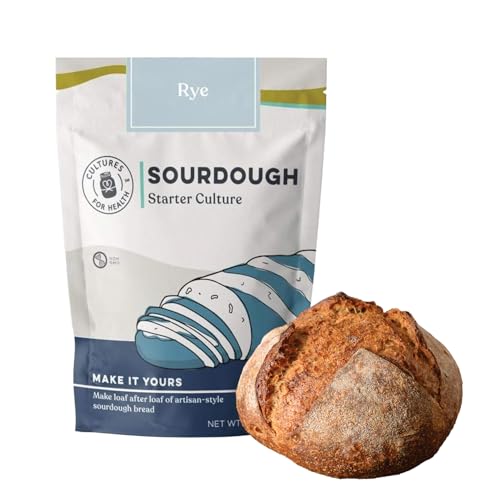
Cultures for Health Rye Sourdough Starter | Heirloom Style Dehydrated Culture for Artisan Bread
More Details On Our Top Picks
Your first loaf often lives or dies by the support materials that come with the culture, and this packet leans hard into that. Mrs. Sourdough ships an organic dehydrated starter alongside step-by-step instructions, video guides, and recipes aimed at people who have never fed a culture before. The roughly five-day activation window is paced so you can see visible bubbles before you commit to a bake.
Each packet includes enough dried culture for two separate activations, which lowers the stakes on your first attempt. Compared with Eve from The Southern Sourdough Co., which emphasizes fast activation, this one trades raw speed for a more scaffolded, learn-as-you-go path.
Real Benefits
- Step-by-step written instructions and video walkthroughs reduce first-time guesswork significantly.
- Two activations per packet mean a spare if your initial attempt does not rise as expected.
- Organic flour base appeals to bakers reading ingredient lists closely.
- The five-day window is forgiving for a weekday schedule.
Points To Keep In Mind
- Five-day activation is slower than options like Eve, which targets bakers who want to bake the same week.
- Owners commonly report that the printed material is the real value; the dried culture itself is a modest amount.
Quick Facts
Right Fit For
Total beginners who want a guided first bake and are happy to wait a few days before mixing dough.
Skip It When
Bakers who already have sourdough experience may find the Cultures for Health Rye Sourdough Starter a more flexible long-term companion.
Eve leans into speed and accessibility. The Southern Sourdough Co. ships a 10-gram packet of organic flour-based starter built for fast activation, so the path from sachet to active culture is shorter than most. The brand has picked up momentum online, which makes community advice easier to find if you get stuck.
You trade the heavier educational kit of Mrs. Sourdough for a simpler packet that assumes you can find your own recipes. That makes Eve a good middle step for bakers who want guidance without the full onboarding experience.
What Makes Sense
- Fast-activation focus gets you to a bubbly starter quickly, often within a few days.
- 10-gram packet size suits bakers who plan a small first bake rather than a perpetual mother dough.
- Organic flour base aligns with clean-label preferences.
Honest Caveats
- Less bundled educational material than Mrs. Sourdough, so total beginners may want external recipes handy.
- Small packet size means you may need to feed up the culture before a full-sized bake.
Who Will Love This
Impatient bakers who want a working culture fast and are comfortable sourcing their own recipes.
A Better Fit Elsewhere
Bakers who want heirloom lineage and a tang-forward loaf will get more from the Captain Sourpants Mature Sourdough Starter Culture.
The Rakovar jar sits in a different category from the rest of this list, and that is the point. Rather than a culture, it is a 50-ounce wide-mouth vessel with measurement markings, aimed at bakers who already have a starter and want a better home for it.
The wide opening makes stirring and feeding less messy, and the printed scale helps you track rise ratios without an extra kitchen tool. For a household baking weekly, one of these jars will outlast countless smaller containers.
Everyday Perks
- Wide-mouth design simplifies stirring, scraping, and feeding without spills down the sides.
- Built-in scale markings let you measure starter and flour ratios by eye, a small daily convenience.
- 50-ounce capacity holds enough active starter for roughly 5 to 6 loaves of bread, useful for weekend bakers.
- Glass body is easy to clean in a standard sink without hard-to-reach corners.
Small Caveats
- Larger footprint than a typical mason jar, so small counters may feel crowded.
- Does not include a culture or lid, which means a separate purchase for new bakers.
Feature Snapshot
Made For
Bakers with an active starter who want a dedicated, easy-clean container for daily or weekly feeding.
Consider Something Else When
You have not activated a culture yet, in which case the Mrs. Sourdough packet plus a basic jar is a more logical starting bundle.
Captain Sourpants leans into tradition with this culture, which is presented as a mature line tracing back over a century. The selling point is flavor: older, well-maintained cultures often produce a more pronounced tang and deeper aroma than first-generation starters you might grow from scratch.
You also get a guide to reviving and maintaining the culture, so the brand assumes you are willing to put in a little stewardship. Compared with Eve, this is less about speed and more about long-term character.
What Pays Off
- Documented line age gives you a culture with established flavor depth rather than a freshly captured wild yeast.
- Non-GMO, natural ingredient profile with no listed preservatives or additives.
- Maintenance guide supports bakers planning to keep the mother dough alive for months or years.
Trade Offs
- Revival may take longer than a quick-activation option like Eve, depending on your feeding schedule.
- Stronger tang is not a neutral flavor, so bakers wanting a milder crumb may need to adjust hydration and flour choice.
Whose Shelf It Belongs On
Bakers who prize traditional tang and a documented heritage line over the fastest possible first bake.
Not Your Match When
Anyone avoiding gluten should pick the Captain Sourpants Gluten Free Sourdough Starter Culture instead, which mirrors this line’s age claim in a different formulation.
Cultures For Health built this starter on unbleached rye flour, which is a deliberate choice. Rye carries more wild yeasts and minerals than white flour, so the resulting culture often rises vigorously and contributes a slightly nutty, earthy note to loaves.
The brand targets both newcomers and seasoned bakers, framing the culture as flexible enough to drop into standard recipes. If you already keep rye flour on the shelf, you can keep feeding the mother with what you have.
The Upside
- Unbleached rye base ferments quickly and tolerates a range of feeding flours once active.
- Clean ingredient list with no additives appeals to label-reading bakers.
- Suitable for both newcomers and experienced hands, so it can grow with your skills.
Worth Noting
- Rye flavor carries through into lighter loaves, which may not suit a neutral-tasting white crumb.
- Owners commonly report that the culture can be lively to the point of needing careful discard management early on.
Spec Overview
Best Suited To
Bakers who want a robust, fast-rising culture and enjoy the deeper flavor rye brings to bread.
Reach For A Different Pick When
You want a milder, white-flour-friendly crumb profile, in which case the Mrs. Sourdough packet is an easier entry point.
This is the gluten-free sibling of Captain Sourpants’ heritage line, aimed at bakers who need to avoid wheat, rye, barley, and similar grains. The same general appeal applies: a mature culture with a documented history, designed to feed on gluten-free flours rather than traditional bread flour.
That distinction matters because the surrounding ecosystem is different. You will want a gluten-free flour blend (rice, sorghum, or a commercial GF mix) on hand before you activate.
A Favorable Mix
- Gluten-free formulation supports sensitive households and dietary restrictions.
- Non-GMO, organic-leaning ingredient profile with no preservatives listed.
- Maintenance guide mirrors the wheat-based sibling, so the learning curve transfers.
Practical Considerations
- Requires gluten-free flours for feeding, which are not always on a standard grocery shelf.
- Gluten-free sourdough behaves differently from wheat-based versions, so expect a learning curve beyond revival.
Right Fit For
Home bakers managing celiac disease, gluten sensitivity, or household members who avoid gluten and still want a real sourdough loaf.
Where Another Pick Suits Better
Bakers without dietary restrictions will find more flavor options and easier feeding with the traditional Captain Sourpants Mature Sourdough Starter Culture.
The longer-standing Cultures For Health rye starter takes a different angle: with proper care, the culture can be revived and reused indefinitely, turning one packet into a long-term kitchen companion. Sourdough is generally forgiving compared with other live cultures (like kefir or kombucha), which makes it friendly for first-time caretakers.
The brand also highlights uses beyond bread, including crackers, pancakes, and pasta. That flexibility matters if you do not bake every week but still want a living culture on the counter.
What It Does Well
- Heirloom-style culture designed for indefinite reuse with regular feeding.
- Forgiving nature makes it approachable for beginners while still useful for experienced bakers.
- Works in more than just loaves: crackers, pancakes, waffles, and pasta all sit in the suggested range.
- Non-GMO ingredient profile with no listed additives.
A Few Limitations
- Long-term care requires consistent feeding; neglect leads to sour-smelling, sluggish cultures.
- Rye base flavor carries through to finished baked goods, which may not match a neutral white-flour loaf.
Feature Rundown
Perfect Match For
Bakers who want one culture that handles both bread and non-bread baking without buying multiple packets.
Look Elsewhere When
You need a gluten-free option, in which case the Captain Sourpants Gluten Free Sourdough Starter Culture is the better specialty match.
Choosing A Starter That Fits Your Kitchen
Flour Base And Flavor Direction
The flour a starter is built on shapes the bread it eventually makes. A rye-based culture, like the Cultures For Health options, tends to ferment fast and add a deeper, slightly tangy note. Wheat-based packets such as Mrs. Sourdough produce a milder crumb. Bakers with gluten restrictions need a culture that lives on alternative flours, which is its own maintenance routine.
Activation Speed Versus Guidance
Fast-activation cultures get you to a working starter within days, which suits impatient bakers. Slower or more guided packets assume you want a few days of step-by-step learning before you bake. Total beginners often do better with a slower, well-documented process; people with previous baking experience may not need the extra hand-holding.
Documentation And Long-Term Care
An heirloom-style line with a documented age brings established flavor complexity. Any starter, though, needs regular feeding to stay alive, so plan for a weekly discard routine. The Rakovar jar helps by giving your active culture a roomy, easy-clean home with built-in measurement markings, which removes a small daily friction.
Beyond Bread
Sourdough cultures are not limited to loaves. Pancakes, crackers, waffles, pizza dough, and pasta all work well with an active starter. Bakers who want a single living culture for multiple uses benefit from a forgiving, reusable line, such as the Cultures For Health rye starter.
Key Considerations Across These Picks
Pitfalls Shoppers Hit
New bakers often grab a culture without checking the flour base, then try to feed it with whatever is in the pantry. That mismatch stalls activation and creates a discouraging first run. Another common slip is skipping the discard routine, which leads to a culture that overflows its jar or smells sharply off. A simple plan for flour type, feeding schedule, and storage will keep things on track from the start.
When Paying More Pays Off
Higher-tier cultures often come with documented heritage, non-GMO or organic sourcing, and richer educational materials. For bakers planning to keep a mother dough for years, that investment pays off in flavor depth and long-term reliability. For a one-time novelty bake, a simpler packet is plenty. The honest read is: match the spend to how long you expect the culture to live on your counter.
Frequently Asked Questions
How long does a dehydrated sourdough starter take to activate?
Most packets reach visible activity within 3 to 7 days, depending on flour type, room temperature, and feeding schedule. Rye-based cultures often rise faster than wheat-based ones.
Do I need special flour to feed my starter?
You need flour that matches the culture’s base, so a wheat-based starter can be fed bread or all-purpose flour, while a gluten-free starter needs a rice, sorghum, or commercial GF blend. Regular table flour is fine for most wheat-based routines.
Can a dehydrated starter be used more than once?
Yes. Once revived and healthy, the culture can be kept alive indefinitely with regular feedings, so a single packet becomes a long-term kitchen resource rather than a one-time product.
Do I need a special jar to store my starter?
A clean glass container with room for the culture to roughly double works well. Wide-mouth jars with measurement markings, like the Rakovar option, make feeding and tracking rise noticeably easier.
How do I know my starter is ready to bake with?
A reliable starter roughly doubles within 4 to 8 hours of feeding at room temperature, floats when a small spoonful is dropped in water, and has a pleasantly tangy, yogurty smell.
The Takeaway
The right dehydrated sourdough starter depends less on hype and more on your kitchen habits. Beginners who want a guided first bake get the most from Mrs. Sourdough, while flavor-focused bakers will gravitate toward a rye base or an heirloom line. Keep the flour type, feeding plan, and long-term use in mind, and the culture you bring home will reward you for years.
