

A good cup of Earl Grey turns a hurried morning into something you actually look forward to. The challenge: bergamot intensity swings wildly between brands, and “loose leaf” ranges from hand-rolled whole tips to swept-up fannings barely bigger than dust. This roundup cuts through the noise, lining up ten options that span traditional bergamot, creamy dessert-style blends, and an organic Kenyan origin story worth a detour. You’ll find sachet convenience for the office crowd and proper loose leaf for the kettle-and-strainer ritual at home, all sourced from established tea houses with real provenance.
The Main Contenders

Wissotzky Imperial Earl Grey Signature Collection, 16ct (Pack of 6)

Shamshiri Persian Tea 500g (18 oz)

Wissotzky Imperial Earl Grey Signature Collection, 16ct (Pack of 3)

Tiesta Tea Earl Grey de la Crème Loose Leaf

Palais des Thés Blue of London Earl Grey, 20 Cotton Tea Bags
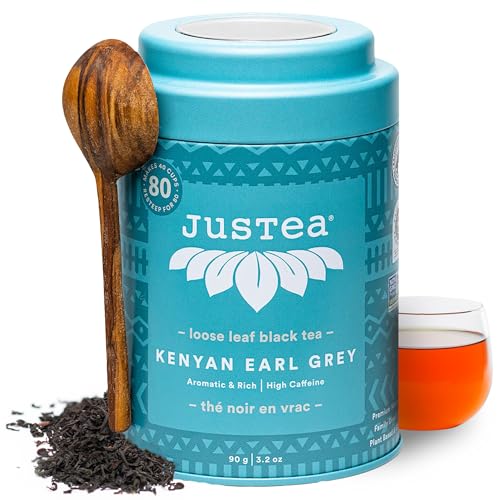
JusTea Kenyan Earl Grey Loose Black Tea, 40+ Cups Tin
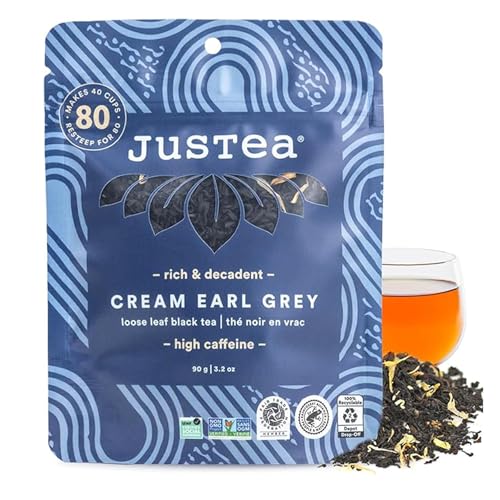
JusTea Cream Earl Grey Loose Leaf Black Tea, 40+ Cups Pouch

Palais des Thés Tahitian Rooibos Vanilla & Almond, 20 Bags

Palais des Thés Big Ben Organic English Black Tea, 20 Bags

JusTea Cream Earl Grey Loose Black Tea, 40+ Cups Tin
The Strengths Of Each Pick
Wissotzky’s Imperial Earl Grey is the kind of sachet format that quietly handles a heavy weekly rotation. Six 16-count boxes arrive in one shipment, which means your pantry stays stocked through months of two-cup mornings without reordering anxiety. The blend is built around all-natural ingredients, with a bergamot profile that reads as classic rather than perfumed, so it pairs well with milk, lemon, or a plain short steep.
Compared to the loose leaf entries further down this list, you trade leaf size for speed. Drop a bag in a mug, top with hot water, and you’re drinking within three minutes. For shared office kitchens where nobody wants to fiddle with strainers, that trade usually pays off. Most households that buy this in bulk do so for the convenience math, not the leaf.
The Upside
- 96 total sachets spread across six boxes, suiting heavy daily drinkers and small offices
- Classic bergamot balance that holds up with milk or lemon without going soapy
- Sachet format eliminates the need for strainers, infusers, or dedicated teaware
- All-natural ingredient label, which matters for shoppers avoiding artificial flavorings
Points To Keep In Mind
- Each tea bag is individually wrapped but not nitrogen-flushed, so transferring to an airtight tin helps preserve the citrus oils once a box is open
- Sachet leaf is finer than proper loose leaf, so re-steeping a single bag is rarely worth the effort
Who It Suits Best
You run through Earl Grey by the box and want a single shipment to cover months of routine brewing.
Consider Something Else When
The JusTea Kenyan Earl Grey suits you better if you want whole leaves you can re-steep two or three times per session.
Shamshiri’s Persian Tea arrives in a hefty 500-gram format that flips the usual Earl Grey ratio on its head. The base is high-grown Ceylon leaf (Ceylon is the historical name for tea grown in Sri Lanka), and the bergamot is layered in rather than sprayed, so the citrus aroma lifts off the dry leaf and deepens again once steeped. Packaged in a foil bag to slow oxidation, it stores well in a pantry tin once opened.
The catch is the brewing style. Persian tea tradition pulls this leaf hard, sometimes simmering it on the stove with cardamom or sugar, and the robust base handles that kind of treatment. If your household leans toward concentrated, sweet, or spiced brews, this is a flexible foundation. For someone wanting a quiet, bergamot-forward cup, the Shamshiri can feel bolder than expected.
Reasons It Performs
- 500-gram foil bag offers strong per-cup value for shared households or tea-heavy kitchens
- Ceylon origin gives a malty backbone that handles milk, sugar, and stovetop simmering
- Bergamot is present in both aroma and cup, leaning toward a layered finish rather than a single sharp note
Worth Noting
- Loose leaf format requires a strainer or infuser, and the cut is medium, not whole tip, so dust shows up at the bottom of the cup without proper filtering
- Once opened, the bag should move to an airtight container since foil alone loses its seal after repeated opening
Key Attributes
Made For
You brew tea by the pot, like a robust Ceylon backbone, and don’t mind reaching for a strainer.
A Better Fit Elsewhere
The Wissotzky Imperial Earl Grey in sachets fits better if you’d rather skip strainer cleanup on weekday mornings.
This is the same Wissotzky Imperial Earl Grey formula as the larger pack, just trimmed down to three boxes of 16. For a two-person household that goes through Earl Grey on weekday mornings, that size hits a useful middle ground. You get the sachet convenience and the same natural ingredient label without committing to six boxes of backup stock.
Compared to the pack-of-6, this one fits the “try before you bulk” approach. If you’re testing whether the bergamot level here works with your milk ratio or your morning timing, three boxes is enough to settle the question. Once you know the answer, stepping up to the larger pack is easy.
Strong Points
- 48 sachets across three boxes, a comfortable restock size for one or two regular drinkers
- Same all-natural ingredient list as the bigger pack, so flavor consistency carries over
- Sachet format keeps brewing cleanup to a minimum on rushed mornings
Honest Caveats
- You pay slightly more per sachet than the pack-of-6, so heavy drinkers end up upgrading soon
- Sachet leaf is finer than loose leaf, limiting how many times you can re-steep a single bag
Right Fit For
You drink Earl Grey a few times a week and want a manageable restock that doesn’t crowd the pantry.
Look Elsewhere When
The Tiesta Tea Earl Grey de la Crème is a stronger match if you want a vanilla-softened cup without buying in bulk.
Earl Grey de la Crème sits in a different lane from the traditional bergamot-forward blends. Vanilla and blue mallow flowers weave through the black tea base, so the cup lands soft, almost dessert-like, rather than bracing. Tiesta packages this in a tin sized for around 50 cups, which is a friendly entry point for a flavored blend you might rotate in for evening brewing.
The trade-off is that this isn’t your standard morning driver. The cream and vanilla push it toward a post-dinner or weekend cup. Hot, iced, or with a touch of milk, it leans gentle. If your household treats Earl Grey as a flavor canvas rather than a caffeine delivery system, this is one of the more likable expressions in the category.
Good Reasons To Consider
- Vanilla-softened bergamot profile is approachable for drinkers who find traditional Earl Grey too sharp
- Tin format protects the leaf from light and air, helping the floral and vanilla notes hold their character
- Works hot or iced, so it doubles as a summer pitcher option
- Approximate 50-cup yield from the tin is a manageable test size
Trade Offs
- Flavored blends lose their aroma faster than plain bergamot, so finishing the tin within a couple of months is wise
- Loose leaf format requires an infuser, and the cut includes some smaller particles that need a fine mesh strainer
Perfect Match For
You want a softened, dessert-leaning Earl Grey for evening or weekend cups rather than a sharp morning driver.
Not Your Match When
The Palais des Thés Blue of London Earl Grey is a better fit if you want a more traditional bergamot with a floral edge.
Palais des Thés leans on its French tea house heritage here, and Blue of London is one of the more elegant expressions of Earl Grey on this list. Chinese black tea carries a smooth body, while bergamot, blue cornflower petals, and mallow petals build a delicate floral finish. The cotton sachets steep cleanly and let the leaf expand properly, which is part of why the cup comes out balanced rather than bitter.
The brew window is specific, and the brand calls it out: 200°F water for four minutes delivers the intended profile. Push past that and the bergamot can turn sharp. Pull it short and the floral notes stay quiet. This is a tea for people who like measuring and timing, not eyeballing a mug.
Useful Highlights
- Bergamot stays refined rather than perfume-like, with cornflower and mallow adding a subtle floral finish
- Cotton sachets allow better leaf expansion than standard paper bags, improving extraction
- Versatile enough to brew hot, iced, or as a milk-based latte
- From a French tea house established in 1986, with sourcing and blending expertise behind the recipe
Small Caveats
- Best results depend on hitting 200°F and a four-minute steep, so a variable-temp kettle helps
- 20 sachets is a smaller count than the bulk Wissotzky packs, so heavy drinkers will reorder often
Feature Snapshot
Who Will Love This
You treat tea as a small ritual and want a refined bergamot with a floral edge for special-occasion cups.
Swap It Out When
The Palais des Thés Big Ben Organic English Black Tea fits better if you want a malty, breakfast-style cup without floral notes.
JusTea’s Kenyan Earl Grey stands out for reasons that have nothing to do with the cup and everything to do with the chain behind it. The leaf is hand-plucked and small-batch from partner farms in Kenya, sourced through a direct-fair-trade model. For shoppers who care about where their tea comes from, that provenance carries weight before you even take a sip.
In the cup, the tasting notes lean bright and floral rather than heavy. Bergamot meets wildflower-style aromatics, and the leaf re-steeps generously. The included spoon and 3.2-ounce tin (around 40 to 80 cups depending on how many times you re-infuse) make it a practical kitchen-counter option rather than a special-occasion tin.
Where It Excels
- Direct-fair-trade sourcing from Kenyan partner farms supports smallholder agriculture
- Whole leaves re-steep two to three times, effectively doubling or tripling the tin’s cup count
- Non-GMO certified, 100% natural ingredients, no synthetic pesticide residue
- Caffeine lands around 50 mg per cup, roughly half a black coffee, for drinkers tracking intake
Practical Considerations
- Whole loose leaves need a basket infuser or strainer with enough room to expand
- Organic, hand-plucked leaf carries a higher per-ounce cost than commodity bergamot blends
Quick Facts
Built With In Mind
You care about fair-trade sourcing and want a bright, re-steepable loose leaf for daily brewing.
Reach For A Different Pick When
The Palais des Thés Blue of London Earl Grey is a better fit if you want sachets over loose leaf prep.
The Cream Earl Grey sibling to the Kenyan classic layers vanilla into the same fair-trade Kenyan leaf. The result is a smoother, dessert-leaning cup that drinks well in the afternoon without the bracing edge of straight bergamot. The 3.2-ounce pouch yields 40 to 80 cups depending on how aggressively you re-steep, which puts it in the same practical range as the tin version.
Vanilla and bergamot together is a familiar pairing, and JusTea’s version leans into it without going syrupy. You can taste the citrus under the cream rather than losing it. The pouch format is the main difference from the tin: it costs less, stores flatter, and is easier to decant into your own jar. Heavy drinkers often prefer pouch value; gift-givers usually want the tin.
Features That Help
- Vanilla-bergamot profile is approachable for drinkers easing into flavored black tea
- Whole Kenyan leaves re-steep two to three times, stretching the pouch across many sessions
- Non-GMO certified, 100% natural, with no synthetic pesticide residue
- Pouch format costs less per ounce than the tin, suiting high-volume drinkers
Where It Is Less Suited
- Pouches reseal less securely than tins once opened, so a clip or decanting into an airtight jar is wise
- Vanilla flavor fades faster than plain bergamot, so finishing the pouch within a couple of months helps
Whose Shelf It Belongs On
You want a creamy, vanilla-kissed Earl Grey with fair-trade sourcing and pouch-level value.
Where A Sibling Pick Shines
The Tiesta Tea Earl Grey de la Crème suits you better if you want a tin format and don’t need fair-trade sourcing.
Strictly speaking, Tahitian Rooibos isn’t Earl Grey. Rooibos is a South African red bush leaf, naturally caffeine-free, and this blend skips bergamot entirely in favor of vanilla and almond. Including it in an Earl Grey roundup makes sense for one reason: it’s the option for drinkers who love the Earl Grey ritual but want to skip the citrus and the caffeine in the evening.
The ingredient list is heavy on rooibos (around 93%) with natural vanilla flavoring, almond notes, and marigold petals rounding it out. The cup comes out smooth and slightly sweet, with no need for sugar. If you’re stocking a kitchen that serves both daytime Earl Grey fans and evening caffeine-light drinkers, this bridges the gap.
What Earns Its Place
- Naturally caffeine-free, so it works as a post-dinner or late-evening cup
- Vanilla and almond create a soft sweetness that doesn’t need added sugar
- Cotton sachets, like the Blue of London, allow proper leaf expansion for cleaner extraction
- From the same French tea house as Blue of London and Big Ben, so blending standards carry over
Things To Weigh
- Not technically an Earl Grey, so shoppers specifically seeking bergamot should look elsewhere
- Flavor profile skews sweet, which won’t suit drinkers who prefer unsweetened or savory cups
Best Suited To
You love the tea ritual but want a caffeine-free, vanilla-leaning cup for evenings or sensitive sleepers.
Skip It When
The Palais des Thés Blue of London Earl Grey is a better fit if you want actual bergamot character in your cup.
Big Ben skips the bergamot entirely and stands in for the breakfast side of the spectrum. The blend pairs Assam with Chinese Yunnan black tea, and both origins are organic. The cup lands malty, full-bodied, and structured enough to handle milk and a splash of sugar. If your morning routine treats tea as a coffee substitute, this is the closest analog on the list.
Brewing it right takes a hair of attention. The brand recommends 195°F for four minutes, which is just below a full boil. Going hotter flattens the malt; going cooler leaves the cup thin. With those numbers dialed in, the result is a robust, well-built breakfast tea that also takes a splash of milk without going gray.
What Helps Most
- Assam-Yunnan blend delivers a malty backbone that holds up to milk and sweetener
- Organic certified base and French tea house blending standards
- Cotton sachets, like the other Palais des Thés entries, support cleaner extraction
- Versatile for hot, iced, or latte-style brewing
Possible Compromises
- No bergamot means it isn’t technically Earl Grey, so citrus seekers should pair it with the Blue of London
- 20-bag count is modest for daily drinkers, so heavy users will reorder often
Feature Rundown
Who Should Grab It
You want a malty breakfast tea with milk rather than a citrus-forward morning cup.
Another Choice May Suit
The Palais des Thés Blue of London Earl Grey is the better swap if you want a classic bergamot character with similar brew precision.
Functionally, this is the same Cream Earl Grey blend as the pouch version, but the format and audience shift. The 3.2-ounce tin ships with a small spoon, sits cleanly on a countertop, and reseals more securely than a pouch once cracked open. For drinkers who keep tea in a dedicated canister rather than a cabinet, that presentation matters.
Gift-giving is the other obvious fit. The tin reads more substantial than a pouch, and the included spoon signals “this is meant to be used.” If you’re introducing someone to fair-trade Kenyan tea or to a vanilla-bergamot profile, the tin is the format that lands the introduction cleanly. Inside, you get the same fair-trade, hand-plucked leaf and the same 40 to 80 cup range.
Useful Strengths
- Tin format protects leaf from light and air better than a pouch once opened
- Included spoon makes dosing consistent, especially for new loose leaf drinkers
- Direct-fair-trade Kenyan leaf with non-GMO certification
- Vanilla-bergamot profile works hot, iced, or with a splash of milk
Things To Consider
- Tin format typically costs more per ounce than the pouch version of the same blend
- Flavored black teas lose aroma faster than plain bergamot, so finishing within a few months is wise
The Right Fit
You want a reusable tin with a spoon for kitchen-counter storage or for gifting a fair-trade vanilla Earl Grey.
Where Another Pick Suits Better
The JusTea Cream Earl Grey pouch is a better match if you’d rather save money per ounce and don’t need the tin presentation.
What Matters Most Before Choosing Earl Grey Loose Leaf Teas
Bergamot Strength And Origin
Bergamot oil concentration is the single biggest flavor divider. Lightly scented blends let the black tea base lead, which suits drinkers who treat Earl Grey as a black tea with a hint of citrus. Heavily scented versions push bergamot forward, sometimes into perfume territory, which can clash with milk or sweeteners. The Ceylon-based Shamshiri leans layered, while the JusTea options bring a brighter, more floral lift. Sampling two or three strength levels is the fastest way to figure out where your palate lands.
Base Tea And Body
The black tea underneath the bergamot does more work than the label suggests. Ceylon gives a mid-weight, slightly brisk body. Assam and Yunnan, like the Big Ben blend, deliver malty depth. Chinese black tea, used in the Blue of London, smooths things out. Chinese and Kenyan bases both tend to read cleaner, which works for drinkers who want the bergamot to stay forward rather than fighting a heavy malt. Body and bergamot strength interact: a heavy base can mute a light dose of citrus, and a light base can turn a heavy dose of bergamot sharp.
Format, Freshness, And Storage
Loose leaf, sachets, and cotton bags each carry trade-offs. Whole loose leaves re-steep two or three times, which stretches a tin or pouch. Sachets skip strainer cleanup but rarely reward re-steeping. Cotton bags, used by Palais des Thés, expand more than paper and brew closer to loose leaf quality. Once opened, leaf and bags both degrade faster in light, heat, and humidity, so an airtight container, stored away from the stove, extends the life of whatever you buy. Vanilla and cream blends fade faster than plain bergamot, so finishing those within two to three months is the practical move.
Key Considerations Across These Picks
Pitfalls Shoppers Hit
Bergamot intensity is the most common stumble. Shoppers buy a heavily scented blend expecting a classic cup, then find the citrus overwhelms the base. The flip side is just as common: a lightly scented bag brews up flat and the drinker assumes Earl Grey “isn’t for them.” Looking for tasting notes or origin language on the listing helps calibrate before you commit. Another trap is treating the bergamot as fixed, when in practice it fades over weeks once a tin or bag is open. A sealed container slows the loss, but it doesn’t stop it.
When Paying More Pays Off
Higher-tier Earl Greys, like the Palais des Thés cotton-sachet options or the JusTea fair-trade Kenyan tins, cost more per cup for specific reasons. Cotton sachets expand the leaf properly. Single-origin and fair-trade sourcing raises farm-level pay and often comes with smaller, more carefully handled batches. Vanilla and cream profiles need flavoring that holds up to heat and time, which costs more to source than commodity bergamot oil. For a daily driver, the premium may not feel necessary. For a kitchen that takes tea seriously, or for a gift, the upgrade shows up in the cup and in the supply chain.
