

The energy drink aisle has shifted in the last few years. Many shoppers now want a steady lift without the sugar crash, and functional ingredients like B-vitamins and electrolytes have become a real selling point. Choosing well means reading past the flashy cans and focusing on what your body actually gets from each sip. This roundup covers ten options worth your attention, from sparkling functional cans to nutrient-dense shakes and grab-and-go powder sticks.
A Side-By-Side Look

Red Bull Energy Drink Watermelon (4-Pack)

V8 Energy Pomegranate Blueberry (24-Pack)

Zipfizz Energy Powder Pink Grapefruit 20-Pack

Monster Energy Ultra Rosa 16 oz

Red Bull Sugarfree Energy Drink 4-Pack

Propel Kiwi Strawberry Powder 50-Count

CELSIUS Sparkling Mango Passionfruit 12-Pack

BOOST High Protein Chocolate Shake 24-Pack
BOOST Very Vanilla Shake 24-Pack

BOOST Creamy Strawberry Shake 24-Pack
Inside Each Recommended Option
Red Bull’s Watermelon Red Edition keeps the formula consistent with the original: taurine (an amino acid often included in energy drinks), B-group vitamins, and about 80 mg of caffeine per 8.4 fl oz can. The flavor skews juicy rather than syrupy, which makes it easier to reach for during a long afternoon. Compared to the sugar-free sibling on this list, this one carries sugars, so it’s a better fit when you want a pre-workout splash than an all-day sipper.
For most commuters and casual users, the four-pack is a manageable way to keep the fridge stocked without committing to a 24-can case. The slim can slides into a laptop bag pocket with no trouble. You’ll find it widely available, so swapping flavor varieties between Coconut Berry, Iced Vanilla Berry, and Strawberry Apricot is easy.
Features That Help
- Familiar formula with caffeine, taurine, and B-group vitamins for a steady lift.
- Watermelon flavor reads light, which helps during hot weather or post-gym sessions.
- Small 8.4 fl oz can works for portion control.
- Wheat-free and gluten-free profile broadens the appeal.
- Four-pack format keeps the fridge rotation simple.
Things To Consider
- Contains sugar, so it isn’t the right call for sugar-conscious shoppers.
- Flavor rotation between editions can confuse households sharing one fridge.
Who It Suits Best
Casual drinkers and commuters who want a familiar energy drink with a fruity twist and don’t mind a moderate sugar load.
Where Another Pick Suits Better
Cut out the sugar? Red Bull Sugarfree covers the same 80 mg caffeine profile in a calorie-free can.
V8 Energy leans on a vegetable juice base instead of the standard carbonated water build, and the difference shows up in the ingredient panel. Each 8 fl oz can delivers about 80 mg of caffeine, the rough equivalent of a home-brewed cup of coffee, alongside a blend of B-vitamins. The pomegranate-blueberry combo lands more on the tart-sweet end than the candy-sweet end.
The 24-can case is built for households that drink one nearly every day. It’s a smart upgrade for anyone stepping away from sugary sodas but still wants a little lift. The label notes “no added sugar,” though the can still carries natural sugars from the vegetable juice. Worth scanning the nutrition panel if you track macros closely.
Real Benefits
- Vegetable juice base sets it apart from traditional energy drinks.
- About 50 calories per can keeps daily intake reasonable.
- Good source of B-vitamins in every serving.
- Eight fl oz format is easier to finish than oversized cans.
Trade Offs
- Not a true low-calorie food once natural juice sugars are counted.
- Flavor variety is limited within the V8 Energy lineup.
- The juice-forward taste won’t win over fans of crisp, clean energy drinks.
The Right Fit
Vegetable-juice fans and shoppers easing off soda who want a moderate caffeine hit and don’t mind natural sugars from juice.
Look Elsewhere When
You want zero sugar across the board. Red Bull Sugarfree or Monster Energy Ultra Rosa delivers a cleaner label.
Zipfizz flips the script by skipping the can entirely. Each 0.39 oz tube is a powder you pour into water, where it fizzes up and turns the bottle into a citrusy pink-grapefruit drink. The format shines for travelers, hikers, and gym-goers who’d rather not pack liquids. One tube replaces a single can in your bag, and the empty tube tosses into recycling.
The powder includes B12 and electrolytes, and the formula is sugar-free with low carbs. You do need to give the bottle a good shake to dissolve everything. In our view, the slightly chalky aftertaste is the main reason some shoppers move on to canned options.
Bright Spots
- Powder tubes weigh almost nothing and travel well.
- Sugar-free and low-carb formula suits keto and macro-tracker routines.
- B12 and electrolyte blend supports longer days on your feet.
- Multi-pack format makes portion planning easy.
Honest Caveats
- Flavor leans tart, so first-timers may want to try a single tube before committing to a 20-pack.
- Requires a water bottle to mix, which isn’t always handy.
Made For
Travelers, hikers, and gym-goers who want portable energy without hauling cans and prefer a sugar-free, low-carb mix.
Not Your Match When
You want grab-and-go convenience. CELSIUS Sparkling Mango Passionfruit ships as a ready-to-drink can.
Monster’s Ultra line skips sugar entirely, and the Rosa flavor is the most flower-forward option in the family. At 16 fl oz, this can is built for long shifts, long drives, or one large afternoon refill. The label lists 10 calories per can and the same sugar-free Monster energy blend as the rest of the Ultra series.
Shoppers who find traditional Monster too heavy tend to warm up to Ultra Rosa quickly. The 16 oz size is generous, so caffeine-sensitive drinkers may want to pace themselves. The Ultra family also includes Mango, Paradise, Strawberry Dreams, and Sunrise if you like to rotate.
Notable Gains
- Zero sugar with only 10 calories per can.
- Floral finish sets it apart from heavier citrus flavors.
- Larger 16 oz can suits long shifts or extended focus sessions.
- Full Monster energy blend without the sugar crash.
Points To Note
- Caffeine load is high for a single sitting, so pacing matters.
- Floral finish isn’t for everyone; taste-test before stocking up.
Best Suited To
Sugar-conscious shoppers who need a larger can to get through long shifts and enjoy lighter, floral flavor profiles.
Skip It When
Smaller servings work better. The 8.4 fl oz Red Bull Sugarfree can keeps intake in check.
Red Bull Sugarfree keeps the original’s 80 mg caffeine, taurine, and B-vitamin lineup while dropping the sugar. The 8.4 fl oz can mirrors the original’s portion, so switching from one to the other feels seamless. For frequent drinkers, the smaller format is honestly easier on the stomach than chasing a 16 fl oz can mid-shift.
Compared to the Watermelon Red Edition earlier on this list, this version is the cleaner option. The trade-off is a flavor that some find slightly more medicinal, which is the same story with most sugar-free energy drinks. If you’ve tried the original and liked the energy profile, this is the calorie-free cousin to keep on hand.
Everyday Advantages
- Zero sugar with the same caffeine level as the original Red Bull.
- Compact 8.4 fl oz can fits easily in a cup holder.
- B-vitamin and taurine blend stays consistent across the lineup.
- Available in multi-pack sizes for stock-up shoppers.
Worth Noting
- Flavor skews a touch medicinal compared to sugared editions.
- Caffeine-sensitive drinkers should still treat each can as one serving.
Who Should Grab It
Frequent low-calorie drinkers who want the classic Red Bull energy profile without the sugar load.
A Better Fit Elsewhere
You want fruit-forward flavor with your zero-sugar lift. Monster Energy Ultra Rosa leans floral and citrus.
Propel isn’t an energy drink in the traditional sense; it’s an electrolyte powder you stir into water, made by the same brand behind Gatorade. Each 0.84 oz packet is designed to mix into about 16.9 oz of water, adding electrolytes and B vitamins without sugar. It’s a smarter pick for hydration days than a can of fizz when you just need a light nudge.
The 50-count pack is built for daily users. Kiwi Strawberry is one of the more popular flavors, though the brand also offers Berry, Grape, Lemon, and Raspberry Lemonade. It’s worth keeping in mind that Propel contains caffeine in some versions but not all, so check the label if caffeine content matters to your decision.
Why It Works Well
- Zero-sugar electrolyte boost suits workout recovery and hot days.
- Single-serve packets slip into a gym bag without leaking.
- Pairs with any reusable water bottle you already own.
Things To Watch
- Not a true energy drink; caffeine and lift are minimal compared to canned options.
- Requires a water bottle to mix on the go.
Built With In Mind
Hydration-focused gym-goers and outdoor exercisers who want electrolytes without the buzz of a full energy drink.
Swap It Out When
You need real caffeine. Zipfizz delivers a comparable powder format with a stronger lift.
CELSIUS has built its reputation on a functional energy blend aimed squarely at the fitness crowd. The Mango Passionfruit flavor leans tropical and juicy, with about 200 mg of caffeine per 12 fl oz can. The label lists no sugar, no aspartame, no high-fructose corn syrup, and no artificial flavors or colors, which is a long list of exclusions many shoppers want to see.
It also carries seven essential vitamins and is gluten-free, kosher, non-GMO, and certified vegan. In our view, the higher caffeine load is what sets CELSIUS apart from lighter cans like Red Bull Sugarfree. For pre-workout use, the can goes down easily without the heavy sweetness that drags down some competitors.
Well-Handled Touches
- About 200 mg caffeine per can, more than the typical 80 mg energy drink.
- No sugar, no aspartame, and no artificial colors or flavors.
- Seven essential vitamins added to the functional blend.
- Gluten-free, kosher, non-GMO, and certified vegan label.
Where It Is Less Suited
- Caffeine load is too high for casual afternoon sipping.
- Tropical flavor profile isn’t a fit for shoppers who prefer classic cola-style energy.
Who Will Love This
Fitness-focused drinkers and pre-workout regulars who want a higher caffeine lift with a clean ingredient list.
Another Choice May Suit
You want a gentler everyday lift. Red Bull Sugarfree stays in the 80 mg range for moderate caffeine needs.
BOOST isn’t pitched as a traditional energy drink, but it earns its spot because it tackles two problems at once: hunger and fatigue. Each 8 fl oz bottle brings 20 grams of protein, 3 grams of fiber, 27 vitamins and minerals, and 240 calories. The Rich Milk Chocolate flavor reads more like a milkshake than a fizzy energy drink, which is exactly the point.
For older shoppers, post-illness recovery, or anyone who skips breakfast too often, BOOST is a stronger daily habit than another can of fizz. You may find the texture thicker than expected, and the dairy base won’t suit lactose-sensitive drinkers. It’s a meal supplement first, energy source second.
What Works In Its Favor
- 20 grams of protein supports muscle health alongside the energy lift.
- 3 grams of fiber per bottle helps with fullness.
- 27 vitamins and minerals cover a wide nutritional base.
- 240 calories per bottle works as a meal replacement for busy mornings.
Factors To Consider
- Texture is thicker and milkier than a traditional energy drink.
- Contains dairy, so lactose-sensitive drinkers should look elsewhere.
Perfect Match For
Busy professionals, older adults, and post-illness recovery shoppers who need protein and energy in one ready-to-drink bottle.
Reach For A Different Pick When
You want a lighter, fizzier option. CELSIUS Sparkling Mango Passionfruit is a more traditional energy drink format.
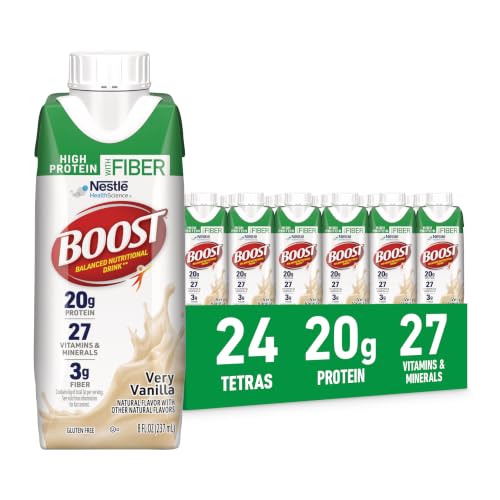
The Very Vanilla flavor is BOOST’s quietest option, the one you reach for when chocolate feels too heavy first thing in the morning. Each 8 fl oz bottle carries the same 20 grams of protein, 3 grams of fiber, and 27 vitamins and minerals as the rest of the BOOST High Protein line. The 240-calorie load makes it a genuine meal replacement rather than a quick pick-me-up.
Shoppers who don’t love the bolder chocolate or strawberry options tend to settle on vanilla for everyday use. The flip side is that very mild flavor can come across as slightly bland, which is the trade-off when you avoid strong sweetness. The 24-pack size is built for daily drinkers.
The Case For It
- Mild vanilla flavor suits sensitive palates and morning routines.
- 20 grams of protein supports sustained energy across the morning.
- Same vitamin and mineral profile as the rest of the BOOST High Protein line.
Soft Spots
- Flavor can read as bland compared to chocolate or strawberry options.
- Dairy base rules it out for lactose-sensitive drinkers.
Whose Shelf It Belongs On
Daily drinkers who prefer a mild vanilla flavor for breakfast routines and want protein plus energy in a single ready-to-drink bottle.
Where A Sibling Pick Shines
You want a fruitier shake. BOOST Creamy Strawberry covers the same nutritional profile with a brighter flavor.
Creamy Strawberry rounds out the BOOST High Protein lineup with a fruit-forward flavor that splits the difference between the chocolate and vanilla options. Like its siblings, the 8 fl oz bottle carries 20 grams of protein, 3 grams of fiber, 27 vitamins and minerals, and 240 calories. It’s a useful pick when households want to keep flavor variety in the fridge without stocking three different 24-packs.
For shoppers who find chocolate too rich and vanilla too plain, strawberry is the middle ground. The dairy base is the same caveat as the rest of the line, so lactose-sensitive drinkers will need to look at the BOOST plant-based options instead. In most kitchens, the strawberry bottle works for both breakfast routines and post-workout recovery.
Points In Its Favor
- Fruitier flavor profile works well for households splitting flavor preferences.
- Same high-protein, high-fiber nutritional base as the rest of the BOOST line.
- 24-pack format keeps a steady supply for daily drinkers.
Details To Watch
- Dairy base rules it out for lactose-sensitive drinkers.
- Strawberry flavor leans sweet, which isn’t the right match for shoppers who prefer tart profiles.
Who Should Grab It
Households wanting flavor variety and daily drinkers who prefer strawberry over chocolate or vanilla nutritional shakes.
A Better Fit Elsewhere
You want a fizzier, lighter format. V8 Energy Pomegranate Blueberry offers a juice-based lift with moderate caffeine.
Choosing Energy Drinks With Real Nutritional Value
Caffeine strength and ingredient list are the two numbers worth memorizing before you add anything to your cart. A standard energy drink hovers around 80 mg of caffeine per 8 fl oz can, which is roughly the same as a home-brewed cup of coffee. Functional drinks like CELSIUS push that closer to 200 mg, so pacing matters more than flavor. Sugar-conscious shoppers should scan for “no added sugar” and check whether the source is artificial sweeteners or natural juice sugars, since the label language can be misleading.
Reading Beyond The Front Label
Front-of-can language tends to lean on broad lifestyle claims. The nutrition panel and ingredient list do the real work. Look for short ingredient lists, B-vitamin coverage, and the absence of high-fructose corn syrup if that matters to you. The “natural flavors” line item is worth understanding too: it’s an umbrella term that hides proprietary blends, so a drink with very few listed ingredients is usually a more transparent pick.
Matching Format To Routine
Cans work for grab-and-go, powder tubes for travel and the gym, and ready-to-drink shakes for breakfast replacement. Frequent flyers and hikers tend to favor powder because empty tubes pack down. Office workers and students usually default to cans because the format is faster. Decide based on when and where you’ll actually drink it, not on which label looks flashiest.
Balancing Energy And Fullness
Traditional energy drinks deliver caffeine with little to no protein or fiber, so they pair with snacks. Nutritional shakes like BOOST pack protein and fiber alongside the energy, so they replace snacks. The right pick depends on whether you need a lift or a meal. Mixing the two across a week is fine, but tracking your total daily caffeine keeps things steady.
Considerations Across These Picks
Pitfalls Shoppers Hit
The first misstep is treating “energy drink” and “nutritional drink” as interchangeable. They serve different purposes: energy drinks boost caffeine, while nutritional shakes cover protein and fiber. Skipping the caffeine count per can is another common miss, since some 16 oz options push well past 200 mg in a single serving. Finally, shoppers sometimes assume “sugar-free” means “free of all sweeteners,” when the product may still rely on artificial or natural non-sugar sweeteners.
Why Top Tier Costs More
Higher-tier functional drinks like CELSIUS include vitamins, cleaner sweetener profiles, and certifications like non-GMO and vegan. The extra production steps and ingredient sourcing add to the cost, but for shoppers with dietary restrictions, that upgrade pays off. For casual drinkers, mainstream cans like Red Bull Sugarfree deliver a similar caffeine lift at a friendlier price, so the upgrade is only worth it when the extras match your needs.
Frequently Asked Questions
How much caffeine is in a typical energy drink?
Most standard 8.4 fl oz energy drinks contain about 80 mg of caffeine, similar to a cup of home-brewed coffee. Functional options like CELSIUS can run much higher, closer to 200 mg per 12 fl oz can.
Are sugar-free energy drinks safe to drink every day?
Sugar-free energy drinks remove the sugar load, but the caffeine content is still active. Daily consumption is generally accepted for healthy adults in moderation, though the FDA recommends capping daily caffeine intake.
Do energy drinks count as nutritional supplements?
Traditional energy drinks are beverages, not supplements. Nutritional shakes like BOOST are positioned as meal replacements with added vitamins and minerals, which is a different category with different serving expectations.
Can I mix energy drinks with workout recovery drinks?
It’s possible, but the caffeine in energy drinks can work against relaxation goals in the evening. Many athletes separate the two: a caffeinated can before training and a protein or electrolyte drink after.
What ingredients should I avoid in energy drinks?
Common ingredients some shoppers choose to avoid include high-fructose corn syrup, artificial colors, and excessive caffeine per serving. Reading the full ingredient list, not just the front label, is the most reliable way to know what you’re drinking.
The Takeaway
The healthiest energy drink is the one that fits your routine, your caffeine tolerance, and your ingredient preferences. Cans like Red Bull Sugarfree and Monster Ultra Rosa cover the everyday lift, powders like Zipfizz handle travel, and shakes like BOOST pull double duty as meal replacements. Pick the format that matches your day, scan the nutrition panel rather than the front label, and rotate flavors so the routine stays fresh.
