

Walking the dairy aisle feels different than it did ten years ago. Plant-based milks now command entire shelves, and almond sits near the top of that pile for good reason: it’s light, neutral, easy on cereal, and approachable for anyone easing off dairy. The catch is that “almond milk” covers a wide range of textures, sweetness levels, and ingredient philosophies, and the wrong carton can sour a whole morning routine.
The list below pulls together ten cartons and shelf-stable options that each solve a slightly different problem. Some are built for daily cereal and coffee, others for pantry stocking, and a couple for a treat-style pour over dessert. Read the use cases, match them to your habits, and grab the one that actually fits how you drink.
The Essentials At A Glance

Almond Breeze Vanilla Almond Milk, 96 oz

Almond Breeze Blue Diamond Almond Milk, Original, 64 Fl Oz
Silk Unsweet Vanilla Almond Milk, 64 fl oz

Silk Organic Unsweetened Soy Milk, 64 fl oz

Silk Soymilk Original, 64 fl oz

Silk Shelf-Stable Unsweetened Almond Milk, 6 Quarts

Silk Vanilla Almond Milk, 64 fl oz
Silk Original Almond Milk, 64 fl oz

Silk Dark Chocolate Almond Milk, 64 fl oz

MALK Unsweetened Almond Milk, 32 oz (6-pack)
Taking A Closer Look At The Options
A 96-ounce carton of vanilla almond milk solves one specific problem: the household that goes through milk faster than it can remember to buy it. Almond Breeze leans on real California almonds, which gives the vanilla variant a slightly rounded, nutty sweetness rather than a sharp sugary edge. It’s fortified with vitamin D and vitamin E, and the brand states it carries 50% more calcium than dairy milk, so nutrition isn’t an afterthought.
The flavor lands well in coffee, hot cereal, and even pancake batter, and the larger carton means fewer last-minute grocery runs. Compared with the smaller Original Almond Breeze carton below, this one trades the neutral pour for a more dessert-leaning profile.
Practical Advantages
- Half-gallon-plus size cuts down on shopping trips for busy families.
- Vanilla flavor profile sweetens cereal, smoothies, and coffee without extra sugar at the table.
- Calcium and vitamin fortification support daily nutritional needs for kids and adults alike.
- Free from dairy, soy, and lactose, which suits common allergen profiles.
Things To Consider
- The 96-ounce size demands solid fridge space; small-apartment dwellers may struggle to store it.
- Once opened, the carton typically has a shorter usable window than shelf-stable options, so a household that sips slowly may waste some.
Feature Snapshot
Right Fit For
Large families or anyone who treats almond milk as a daily kitchen staple and wants the biggest carton on the shelf.
Where Another Pick Suits Better
Solo drinkers who pour a small splash each morning will find the 64-ounce Almond Breeze Blue Diamond Original a better size match.
Blue Diamond’s Original almond milk is the kind of carton that quietly fits into almost any routine. It uses real Blue Diamond almonds, runs at about 30 calories a serving with no added sugar, and tastes clean enough to disappear into savory cooking while still holding its own in a glass. The half-gallon size lands in the sweet spot for two-person households.
Where the vanilla Almond Breeze leans sweet, this one plays neutral. It whips well into a creamy soup base, blends into smoothies without overpowering fruit, and pours black-coffee friendly, which is why so many people keep it as a default.
Real-World Strengths
- Low 30-calorie serving and no added sugar make daily use guilt-free.
- Neutral flavor handles both sweet and savory applications without stealing the show.
- Half-gallon size matches typical fridge space and typical consumption pace.
- Pours smoothly into coffee without curdling, a real plus for daily black-coffee drinkers.
Worth Noting
- No calcium or vitamin D fortification is listed in the source, so nutrition pairing matters.
- Almond-base texture feels thinner than Silk’s creamier line, which some palates notice in lattes.
Best Suited To
Two-person households and solo drinkers who want a neutral, no-sugar almond milk for daily cereal, coffee, and cooking.
Look Elsewhere When
Coffee lovers chasing a thicker microfoam should reach for the Silk Original Almond Milk in the same half-gallon size.
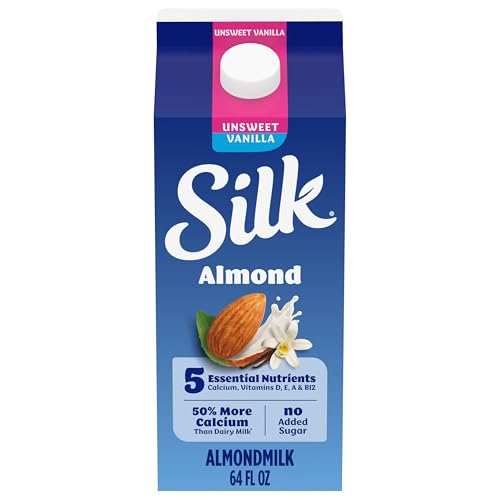
Silk’s Unsweet Vanilla is a clever middle path. You get the aroma and warmth of vanilla without the sugar load, which makes it a quiet hero in coffee and tea. The brand also fortifies it with 50% more calcium than dairy milk, and the carton is free from soy, casein, eggs, gluten, and MSG, covering the most common dietary triggers in one pour.
For most coffee drinkers, this hits a sweet spot that pure originals can’t: enough flavor to cut bitterness, light enough to disappear into a latte. It also reads as a comfort pour over low-sugar granola or bran cereal.
The Upside
- Vanilla scent adds warmth to coffee and tea without adding sugar.
- Calcium fortification at 50% more than dairy supports daily intake goals.
- Allergen-friendly formula skips the most common dairy and gluten triggers.
Points To Note
- Almond-base liquids can separate in very hot drinks, so a quick stir may be needed.
- Vanilla taste is mild; shoppers expecting a strong dessert note may want Silk’s Vanilla Almond Milk instead.
Core Details
Who Will Love This
Low-sweet coffee drinkers and home baristas who want vanilla aroma without pouring sugar into their cup.
Skip It When
Anyone wanting a true dessert-style vanilla milk should look at Silk Almond Milk Vanilla further down the list.
Technically a soy milk, but it earns a place in any almond-milk roundup because it solves a problem almond bases can’t match: protein. Silk’s Organic Unsweetened Soy delivers 8 grams of complete plant protein per serving, a number almond milk rarely approaches. The formula is vegan, unsweetened, and built around whole-harvested soybeans.
The texture is naturally creamier than almond, which means it froths more like dairy in a steam pitcher. Post-workout smoothies, savory cream sauces, and even a swap for half-and-half in mac and cheese all benefit from that body. Where almond milk feels like a coffee accent, soy feels like a structural ingredient.
Why It Works Well
- 8 grams of complete plant protein per serving, well above most almond milks.
- Unsweetened formula keeps the carbohydrate count low.
- Creamier body holds up in coffee, smoothies, and cooking better than almond bases.
Trade Offs
- Soy is a known allergen, so it’s off the table for households avoiding it.
- The flavor is more beany than almond milk, which some palates find earthy in cereal.
Feature Snapshot
The Right Fit
Fitness-focused shoppers and home cooks who want protein plus a creamy texture that almond milks rarely match.
Reach For A Different Pick When
Anyone avoiding soy or chasing the light, nutty taste of almond should choose Almond Breeze Blue Diamond Original from earlier in the list.
The original Silk Soymilk is the kind of carton that quietly anchors a fridge for years. The formula is Non-GMO Project Verified, carries 50% more calcium than dairy, and offers 8 grams of plant protein per serving. Compared to the unsweetened version, this original carries a touch of sweetness that smooths out coffee and works well in baking where you want a hint of sugar but not a candy profile.
It also delivers the same structural creaminess that makes soy a kitchen workhorse, meaning it holds together in a bechamel, doesn’t weep in a casserole, and steams into a recognizable microfoam in a proper pitcher.
The Practical Payoff
- 50% more calcium than dairy supports bone health without the lactose.
- 8 grams of plant protein per serving, well above most almond options.
- Non-GMO Project Verified label adds a transparency layer for label-readers.
- Versatile in cooking: holds in sauces, baking, and coffee without breaking.
Honest Caveats
- Light sweetness may not suit strict low-sugar households.
- Soy is a common allergen, so it isn’t an option for every family.
Built With In Mind
Home bakers and coffee drinkers who want a creamy, protein-rich plant milk that doesn’t disappear into the background.
Swap It Out When
Anyone prioritizing a clean, almond-forward flavor should switch to Silk Original Almond Milk later in the list.
Shelf-stable almond milk changes the math on how much fridge space you really need. This Silk pack arrives as six quart-size cartons, no refrigeration required until you open one, which means you can stash a few in a pantry closet, an office kitchen, or a dorm without sacrificing shelf real estate. The unsweetened formula skips the added sugar and keeps the ingredient list short, and the carton carries a Non-GMO Project Verified seal.
The body is a touch lighter than refrigerated almond milk, but the convenience factor is hard to beat. For homes that go through milk slowly, the lower spoilage risk alone is worth the trade.
A Favorable Mix
- Six-pack shelf-stable format means less fridge crowding and longer unopened storage life.
- No added sugar keeps the calorie count down for daily drinkers.
- Individual quart cartons are easy to share between household members or workspaces.
Points To Keep In Mind
- Shelf-stable almond milk tends to taste slightly different from refrigerated versions, especially straight from the pack.
- Once opened, it still requires refrigeration and the same short window as any other carton.
Feature Card
Whose Shelf It Belongs On
Apartment dwellers, dorm rooms, and home offices that need milk on hand without devoting fridge square footage to a giant jug.
Where Another Pick Suits Better
Heavy daily drinkers who go through a half gallon in a few days will get more value from the refrigerated Almond Breeze Vanilla at the top of the list.
This is the Silk take on a sweet vanilla almond milk, blending three kinds of almonds for a richer body and keeping the calorie count at around 80 per serving. The vanilla flavor is forward and dessert-friendly, which makes it a natural choice for smoothies, fruit bowls, and any pour that benefits from a hit of sweetness without a sugar-bomb ingredient list.
It’s also a strong option for households with kids who are skeptical about switching from dairy, since the familiar vanilla note smooths the transition. Fortified with 50% more calcium than dairy and free from soy, lactose, gluten, casein, eggs, and MSG, it covers most of the common dietary concerns in one carton.
Noteworthy Benefits
- Three-almond blend produces a noticeably creamier texture than single-almond competitors.
- 80 calories per serving keeps the sweet flavor from pushing the calorie count too high.
- Allergen-friendly formula suits picky households and label-readers.
- 50% more calcium than dairy fortifies the daily diet without dairy’s lactose.
A Few Limitations
- The vanilla sweetness is stronger than the Unsweet Vanilla earlier in the list, so it doesn’t disappear into savory dishes.
- Refrigerated shelf life is short once opened; smaller households may pour out the last bit.
Made For
Families with kids and smoothie fans who want a sweet, creamy almond milk that handles dessert duty without being heavy.
A Better Fit Elsewhere
Strict low-sugar shoppers should pick up the Silk Unsweet Vanilla almond milk a few entries above instead.
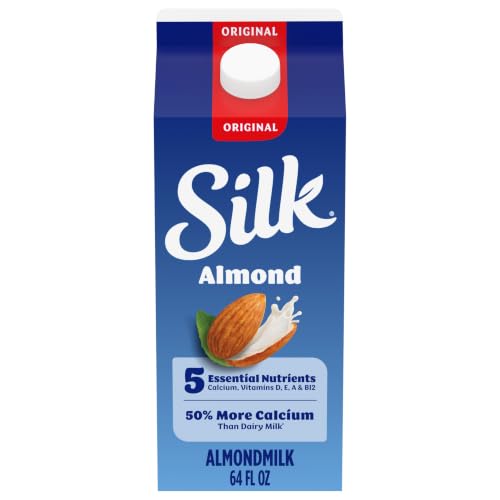
Silk’s Original Almond Milk is the brand’s neutral, easy-drinking workhorse. The carton uses a three-almond blend, comes in at around 60 calories per serving, and is free from lactose, gluten, dairy, soy, casein, eggs, carrageenan, and MSG. Fortified with 50% more calcium than dairy and a useful dose of vitamin D, it covers most nutritional bases without flavor interference.
The real story is how often it works: it pours into tea without dominating, blends into a creamy pasta sauce, and sits quietly next to granola in a bowl. Compared with Almond Breeze Original, the body feels slightly creamier, which some shoppers prefer for flat whites and chai.
The Value In It
- Neutral flavor profile handles both savory and sweet applications without competing.
- Three-almond blend gives it a richer body than single-almond competitors.
- 60 calories per serving and no added sugar suit low-calorie routines.
- No carrageenan, a detail label-readers often look for.
Room For Improvement
- Almond-based texture doesn’t froth as well as soy for proper latte art.
- Flavor is mild, so people who want a more pronounced almond taste may need to add their own extract.
Feature Snapshot
Perfect Match For
Multi-purpose households that want one carton for cereal, coffee, and cooking without flavor overload.
Consider Something Else When
Coffee purists chasing barista-style microfoam should reach for the soy options in the middle of the list.
Chocolate almond milk lives in a different lane than the rest of the list, and Silk’s dark chocolate version leans adult: rich cocoa notes, a balanced sweetness, and around 100 calories per serving, which the brand notes carries 25% less sugar than typical dairy chocolate milk. It uses the same three-almond blend as the other Silk almond cartons, which gives it a creamier body than thinner competitors.
This is the carton to keep on hand for after-dinner pours, weekend pancakes, and anytime you want dessert without leaving the kitchen. Fortified with calcium and vitamin D, it covers nutrition while doing the work of a treat.
Key Advantages
- Dark chocolate profile is richer and less syrupy than typical chocolate milk.
- 25% less sugar than dairy chocolate milk, per the brand’s own comparison.
- Three-almond blend gives it a creamy mouthfeel that handles heating and pouring well.
Trade-Offs To Consider
- Chocolate flavor makes it useless for savory cooking; this is a single-purpose carton.
- Even with reduced sugar, the sweetness level won’t suit strict low-sugar households.
Who Should Grab It
Late-night pourers and families with kids who want a chocolate milk that doesn’t taste like a candy bar.
Look Elsewhere When
Anyone wanting a versatile daily milk should pick the Silk Original Almond Milk one entry up instead.
MALK sits at the minimalist end of the almond milk shelf. The ingredient list is three items: organic almonds, filtered water, and Himalayan pink salt. No gums, no fillers, no emulsifiers, which is the line in the sand for a growing group of clean-label shoppers. The 32-ounce cartons ship shelf-stable, so they go straight into the pantry until you crack one open.
That bare-bones approach also means a thinner body and a more pronounced almond flavor than mainstream brands. The trade-off is honest: if you want the cleanest pour on the list, you give up the cloudier mouthfeel that gums typically create.
Positive Points
- Three-ingredient formula is one of the cleanest on the almond milk shelf.
- Organic almonds and Himalayan pink salt add a transparent sourcing story.
- Shelf-stable packaging reduces waste and makes pantry stocking easy.
- Six-pack format spreads cost across multiple weeks of use.
Where It May Fall Short
- No gums means a thinner texture that some shoppers compare to nut water.
- Price per ounce runs higher than mainstream brands with longer ingredient lists.
The Right Fit
Clean-label shoppers and minimal-ingredient households who want to see every component on the carton before pouring.
Where A Sibling Pick Shines
Anyone who wants creamier body without reading an ingredient panel can stay with the Silk Original Almond Milk earlier in the list.
Shopping For The Right Almond Milk For Your Routine
The almond milk aisle is wider than it looks, and the right carton depends on how you actually pour. A few attributes carry more weight than branding, and skipping them often leads to a carton that ends up half-finished in the back of the fridge.
Protein content varies wildly across plant milks, and almond sits on the low end at around 1 gram per serving, while soy options in this list deliver closer to 8 grams. Shoppers who rely on milk for morning satiety or post-workout recovery tend to do better with a soy base or a fortified almond that leans on added protein.
Sweetness level changes how a carton performs in recipes. Unsweetened formulas disappear into savory cooking and let you control the sugar yourself. Vanilla and original sweetened versions, by contrast, suit cereal, smoothies, and dessert pours, where a touch of sugar is part of the point. Reading the front label for “unsweetened” versus “original” saves the guesswork.
Allergen and additive transparency matters more than ever. Some shoppers avoid carrageenan, some avoid gums, and some avoid any ingredient that isn’t a whole food. Cartons like MALK strip the formula down to three ingredients, while Silk and Almond Breeze lean on gums and emulsifiers to deliver a creamier, more uniform body. Both approaches have merit; the right one depends on what you want out of the carton.
Shelf-stable versus refrigerated is a logistics call, not a quality one. Pantry cartons last longer unopened and free up fridge space, but they typically taste a touch different from refrigerated versions. Heavy daily drinkers benefit from refrigerated half gallons; light drinkers and small households often get more out of a shelf-stable multi-pack.
What These Cartons Actually Tell You
Where Shoppers Go Wrong
The most common slip is buying by the brand you remember without checking the formula. Two Almond Breeze cartons on the same shelf can carry very different calorie counts, and the same goes for Silk’s vanilla versus unsweet vanilla. Taking thirty seconds to read the front label, especially the sweetener and protein lines, prevents the most common complaint: a carton that doesn’t fit your actual routine.
Another trap is treating all shelf-stable almond milks like they’re identical. Some multi-packs use aseptic packaging (sterilized, sealed cartons) that holds for months, while others require refrigeration even before opening. MALK and Silk’s shelf-stable line both stay pantry-safe, but the storage window and post-opening behavior differ between brands.
What Separates Premium From Basic
The premium tier in this category isn’t about glossy packaging. It tends to mean shorter ingredient lists, organic almond sourcing, and fewer stabilizers. Cartons like MALK sit there because they choose transparency over texture, and shoppers who read labels notice the difference.
Mid-tier brands earn their place by balancing clean ingredients with the creamier body that gums provide. That’s where most of the Silk and Almond Breeze options land, and for most households, that balance hits the sweet spot. The upgrade is worth it for clean-label shoppers, and less so for anyone who values a thicker pour above ingredient transparency.
Frequently Asked Questions
How long does opened almond milk last in the fridge?
Most opened cartons hold quality for roughly 7 to 10 days when refrigerated promptly and tightly recapped. Smell and taste are reliable freshness cues, so any sour or off note means it’s time to toss it.
Is almond milk nutritionally comparable to dairy milk?
Almond milk runs lower in protein than dairy, but fortified versions close the gap on calcium and vitamin D. Whole-food shoppers sometimes prefer almond bases for the lower calorie count, while protein-focused drinkers often reach for soy alternatives.
Can almond milk be used in coffee without curdling?
Most modern almond milks are formulated to resist curdling in hot coffee, especially the creamier Silk and refrigerated Almond Breeze options. Cold almond milk poured into very hot coffee works better than cold dairy in many cases.
What’s the difference between shelf-stable and refrigerated almond milk?
Shelf-stable versions use aseptic packaging to stay safe at room temperature until opened, while refrigerated cartons assume a colder storage life. Once opened, both behave the same in the fridge.
Does vanilla almond milk contain a lot of added sugar?
Vanilla formulas vary; some are sweetened with several grams of added sugar, while options like Silk’s Unsweet Vanilla deliver the vanilla note without it. Reading the nutrition label keeps the surprise out of breakfast.
Closing Remarks
The best almond milk is the one that matches how you pour, what you cook, and how much fridge space you actually have. Pull a carton from this list based on the routine you already live, and the morning glass, the weeknight pasta, and the late-night treat all stop being separate problems. Taste preferences settle in after a few pours, so give a new formula a fair week before deciding it isn’t for you.
