

A solid dry yeast is the difference between a tall, tender loaf and a dense brick. Whether you bake sourdough-adjacent breads, weeknight pizza, or sweet rolls, the right packet or jar saves time, money, and the occasional baking disaster. The ten picks below cover the everyday staples, the bulk storage options, and a specialty strain for home winemakers.
An Overview Of The Picks

Fleischmann’s Instant Dry Active Yeast 16 oz
Fleischmann’s Active Dry Yeast 0.75 oz Pack of 9

Fleischmann’s Active Dry Yeast 0.25 oz 9 Count

Anthony’s Active Dry Yeast Packets 42-Count

Fleischmann’s Rapid Rising Dry Yeast 4 oz

Fleischmann’s Active Dry Yeast Strip 9-Count

Lalvin 71B Active Dry Wine Yeast 12-Pack

Quay Naturals Instant Dry Yeast 8 oz

Bob’s Red Mill Active Dry Yeast 8 oz Pack of 2

Red Star Active Dry Yeast 16 oz
What Each Pick Brings To The Table
Fleischmann’s 16-ounce instant dry yeast is the kind of jar that quietly anchors a busy kitchen. The instant format skips the warm-water proofing step traditional active yeast requires, so dough goes straight from mixing bowl to rise. For anyone who bakes two or three times a week, the bigger jar means fewer last-minute grocery runs and lower per-bake cost.
Compare that to the smaller packet-based options later in this list, and the difference is convenience at scale. The granular texture blends easily into flour without clumping, which matters for thin-crust pizza and enriched doughs alike.
Practical Pluses
- Skips proofing, saving roughly 10 minutes per bake
- 16 oz jar covers months of regular home baking
- Fine granule size disperses evenly through dry ingredients
- Consistent rise performance across bread, rolls, and pizza
Things To Weigh Up
- Once opened, long-term freshness depends on a tightly sealed jar kept cool
- Instant yeast behaves differently in some traditional recipes calling specifically for active dry
Key Specs
Right Fit For
Home bakers who run a stand mixer weekly and want a single jar that handles pizza, loaves, and cinnamon rolls without measuring fussy little packets.
Where Another Pick Suits Better
Bakers who only bake once a month and prefer pre-measured single-use strips should reach for Fleischmann’s Active Dry Yeast Strip 0.25 oz 9-Count instead.
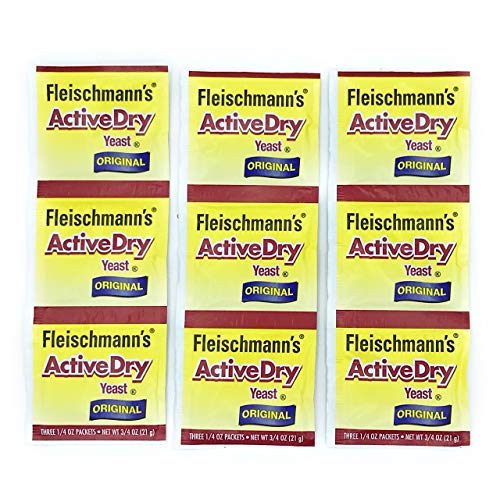
The 0.75-ounce packet is a less common size, and that is precisely why it earns a spot here. Each foil packet covers roughly three standard loaves, which suits small-batch bakers who don’t want to commit to a giant jar. The active dry format calls for a quick proof in warm water, a small ritual that some home bakers actually prefer.
Stability is the quiet win. Fleischmann’s has built a reputation for consistency since 1945, and these packets keep well in a cool pantry for the full shelf life printed on the box.
Real Benefits
- Larger per-packet portion means fewer packets to open per bake
- Foil-lined packets protect yeast from moisture and air
- Active dry style suits traditional bread recipes calling for proofing
- Long-trusted brand with consistent performance
Points To Note
- Requires a proofing step, which adds about 5 to 10 minutes
- Once a foil packet is opened, any leftover yeast should be used promptly or sealed tightly
Feature Snapshot
Made For
Bakers who follow older bread recipes calling specifically for active dry yeast and want a packet that covers more than a single loaf.
Look Elsewhere When
Cooks who want a no-proof workflow should look at Quay Naturals Instant Dry Yeast 8 oz, which blends straight into dry ingredients.
The 0.25-ounce single-use packet is the classic format most home bakers grew up with. Each packet is pre-measured for roughly one standard loaf, so there is no spooning, no guessing, and no half-used jar losing potency in the back of the pantry. Three tear-apart strips of three packets each keep things tidy in a small kitchen drawer.
For new bakers especially, the pre-measured format removes a real point of failure. A 0.25-ounce packet is the amount called for in most bread, pizza, and roll recipes written before instant yeast became standard.
Notable Gains
- Pre-measured packets remove the measuring step entirely
- Strip format stays organized in a drawer or basket
- Active dry yeast suits traditional dough recipes
- Compact box fits in small pantries and apartments
Trade Offs
- Proofing in warm water is still required before mixing
- Per-bake cost runs higher than bulk jar options like the Red Star 16 oz
Whose Shelf It Belongs On
Beginner bakers and anyone baking once or twice a month who wants foolproof portioning without buying a large jar.
Swap It Out When
Bakers running a stand mixer two or three times a week will get more mileage from Fleischmann’s Instant Dry Active Yeast 16 oz, which lowers per-bake cost noticeably.
Anthony’s positions this pack of 42 active dry yeast packets squarely at allergen-conscious households. The product is batch tested and verified gluten free, which matters for anyone managing celiac disease or gluten sensitivity at home. A 42-count box also stretches a long way, covering most of a year of weekly baking.
The packets themselves are the standard 0.25-ounce single-use size, the same format that makes beginners’ lives easier. Active dry means a short proofing step is part of the workflow, and Anthony’s recommends using the yeast in breads, pizza crusts, doughnuts, and cinnamon rolls.
Real-World Strengths
- Batch-tested gluten free for allergen-sensitive bakers
- 42-packet count covers a long stretch of regular baking
- Single-use packets lock in freshness until needed
- Works across bread, pizza, doughnuts, and sweet rolls
Honest Caveats
- Bulk box requires dedicated pantry space
- Active dry format still needs warm-water proofing
Built With In Mind
Gluten-free households and home bakers managing celiac or sensitivity who want a verified product in pre-measured single-use packets.
Reach For A Different Pick When
Bakers without gluten concerns can save with Bob’s Red Mill Active Dry Yeast 8 oz Pack of 2, which also runs a dedicated gluten-free facility but in a resealable bulk format.
Rapid rising yeast sits between standard active dry and instant in terms of workflow. It cuts a traditional two-rise bread recipe down to a single rise, shaving real time off weeknight baking. The 4-ounce jar is a mid-size option that fits somewhere between the giant 16-ounce containers and the small packet boxes.
The trade-off worth knowing: rapid rising yeast is engineered for speed, and some bakers find the flavor development slightly less complex than a slow-proofed dough. For sandwich loaves, dinner rolls, and quick pizzas, the difference is barely noticeable.
Useful Strengths
- Single-rise performance cuts bread-making time significantly
- Mid-size 4 oz jar suits moderate baking frequency
- Reliable brand with a long history
- Works in both bread machines and stand mixer recipes
Less Ideal Details
- Single-rise format produces less developed flavor than a slow, double rise
- Not a direct substitute in recipes calling for active dry with a long first proof
Who It Suits Best
Express bakers and bread-machine users who value a faster turnaround over maximum flavor depth in their everyday loaves.
A Better Fit Elsewhere
Traditional bakers chasing complex flavor should grab Fleischmann’s Active Dry Yeast 0.75 oz Pack of 9, which works for longer, slower rises.
Fleischmann’s ties its heritage to 1868, when Charles and Max Fleischmann built America’s first commercial yeast. The strip format here is a small but useful update on the classic foil packet: nine 0.25-ounce sachets connected in tear-off strips, so you can grab one packet without disturbing the rest. The active dry style still calls for a warm-water proof.
During World War II, Fleischmann’s Laboratories specifically developed shelf-stable active dry yeast so soldiers could bake bread without refrigeration. That stability carries forward into today’s packets, which keep well in a standard pantry.
Standout Benefits
- Tear-off strip keeps the remaining packets sealed until needed
- Pre-measured 0.25 oz suits most standard recipes
- No refrigeration required before opening
- Backed by a brand with a documented 19th-century origin
Worth Noting
- Proofing step adds a few minutes to the workflow
- Per-bake cost sits above the bulk jar options like Red Star 16 oz
Who Will Love This
Multi-bake households that want single-use convenience plus the visual organization of a connected strip sitting on the counter or in a drawer.
Consider Something Else When
Strict gluten-free bakers should look at Anthony’s Active Dry Yeast Packets 42-Count, which is verified gluten free.
The Lalvin 71B is a specialty strain aimed at home winemakers rather than bread bakers. Sold by North Mountain Supply in a 12-sachet pack, it targets young, fruit-forward wines like Beaujolais-style reds, rosé, and lighter white styles. Where bread yeast ferments dough to trap CO2, wine yeast ferments sugar into alcohol with a different flavor profile.
The 71B strain is known for naturally reducing harsh malic acid during fermentation, which rounds out the mouthfeel in finished wine. It performs across a 59 to 86 degrees Fahrenheit range, which fits most home fermentation setups without specialized temperature control.
What Pays Off
- Specialty strain for fruit-forward and nouveau-style wines
- Naturally softens malic acid for a rounder finish
- Tolerates a wide 59 to 86 degrees Fahrenheit range
- 12-sachet pack covers a full year of small-batch winemaking
Practical Considerations
- Not interchangeable with bread yeast in any baking recipe
- Requires proper sanitation and a measured sugar source to perform as intended
Quick Facts
Perfect Match For
Home winemakers making fruit-forward wines from grapes, fruit kits, or country wines who want a softer, rounder mouthfeel in the finished bottle.
Not Your Match When
Anyone looking to bake bread should skip this and grab Fleischmann’s Instant Dry Active Yeast 16 oz, which handles loaves, rolls, and pizza.
Quay Naturals targets a specific set of dietary needs with this 8-ounce instant dry yeast. It’s labeled gluten free, non-GMO, and vegan, which covers the three labels that most often drive specialty yeast purchases. The instant format skips the proofing step, so the yeast goes directly into the dry ingredients.
The 8-ounce jar is a comfortable middle-ground size, smaller than the 16-ounce workhorses but bigger than a packet box. For a household baking once or twice a week with dietary restrictions, it usually lasts about two to three months.
Well-Handled Touches
- Skips proofing, blending straight into flour for a faster workflow
- Gluten free, non-GMO, and vegan labels cover the most common dietary checks
- Suited to bread, pizza, bagels, pretzels, and cinnamon rolls
- Mid-size 8 oz jar fits well in a typical pantry
Smaller Limitations
- Once opened, the jar should be sealed tightly and stored cool to maintain potency
- Per-ounce cost runs higher than larger 16-ounce workhorses like Red Star 16 oz
Best Suited To
Home bakers managing gluten, GMO, or animal-product restrictions who want a fast-acting instant yeast in a manageable jar size.
Where A Sibling Pick Shines
Bakers without strict dietary labels who bake more frequently should look at Bob’s Red Mill Active Dry Yeast 8 oz Pack of 2, which delivers more total yeast for the shelf space.
Bob’s Red Mill ships this active dry yeast in two 8-ounce resealable stand-up bags, totaling a full pound. The resealable format is a small but real quality-of-life improvement over a rigid jar, because the bag collapses as you use the yeast, limiting air exposure. Bob’s also manufactures the product in a dedicated gluten-free facility and runs R5-ELISA testing to verify it.
Stored in the refrigerator, the unopened bags can hold for up to a year. For a household baking through a sourdough phase, a holiday pie crust, and weekly sandwich loaves, the supply covers most of a year without restocking.
Practical Advantages
- Two 8 oz resealable bags limit air exposure as you use them
- Gluten free, vegan, vegetarian, paleo friendly, and kosher pareve
- Manufactured in a dedicated gluten-free facility with ELISA verification
- Refrigerator storage extends usable life up to a year
Where It May Fall Short
- Active dry format requires a warm-water proofing step before mixing
- Larger total volume assumes steady baking use to consume before freshness drops
Key Product Details
Who Should Grab It
Heavy home bakers who want bulk supply, allergen-friendly labeling, and a resealable bag format that keeps yeast fresh through months of regular use.
Skip It When
Bakers who want a no-proof workflow should pick Quay Naturals Instant Dry Yeast 8 oz, which blends straight into dry ingredients.
Red Star’s 16-ounce (one-pound) active dry yeast arrives in a vacuum-sealed brick, the old-school format that serious home bakers have trusted for decades. The vacuum pack locks out oxygen and moisture, both of which slowly kill yeast viability, so an unopened brick holds its potency for a long time on a cool pantry shelf.
Many bakers specifically prefer active dry over instant for the slightly deeper flavor a warm-water proof develops in the dough. Red Star fits that workflow at a bulk-friendly per-bake cost, which matters once you start baking two or more loaves a week.
Points In Its Favor
- Vacuum-sealed brick extends unopened shelf life
- One-pound size lowers per-bake cost for frequent bakers
- Active dry style suits traditional proof-and-rise recipes
- Long-trusted brand in American home baking
Worth Bearing In Mind
- Requires a warm-water proofing step before mixing
- Once the vacuum seal is broken, transfer to a sealed container and refrigerate for best results
The Right Fit
Frequent-batch bakers running through a loaf or two a week who want traditional active dry performance at a lower per-bake cost.
Consider Something Else When
Bakers with strict gluten-free needs should pick Bob’s Red Mill Active Dry Yeast 8 oz Pack of 2, which is verified gluten free in a dedicated facility.
What Matters Most Before Choosing Dry Yeasts
Active Dry Versus Instant Format
Active dry yeast, the traditional format, requires a short proof in warm water (about 100 to 110 degrees Fahrenheit) before mixing. Instant yeast skips that step and goes straight into flour. The two are often interchangeable in modern recipes, but older formulas sometimes assume active dry. Pick instant for speed, active dry for traditional flavor development.
Packet Versus Jar Versus Brick
Single-use packets (typically 0.25 oz) lock in freshness and remove the measuring step. Jars and resealable bags run cheaper per ounce but need a tight seal and cool storage after opening. Vacuum-sealed bricks like the Red Star 16 oz hold potency longest before opening but lose that edge once the seal is broken.
Dietary Labels And Cross-Contamination
Gluten-free bakers should look for batch-tested verification and ideally a dedicated facility, which Bob’s Red Mill and Anthony’s both offer. Vegan and non-GMO labels matter for households with broader dietary restrictions, and Quay Naturals covers all three on a single jar.
Storage Life And Frequency Of Use
A heavy weekly baker benefits from a 1-pound bulk option. A monthly baker is better off with packets that stay sealed until needed. Refrigeration after opening extends usable life across all formats, especially once the original airtight package is broken.
Key Considerations Across These Picks
Common Buying Slip Ups
The most frequent mistake is buying a giant jar for occasional baking. A 16-ounce container only stays potent if you use it up before the yeast loses activity. For monthly bakers, the per-bake cost of packets is actually the better deal once you factor in waste from a stale jar. The other pitfall is grabbing instant yeast for an older recipe that assumes proofing; the dough still rises, but the timing and hydration cues in the recipe can mislead you on doneness.
Where The Extra Money Goes
Premium-tier options like Bob’s Red Mill and Anthony’s charge more for verified gluten-free manufacturing and dedicated facilities, which matter for allergen households. Quay Naturals adds non-GMO and vegan labels plus a mid-size 8 oz jar. Specialty strains like Lalvin 71B exist in a completely different category, priced for winemaking rather than bread. For a typical household without dietary restrictions, the extra spend rarely translates to better rise, just narrower use-case fit.
