

Custom photo cookies, logo-topped cupcakes, and personalized treat boxes all start with the same thing: a sheet of paper that feeds cleanly through your printer and lands soft enough to eat. Finding the right edible paper or frosting sheet is half the battle, because the wrong thickness curls in the tray, smudges mid-print, or tastes like cardboard on top of a buttercream cookie. The ten picks below cover the main flavors of edible stock you will find for home printers, from potato-starch wafer sheets to sugar frosting sheets, so you can match the medium to the cookie.
The Essentials At A Glance

SENTRELA Edible Paper 25 Count A4 Sugar Sheets (Pack of 2)

paper2eat Printable Edible Wafer Paper Sheets (0.40 mm, 25 sheets)

E-Kongton 25pcs Edible Paper, 8.5″ x 11″ A4 Size, White

Oasis Supply 100 Piece Edible Wafer Paper Pack, 8″ x 11″
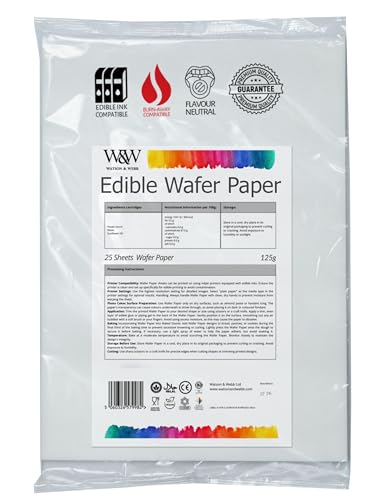
Watson & Webb Printable Edible Wafer Paper Sheets (0.35 mm, 25 Sheets)

paper2eat Frosting Sheets 8.5″x11″ 12ct White Edible Icing

YongEnShang A4 Edible Cake Transfer Paper, 11.7″x 8.3″

Oasis Supply 25 Piece O-Grade Wafer Paper Pack, 8″ x 11″

Oasis Supply Ultra Flexible Edible Icing Sheets, 8.5 x 11

Icinginks Superior THIN Edible Frosting Sheets, 8.5″ x 11″
A Closer Look At Each Pick
For most home bakers dipping into photo cookies for the first time, the SENTRELA edible paper is the easiest on-ramp. It ships as a pack of two A4 sheets, which gives you a spare to test color settings before committing your good ink. The sugar-sheet format lays flat on a buttercream surface and blends into the frosting within a few hours, so the printed edge disappears into the cookie.
Because the format matches standard A4 printers, you can design at full resolution and crop the printed area down to cookie-sized circles. Compared to the paper2eat wafer pick below, this sugar sheet handles full color more cleanly but tolerates less moisture on the cookie itself. You may find dry, set frosting is the safer surface for sharp edges.
What It Does Well
- Two-sheet starter format lets you practice with one and print the final with the other
- A4 sizing suits any standard home printer, no special tray needed
- Bright white surface holds full color well for photo-style cookies
- Sugar format softens into buttercream, hiding the cut edge naturally
- Works for cakes, cupcakes, and cookies without changing your design
Things To Consider
- Sugar sheets can curl at the edges in a dry room, so storing the unused sheet in a sealed bag helps
- Not a good match for very wet or glossy cookie glazes that need to be fully set
Feature Snapshot
Who It Suits Best
Newcomers printing photo-style cookies for birthdays, showers, and small events who want a forgiving sheet with extra spares for trial runs.
Where Another Pick Suits Better
Home bakers who want a plain, tasteless medium that does not soften into the frosting should consider the Watson & Webb wafer paper pick later in this list.
Wafer paper, sometimes called rice paper in older recipes, behaves very differently from a sugar sheet, and the paper2eat 0.40 mm sheets are the sturdiest example in this roundup. The thicker stock means the sheet keeps its shape on top of a cookie without melting in, and the vanilla aroma gives a faint background note rather than a blank one. For a batch of decorated cookies that need to sit on a dessert table for hours, this is a more forgiving choice than the SENTRELA sugar sheet.
You can cut it with scissors, a craft knife, or a small circle punch once the print is dry, and the edges stay clean. The medium is best on dry surfaces like fondant or set royal icing, so plan your cookie base accordingly. Most home cooks find 25 sheets is enough for a couple of dozen cookies at standard topper sizes.
Everyday Advantages
- 0.40 mm thickness resists curling better than thinner wafer stock
- Keeps its printed shape on dry fondant or set royal icing
- Cuts cleanly with scissors, punches, or a trimmer
- Gluten-free, dairy-free, and nut-free base ingredients suit a wide range of guests
Worth Noting
- Faint vanilla note is mild, but taste-sensitive bakers may prefer a tasteless stock
- Colors look slightly muted compared with sugar sheets, so bold designs work better than soft gradients
Quick Facts
Best Suited To
Bakers making decorated cookies and cupcake toppers who want a stiff, clean-cutting sheet that does not melt into the frosting.
Consider Something Else When
Anyone needing an ultra-thin frosting sheet that disappears into buttercream will get a better result with the Icinginks thin frosting sheets at the end of this list.
Allergen awareness in the kitchen has grown sharply, and the E-Kongton sugar paper is built around that reality. The brand lists the sheet as gluten free, nut free, soy free, and vegan, which removes a chunk of guesswork when you are baking for a mixed group. Letter size at 8.5 by 11 inches also matches the standard US paper tray, so there is no fiddling with guides or oversized stock.
For cookies, you get a smooth surface that prints bright color and then softens into a buttercream or ganache topping. The print sits flat for a few minutes after coming out of the printer, which gives you time to position it before it begins to relax. It is a sensible first sugar sheet if you have never printed on edible media before.
Why It Works Well
- Allergen-free formulation covers gluten, nut, and soy concerns
- Vegan-friendly ingredients suit plant-based households
- Letter-size sheets feed through standard US printer trays
- Smooth white finish produces clean full-color prints
Trade Offs
- Smaller pack count than bulk wafer packs, so heavier projects will burn through it fast
- As a sugar sheet, it still needs a dry frosting base to keep crisp edges
Who Will Love This
Allergen-conscious home bakers who want a clean ingredient list and a familiar US paper size for casual photo-cookie projects.
Look Elsewhere When
High-volume bakers should reach for the Oasis Supply 100-piece wafer pack instead, which gives more sheets per dollar.
If you are decorating cookies for a school bake sale, a wedding, or a holiday cookie box run, a 25-sheet pack disappears in one sitting. The Oasis Supply 100-piece rectangle pack is the bulk answer: enough paper to handle a few hundred cookie toppers without reordering. The 8 by 11 inch rectangle is close to US letter but slightly narrower, so you may need to nudge the paper guide in your printer.
This is the same kind of wafer paper used in the smaller Oasis 25-pack further down, so if you have tried that one, you already know how it cuts and prints. The extra volume just removes the fear of wasting a sheet on a bad test print. Compared with the SENTRELA sugar sheets above, this medium stays firm and does not blend into the frosting, which is exactly what you want for sharp edges on a logo or monogram.
Standout Benefits
- 100 sheets per pack keep a busy home bakery supplied for many batches
- Letter-adjacent size fits most home printers with a small guide adjustment
- Wafer paper format keeps the printed image crisp on a flat fondant surface
- Easy to cut, trim, and punch for detailed shapes
Honest Caveats
- Storage matters, since wafer paper absorbs humidity quickly in a busy kitchen
- Not ideal for soft, glossy buttercream unless you set it first
Technical Sheet
Right Fit For
High-volume home bakers and small bakery owners who go through wafer paper quickly and want to skip frequent reorders.
Not Your Match When
Decorators who want a thin frosting sheet that melts into buttercream will prefer the Icinginks thin frosting sheets at the end of this list.
Plain wafer paper can pick up a faint papery taste on delicate cookies, and that is where the Watson & Webb sheet earns its place. The 0.35 mm stock is precision-milled for smooth printer feeding, and the formulation is built around being genuinely tasteless. The brand also lists the paper as vegan and ISO-certified, which is a comfort signal for anyone running a small home bakery with paperwork to keep.
On the printer, the thin profile still holds up to standard ink cartridges without smearing once dry. The catch is that the lighter 0.35 mm gauge feels delicate in the hand, so handle it by the edges when moving from the tray to the cookie. Compared with the thicker paper2eat 0.40 mm pick above, this one is a touch fussier but cleaner in flavor.
The Upside
- Tasteless, flavor-neutral formula protects delicate cookie flavors
- Precision-milled 0.35 mm gauge feeds smoothly with minimal jamming
- Vegan ingredient list suits plant-based kitchens
- ISO certification adds a layer of documentation for small bakery operators
Points To Note
- Thinner stock can tear if you pull it from the tray too quickly
- Higher per-sheet cost than the bulk Oasis wafer pack
Feature Card
Perfect Match For
Bakers who want a clean, tasteless wafer that lets a flavored cookie or buttercream speak for itself without a papery backdrop.
A Better Fit Elsewhere
Decorators who need volume at a lower per-sheet cost should reach for the Oasis Supply 100-piece wafer pack instead.
Frosting sheets sit in their own corner of the edible-paper world, and the paper2eat 12-pack is the kosher-certified entry on this list. Each sheet is meant to lay flat on a cake or large cookie, then soften and merge with the surface underneath. The 8.5 by 11 inch size is the same as US letter, so the sheets feed through any home printer that handles plain paper.
You can print a single large image, then cut around the design with a sharp knife. A pack of 12 covers a year of small family projects, but a busy baker will move through it quickly. The trade-off is clear: smaller pack, slightly higher cost per sheet, in exchange for the kosher certification.
Practical Advantages
- Kosher certification covers a range of dietary requirements
- US letter size fits standard printer trays without adjustment
- Frosting sheet format blends smoothly into fondant or set icing
- Works on large round cookies and small cake tiers alike
Points To Keep In Mind
- 12-sheet pack is the smallest in this roundup, so plan reorders for larger projects
- Frosting sheets need a dry, set base to keep edges clean during transfer
Built With In Mind
Kosher-keeping households and home bakers who handle dietary certifications as part of their regular order book.
Swap It Out When
Decorators who want the same kosher format in larger quantities should look at other paper2eat listings or the bulk Oasis packs above.
Storage can be the difference between a sheet that prints cleanly and one that curls in the tray. The YongEnShang edible cake transfer paper arrives in a resealable pack with a peel-and-seal strip, so any sheet you do not use in one session goes back into a dry environment. The format is A4 wafer paper, which gives the same kind of bendy, fondant-friendly behavior as the paper2eat sheets above.
The flexibility is the standout feature for cookie decorators. The sheet drapes over a slightly domed surface without cracking, which makes it useful for curved sugar cookies. The pure white surface keeps printed colors accurate, so your designs do not pick up a beige tint.
What Makes Sense
- Resealable packaging keeps unused sheets dry between sessions
- Flexible A4 wafer lays gently over curved cookie surfaces
- Pure white background preserves color accuracy in prints
- Available in 15, 30, or 50 sheet pack options for different project sizes
Possible Compromises
- Flexible wafer can show creases if you press too hard during transfer
- Stock ships in a few pack sizes, so the listing can feel inconsistent between orders
Spec Overview
Whose Shelf It Belongs On
Bakers who print in stages, working on one design at a time, and want a pack that keeps the rest of the sheets usable across weeks.
Reach For A Different Pick When
Decorators who want a firmer wafer for sharp logo edges should choose the paper2eat 0.40 mm wafer pack reviewed earlier.
Sometimes you just need a small stack of wafer sheets to test a new design, and the Oasis Supply 25-piece O-Grade pack fits that brief. The 8 by 11 inch size is the same as the bigger Oasis 100-pack, so you can move between the two without rethinking your layout. The O-Grade designation refers to Oasis’s everyday tier, which trades a little smoothness for a friendlier per-sheet cost.
The sheets are sugar free and tasteless, built from potato starch and vegetable oil. That makes them safe for almost any guest list, and the print surface takes edible ink without smearing once dry. You will see a slightly less refined finish than the premium Watson & Webb pick above, but for hobby work the difference is small.
A Strong Showing
- 25-sheet pack is the right size for trying out edible printing
- Sugar-free, tasteless base ingredients suit sensitive diets
- Works with edible ink printers and food-safe decorating pens
- Potato-starch construction is allergen-friendly for most kitchens
Less-Strong Areas
- O-Grade finish is a step down from premium wafer for high-detail photo prints
- Smaller pack means more reordering for frequent decorators
Who Should Grab It
Cookie hobbyists and home decorators who want an everyday wafer pack without committing to a bulk 100-sheet case.
Another Choice May Suit When
Bakers running larger events will get better per-sheet value from the 100-piece Oasis wafer pack reviewed earlier in this list.
Some cookies are not flat. A macaron, a whoopie pie, or a domed sugar cookie will reject a stiff sheet the moment you try to lay it down. The Oasis Supply ultra flexible icing sheet solves that problem with a soft, drapable frosting medium that hugs gentle curves. The bright white print surface gives a clean canvas, which matters when your colors need to read as true on camera or on a party tray.
At 8.5 by 11 inches, the sheet matches US letter, and the brand lists it as made in the USA, which helps decorators who like to keep their supply chain close to home. The flexibility makes the sheet a touch more delicate to move from the printer, so a clean tray and a slow hand both help.
Advantages To Know
- Ultra flexible format drapes over gently curved cookie surfaces
- Bright white print surface keeps colors vivid and accurate
- US letter size suits any standard home printer tray
- Made in the USA sourcing suits locally-minded decorators
Factors To Consider
- Extra flexibility means the sheet can stretch if pulled during transfer, so handle by the edges
- Not the right medium for super sharp logo edges, where a stiffer wafer holds shape better
Made For
Decorators working with curved cookies, macarons, and domed shapes who need a sheet that bends without cracking or lifting at the edges.
Where A Sibling Pick Shines
Bakers who want a thicker, more rigid wafer for flat fondant surfaces should consider the paper2eat 0.40 mm wafer pick earlier in this list.
Thicker frosting sheets can feel like a separate layer on top of a soft sugar cookie, and the Icinginks thin frosting sheet is built to fix that. Each sheet measures 0.25 to 0.32 mm, which is noticeably slimmer than most frosting sheets on the market. Once placed, it relaxes into the icing underneath, so the printed image looks like part of the cookie rather than a sticker on top.
The 8.5 by 11 inch format works with any standard home printer, and the easy-peel backing on each sheet keeps the print clean while you prep your cookies. The eggshell white tone gives a soft, slightly warm background that flatters pastel designs. It is the closing pick of this list for a reason: it does the most delicate job of any sheet here.
A Favorable Mix
- 0.25 to 0.32 mm thickness blends into frosting rather than sitting on top
- Easy-peel backing protects the print during transfer
- Eggshell white tone flatters pastel and skin-tone designs
- Standard US letter size for any home printer
Smaller Limitations
- Thin gauge tears more easily if you try to lift and reposition after placement
- Eggshell tone is a touch warmer than the bright white sheets above, so vivid designs read slightly softer
Key Product Details
Right Fit For
Bakers finishing delicate sugar cookies who want the printed image to feel painted on rather than placed on top of the surface.
Skip It When
Decorators who want a stiff, sharp-edged wafer for clean logos will get a better result with the Watson & Webb wafer pick further up this list.
Choosing Edible Paper And Frosting Sheets That Actually Print
The single biggest decision is whether you want a sugar frosting sheet that softens into the surface, or a wafer paper that holds its shape on top. Sugar sheets give you photo-realistic color and a seamless finish, but they need a dry, set base to look right. Wafer paper gives you crisp, sharp edges and a stable platform for logos and lettering, but the print colors read a touch more muted and the paper has a faint flavor of its own unless you choose a tasteless formulation like the Watson & Webb pick.
The second decision is sheet thickness. Thinner sheets, like the Icinginks 0.25 to 0.32 mm frosting stock, lay flatter and feel less like a separate layer on a soft cookie. Thicker sheets, like the paper2eat 0.40 mm wafer, are easier to handle from the printer tray to the cookie, which matters for beginners.
What To Match To Your Cookie Surface
A dry fondant or set royal icing surface handles any medium well. Soft buttercream or ganache works best with a sugar or thin frosting sheet, since a stiff wafer can lift or bubble. For domed shapes like macarons, a flexible sheet like the Oasis Supply ultra flexible icing sheets is the safer pick. Your printer also matters: most home inkjet printers handle these sheets fine on a straight paper path, but a rear feed tray makes life easier if you have one.
Pack Size And Storage Considerations
A 25-sheet pack is a fair test run for a new hobby. A 100-sheet bulk pack, like the Oasis Supply rectangle wafer, makes more sense for events and small bakeries. Wafer paper absorbs humidity quickly, so any pack you open should be resealed or stored in a dry container between sessions. Sugar and frosting sheets are slightly more forgiving, but still benefit from a sealed pouch.
Dietary And Certification Details That Matter
Allergen-free, vegan, and kosher certifications are real buying drivers for home bakers who sell or share with mixed groups. The E-Kongton sugar sheet lists a broad allergen-free profile, while the paper2eat kosher frosting sheets and the Watson & Webb ISO-certified wafer add documentation for anyone running a small business. Tasteless formulations protect a delicate cookie flavor, which is worth the slightly higher per-sheet cost for some bakes.
Key Takeaways Across The List
The picks above are mostly interchangeable for casual home use, but small details tip the balance for specific projects. Sugar frosting sheets win for photo cookies on buttercream. Wafer paper wins for sharp logos and lettering on flat fondant. Thin frosting sheets win for soft sugar cookies where you want the print to disappear into the surface.
Pitfalls Shoppers Hit
The most common error is buying a wafer paper pack and trying to use it on a soft, wet frosting. The sheet bubbles, lifts, and ruins the design. Another is printing on the wrong side of the sheet. Most papers have a coated print side and a rougher back, and using the wrong one leads to smudging. A small test print on a single sheet saves a whole batch.
Where The Extra Money Goes
Higher-tier wafer paper, like the Watson & Webb pick, costs more per sheet because the milling is tighter and the formulation is genuinely tasteless. Premium frosting sheets, like the Icinginks thin pack, cost more because the gauge is harder to manufacture consistently. The upgrade pays off when flavor neutrality, print sharpness, or a barely-there feel on the cookie matters to your project. For a once-a-year birthday cookie, a value wafer pack is plenty.
Frequently Asked Questions
Can you use regular printer paper for edible images?
No. Regular paper is not safe to eat, and standard ink is not formulated for food contact. Edible printers need food-safe ink cartridges, and edible paper is required to keep the image safe to consume on a cookie or cake.
What is the difference between wafer paper and frosting sheets?
Wafer paper is a stiff, potato-starch based sheet that holds its shape on top of a cookie. Frosting sheets are sugar-based and soften into the icing underneath, so the printed image looks like part of the surface. Wafer paper is better for sharp edges; frosting sheets are better for photo-realistic prints on soft icing.
Do you need a special printer for edible paper?
You need a printer that uses edible ink cartridges in place of standard ink. Many home inkjet printers can be converted by swapping the cartridges, but you should never mix edible and standard ink in the same machine. A dedicated printer is the safest setup for food production.
How long do printed edible images last on cookies?
Printed sheets stay vivid for several days on a dry cookie, and they hold up across refrigeration as long as the surface stays dry. In humid kitchens, wafer paper can absorb moisture and curl, so store decorated cookies in a sealed container if you are preparing them a day ahead.
Can you print full color on edible paper?
Yes. Both sugar frosting sheets and wafer paper accept full-color edible ink prints, though frosting sheets tend to show slightly more vibrant results. For the most accurate color, set your printer to high quality and let each sheet dry for a minute before moving it.
Wrap Up
The right edible paper comes down to the cookie in front of you, and the ten picks above cover the main paths you can take. Start with a small 25-sheet pack to dial in your printer and your designs, then move to bulk sizing once you know which medium you actually enjoy working with. The cookies get the message across, so pick the sheet that lets your design land the way you imagined it.
