

A milky oolong can turn a tired afternoon into a small ritual, the kind of cup you actually look forward to while the kettle hums. The challenge is that “milky” means different things across brands, from natural leaf aroma to added flavoring, and the price gap between a 20-sachet tin and a 1-pound loose-leaf tin is enormous. This roundup sorts through seven options, weighing origin, processing style, format, and how each one actually fits into a daily routine.
Your Options, Compared

Da Hong Pao Oolong Tea Loose Leaf Wuyi Rock Oolong (3 oz)

Harney & Sons Milky Oolong Tea 20 Sachets

Republic of Tea Full Leaf Milk Oolong 3.5 oz

Niceen Oolong Tea Bags 30 ct (4g each)

Niceen Oolong Tea Bags 60 ct (4g each)

Milk Oolong Tea Loose Leaf 1 lb Tin
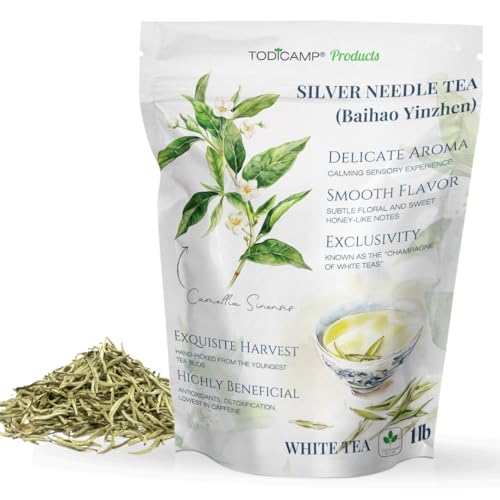
TODICAMP Premium Silver Needle White Tea 1 lb
The Picks, Examined More Closely
Da Hong Pao, the famous “Big Red Robe” tea, is the heavyweight of Chinese oolong. Sourced from the mineral cliffs of Mount Wuyi in Fujian, this loose-leaf version delivers the deeply roasted, almost cocoa-like profile the style is known for, rather than the creamy, buttery notes the milky oolong category usually emphasizes.
That distinction matters if you want genuine rock tea character. Compared to the sachet convenience of Harney & Sons later in this list, this is a slower cup, better for a focused gongfu session than a hurried desk break. Brew at a rolling boil and use a small gaiwan or yixing pot to bring out the layered mineral finish.
A Strong Showing
- Authentic Wuyi origin gives genuine “yan yun,” the rocky mineral aftertaste prized in rock oolongs.
- Traditional charcoal-roasting produces caramelized depth that holds up across multiple short steeps.
- Loose-leaf format lets you control dose and infusion time, stretching a 3 oz tin across many sessions.
- 3 oz starter size is approachable for drinkers new to the rock tea category.
Things To Consider
- Roasted, not milky, so flavor expectations need adjusting if you are chasing the cream-and-butter cup.
- Requires a small teapot or gaiwan to brew well; a standard mug works but flattens the layered finish.
- Strong roast can read as smoky to palates used to greener, lighter oolongs.
Key Specs
Who It Suits Best
Curious drinkers stepping into traditional Chinese tea who want a real Wuyi experience rather than a dessert-style milky cup.
Where Another Pick Suits Better
For a naturally creamy, lighter-bodied cup you can brew in a mug, The Republic of Tea Full Leaf Milk Oolong is a closer match.
Harney & Sons has built a reputation for polished, accessible teas, and the milky oolong tin leans into that signature. Each pyramid sachet is portioned for a single 12 oz cup, which removes the usual measuring guesswork and makes this one of the easiest entries in the entire category for an office kitchen or a hotel-room kettle.
The cream profile is added through natural flavoring rather than grown into the leaf, so the cup reads light, smooth, and quietly sweet. That keeps the brew approachable for drinkers who find traditional rock oolong too smoky, and it explains why the tin works well as a gift or a low-commitment introduction to the style.
Points In Its Favor
- Single-serve pyramid sachets brew a clean 12 oz cup with no strainer needed.
- Light, creamy profile suits drinkers who want a smooth afternoon cup without roasted intensity.
- Decorative tin keeps sachets fresh and looks tidy on a counter or shared break room shelf.
- Natural caffeine makes it a workable alternative to a second coffee in the early afternoon.
Worth Noting
- Only 20 sachets per tin, so heavy drinkers will run out quickly without repurchasing.
- Cream note comes from added flavoring, not from the leaf’s natural terroir.
Quick Facts
Right Fit For
Office workers, travelers, and gift-givers who want a polished milky oolong without any brewing gear.
Look Elsewhere When
Heavy daily drinkers get better long-run value from the bulk Niceen or TODICAMP 1 lb tins later in this list.
Republic of Tea’s milky oolong is the gentle middle ground of the category. The hand-processed Fujian leaves are shaken and oxidized just enough to develop a sweet cream and pineapple fragrance, then left light-bodied so the cup never tips into heavy roasted territory. The result is a delicate, almost floral milk oolong that rewards slow sipping rather than quick gulping.
It also represents a clear step up from sachets in terms of leaf quality, since the rolled whole leaves unfurl during steeping and give a more aromatic infusion. Compared to Harney & Sons’ flavored-tin approach, this one lets the leaf do more of the talking, and it is a useful benchmark for understanding what natural milk oolong aroma is supposed to taste like.
Everyday Perks
- Hand-processed Fujian leaves give an authentic, naturally creamy fragrance without added flavoring.
- Large, tightly rolled leaves unfurl dramatically, signaling freshness at a glance.
- 3.5 oz tin strikes a workable balance between trial size and household supply.
- Brews cleanly in a standard infuser mug, no special teaware required.
Trade Offs
- Lighter body may feel thin next to roasted rock oolongs like the Da Hong Pao earlier in this list.
- Ingredients list includes “natural flavors,” so part of the creamy note is enhanced rather than purely leaf-derived.
- Tin size may run out fast for households drinking multiple cups per day.
Best Suited To
Drinkers who want a naturally milky cup that still shows off the leaf’s floral and orchard-fruit character.
A Better Fit Elsewhere
If you need an enormous household supply at lower per-cup cost, the TODICAMP 1 lb loose-leaf milk oolong offers a much bigger tin.
Niceen leans into the convenience side of the oolong world without dropping the leaf quality. Each pyramid bag is filled with whole leaves from high-altitude gardens, a meaningful upgrade from the dust-and-fannings sachets that dominate the grocery aisle, and the 4-gram fill is generous enough to brew a fuller mug without bitterness.
The clean ingredient list is another quiet win: just oolong leaves, no sweeteners or flavorings, which is not always the case in this category. For someone transitioning from flavored supermarket teas into a more traditional cup, this is a low-friction on-ramp that still respects the leaf.
Key Advantages
- 4-gram whole-leaf pyramid bags give a richer brew than typical grocery sachets.
- Vegan, non-GMO, and free of artificial flavoring, sweeteners, and preservatives.
- Works for both hot brewing and cold-brew pitchers, useful across seasons.
- Low astringency profile makes it forgiving if you accidentally oversteep.
Points To Keep In Mind
- Not specifically labeled “milky” in the source, so the cream note is gentler than Republic of Tea’s version.
- 30 bags is a modest supply, better as a trial than a primary household stash.
Perfect Match For
Beginners and minimal-prep drinkers who want whole-leaf quality with sachet convenience and a clean ingredient list.
Swap It Out When
For a larger supply at the same whole-leaf format, the 60-count Niceen bag in this roundup is a natural step up.
Functionally, this is the same tea as the 30-count Niceen, just doubled up. Two 30-bag pouches ship together, which is the format that makes sense for daily drinkers who don’t want to reorder every month. The whole-leaf pyramids, vegan and non-GMO sourcing, and low-astringency profile all carry over unchanged.
Compared to the 30-count version, the trade-off is mostly storage and freshness. Two open bags mean more exposure to air, so drinkers who go through a bag every two to three weeks get the full benefit, while slower households may find the second pouch losing aroma before they finish it.
What Works In Its Favor
- 60-bag count stretches supply across roughly two months of daily use.
- Whole-leaf pyramids deliver fuller body than standard dust-filled grocery sachets.
- Works for hot cups, cold brews, and large iced pitchers without getting bitter.
- Clean ingredient list, no flavorings, sweeteners, or preservatives.
Honest Caveats
- Two-pouch format can be awkward in small kitchens with limited shelf space.
- Once opened, the second pouch needs to be sealed tightly to keep leaves from staling.
Feature Snapshot
Whose Shelf It Belongs On
Daily oolong drinkers and shared households that go through more than one cup a day and want a tidy bulk supply.
Another Choice May Suit
For a richer roasted, non-sachet experience, the TODICAMP 1 lb milk oolong tin is a worthwhile format switch.
The 1 lb TODICAMP milk oolong tin is built for households that go through a serious amount of tea. Where the 3 oz Da Hong Pao earlier in this list feels like a focused introduction, this is the working supply, generous, resealable, and priced to reward a daily brewing habit rather than a special occasion.
The cup lands on the creamy, full-bodied side of the milky oolong spectrum, with a smoother mouthfeel than the Republic of Tea version and a softer roast than the Wuyi rock tea. It is also one of the few entries in this roundup that doubles as a gift tin, since the bulk format reads substantial on a countertop.
Why It Works Well
- 1 lb tin offers strong per-cup value for daily drinkers and small offices.
- Loose-leaf format lets you tune dose and steeping time to taste, with multiple short infusions possible.
- Creamy, smooth profile works for both afternoon sipping and post-dinner relaxation.
- Resealable tin helps preserve aroma across weeks of regular use.
Room For Improvement
- Loose-leaf brewing needs an infuser, basket, or small teapot to use comfortably.
- 1 lb is a lot of tea, and the tin can lose freshness if the household pace slows.
Spec Overview
Who Should Grab It
Daily loose-leaf drinkers, small offices, and gift-givers who want a substantial milk oolong tin on hand.
Reach For A Different Pick When
Roasted, traditional rock-tea drinkers will get more satisfaction from the 3 oz Da Hong Pao featured earlier in this list.
Silver Needle is not a milk oolong at all, which is exactly why it earns a place in this roundup. It is the lightest, most delicate option on the list, brewed from unopened buds picked early in the season, and it sits at the opposite end of the flavor spectrum from the creamy, roasted cups above.
Including it here is a useful contrast: anyone who finds even gentle milk oolongs too rich or too sweet can pivot to this 1 lb tin and still drink a daily Chinese tea that feels substantial. The leaves are the least processed in the white tea family, so the cup is gentle, faintly sweet, and remarkably clean.
Good Reasons To Consider
- 1 lb tin offers long-term supply at a low per-cup cost, even at premium white tea pricing.
- Delicate, slightly sweet cup is a good fit for late evening drinking when caffeine is a concern.
- Minimal processing means the leaves retain high antioxidant levels relative to other tea styles.
- Plays well as a palate reset between richer oolong sessions through the week.
Some Limits To Know
- Not a milky oolong, so the creamy cup seekers in this category will need to look elsewhere.
- Delicate buds need cooler water (around 175 to 185°F) to avoid scalded, flat notes.
Made For
Drinkers who want a featherweight white tea to alternate with creamier oolongs, or anyone new to loose-leaf Chinese tea.
Not Your Match When
If the whole point of the roundup is a milk-forward cup, the TODICAMP 1 lb milk oolong or Republic of Tea will land closer to the target.
Choosing Milk Oolong Teas That Fit Your Cupboard
Where the Cream Flavor Actually Comes From
Some milk oolongs grow the creamy note into the leaf through careful cultivar selection and a specific oxidation process, while others use natural flavoring to add the dairy impression after the fact. Neither approach is automatically better, but the distinction drives price and taste. Naturally aromatic leaf costs more per ounce and gives a more layered cup with floral or fruit undertones. Flavor-enhanced versions, like certain sachets, tend to be lighter and more uniform, which works well in office settings and gift tins. If the label lists “natural flavors” alongside oolong, you are looking at the latter category.
Format Shapes the Routine
Loose-leaf, sachet, and tin all set different daily rhythms. A 1 lb loose-leaf tin rewards a small infuser basket or a teapot, and lets you adjust dose and steeping time across multiple short infusions, which is how traditional gongfu brewing extracts the most from a milk oolong. Pyramid sachets, like the Niceen bags and the Harney & Sons tin, are built for grab-and-go mornings and travel. The Republic of Tea loose-leaf tin sits between the two, sized for an infuser mug without overcommitting shelf space.
Match Roast Level to Your Palate
Milk oolong runs from light and floral to deeply roasted. Green-style milk oolongs, like the Republic of Tea entry, lean toward orchid, sweet cream, and orchard fruit. Heavier rock oolongs, like the Da Hong Pao earlier in this list, layer in cocoa and mineral notes that can read smoky. Daily drinkers who enjoy green tea usually prefer the lighter end, while black-tea drinkers tend to migrate toward the roasted rock-style options. Choosing based on your usual cup cuts the chance of buyer’s remorse on a 1 lb tin.
Key Considerations Across These Picks
Common Shopping Slip Ups
Chasing the strongest “milky” label without checking the ingredient list is the most common mistake in this category. Many sachets use added flavoring to deliver the cream note quickly, which suits office use but disappoints drinkers expecting an authentic leaf aroma. Another trap is buying a 1 lb tin before sampling the style. A 3 oz or 3.5 oz tin, like the Republic of Tea or Da Hong Pao options in this roundup, lets you confirm the roast level and body suit your taste before committing to a bulk supply.
What the Higher Tier Buys
Premium milk oolongs command higher prices for three concrete reasons: authentic terroir (Wuyi or high-mountain Fujian), hand-processing during oxidation, and larger leaf grades that unfurl into fuller cups. The extra cost shows up in the cup as more complex aroma, longer finish, and the ability to steep the same leaves multiple times without bitterness. For daily one-cup drinkers, the upgrade may feel modest, but for anyone steeping milk oolong as a deliberate afternoon ritual, the layered quality of a premium tin justifies the spend.
Frequently Asked Questions
What does milk oolong tea actually taste like?
A good milk oolong tastes smooth, buttery, and gently sweet, often with floral or orchard-fruit undertones. Naturally aromatic versions are more complex, while flavor-enhanced sachets deliver a more uniform cream note.
How much caffeine is in milk oolong tea?
Milk oolong contains moderate caffeine, generally around 40 to 60 mg per cup, depending on leaf grade and steeping time. That puts it between green tea and a standard black tea, suitable for early afternoons but worth tapering later in the day.
Can you reuse milk oolong leaves for multiple steepings?
Yes, whole-leaf milk oolong handles multiple short steeps very well. A small pot or gaiwan lets you pull three to five light infusions from the same leaves, which is one reason loose-leaf tins are popular with gongfu-style drinkers.
Is milk oolong tea sweet on its own?
Naturally aromatic milk oolong has a soft, natural sweetness from the leaf, not added sugar. Flavor-enhanced sachets can taste sweeter because of added natural flavoring, which is a different effect from the leaf’s own character.
How should milk oolong be stored?
Keep loose-leaf and sachet milk oolong in a sealed tin away from light, heat, and moisture. A 1 lb tin should be tightly closed after each use to keep the aroma from fading over the weeks it takes to finish the supply.
Closing Remarks
The best milk oolong is the one that fits the time you actually have to brew. Sachets win the desk and the travel day, a 3 oz tin is the right size to test a new style, and a 1 lb loose-leaf tin rewards anyone settling into a daily ritual. Start with the format that matches your routine, and let the cup guide the upgrade from there.
