

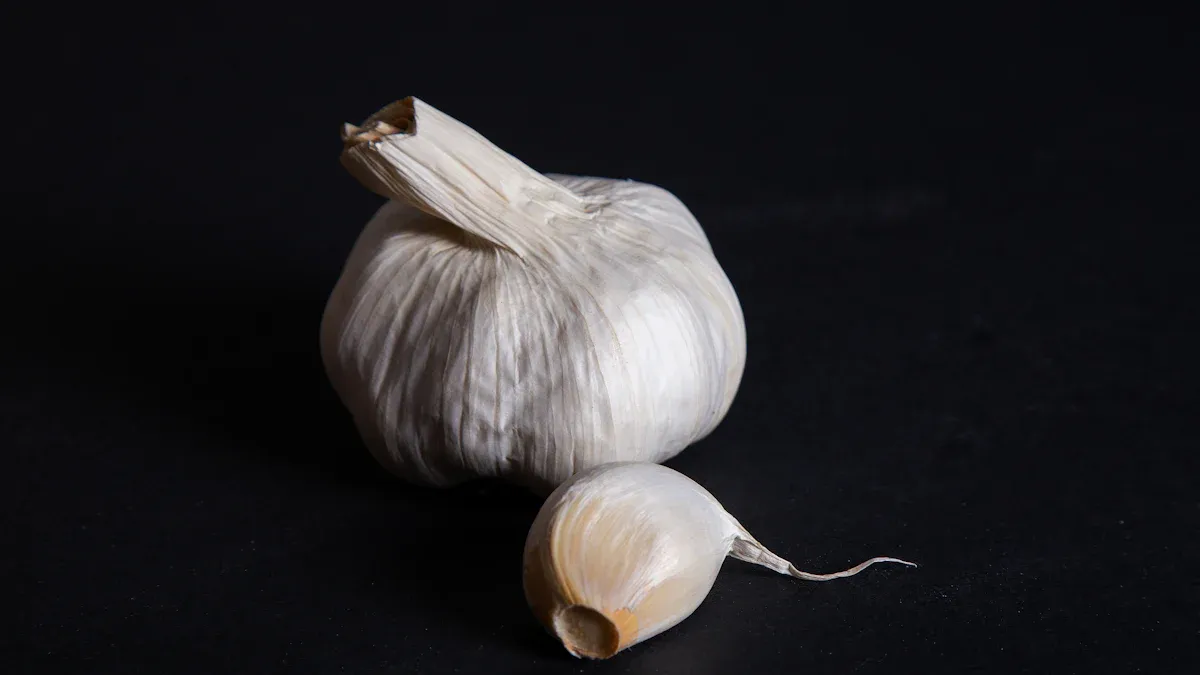
Garlic is more than just a flavorful ingredient in your meals; it is renowned for its garlic benefits. This powerful bulb offers numerous health advantages, particularly for your immune system and heart health. Research shows that 41% of adults consume garlic regularly to harness its garlic benefits. Scientific studies highlight how garlic can support your immunity and improve cardiovascular health. Embracing garlic in your diet can be a simple yet effective way to enhance your well-being.
Key Takeaways
Garlic boosts your immune system by fighting infections with its antimicrobial properties, particularly through the compound allicin.
Regular garlic consumption can lower blood pressure, making it beneficial for those with hypertension.
Garlic helps manage cholesterol levels, potentially reducing bad cholesterol (LDL) while increasing good cholesterol (HDL).
Incorporating garlic into your meals can enhance zinc absorption, which is crucial for a strong immune response.
Enjoy garlic raw, cooked, or as a supplement to maximize its health benefits while being mindful of potential digestive issues.
Garlic and Immunity
Antimicrobial Effects
Garlic serves as a powerful immune system booster due to its remarkable antimicrobial properties. The sulfur-containing compounds in garlic, especially allicin, play a crucial role in fighting off harmful pathogens. When you crush garlic, an enzyme called allinase converts alliin into allicin, which is highly reactive and effective against bacteria, viruses, and fungi. Studies show that allicin can inhibit the growth of various pathogens, making garlic a natural defense against infections.
Study | Findings |
|---|---|
Schier et al | Allicin inhibits Mucorales fungi germination with EC50 25–72 times lower than for fungal spores. Allicin is more effective than amphotericin B in inhibiting spore germination. |
University of Ottawa | Garlic extracts showed antimicrobial activity against E. faecalis, N. gonorrhoeae, and S. aureus, with higher allicin content correlating with greater effectiveness. |
These findings highlight how garlic can enhance your immune health benefits by reducing the risk of infections.
Anti-inflammatory Properties
Garlic also exhibits strong anti-inflammatory properties. Research indicates that garlic can lower inflammatory markers in the body, which is vital for maintaining a healthy immune system. For instance, a double-blind placebo-controlled trial found that garlic reduced levels of IL-6 and C-reactive protein (CRP) in patients with end-stage renal disease after just eight weeks. This reduction in inflammatory biomarkers can help you manage chronic inflammation, a common issue that can weaken your immunity.
A systematic review concluded that garlic can lower inflammatory markers, including CRP and TNF-α, which are associated with coronary artery disease.
An in-vitro study demonstrated a significant reduction in inflammatory biomarkers such as TNF-α, IL-1α, IL-6, and IL-8 when exposed to garlic extract.
These studies emphasize garlic’s role in supporting your immune system by combating inflammation.
Immune Cell Activity
Garlic consumption positively influences the activity of various immune cells. Research shows that garlic can enhance the production of immunoglobulins, which are crucial for fighting infections. For example, garlic lectins have been found to stimulate IgG production, leading to increased antibody titers. This means that when you include garlic in your diet, you may boost your body’s ability to respond to pathogens effectively.
Immune Cell Type | Effect of Garlic |
|---|---|
Immunoglobulins (IgG) | Restored levels to normal in studies |
T-cell subtype CD4+ | Levels restored in rats |
Lymphocytes | Improved multiplication due to polysaccharides |
These findings suggest that garlic can enhance your immune response, making it a valuable addition to your diet.
Zinc Absorption
Garlic also aids in the absorption of zinc, an essential mineral for immune function. Studies indicate that garlic consumption can enhance the intestinal absorption of zinc, which is vital for maintaining a robust immune system. Increased zinc levels can improve your immune response and overall health.
Research shows that garlic enhances the bioaccessibility of zinc from food grains, with increases ranging from 10% to 159.4% in cereals and 9.8% to 49.8% in pulses.
Another study confirms that garlic consumption can improve the intestinal absorption of zinc in humans.
By incorporating garlic into your meals, you can support your body’s ability to absorb this crucial mineral, further enhancing your immunity.
Health Benefits of Garlic for Heart Health

Garlic plays a significant role in promoting heart health. Its compounds can help you manage various cardiovascular risk factors. Here are some key benefits of garlic for your heart.
Blood Pressure Regulation
Garlic is effective in lowering blood pressure, especially for those with high blood pressure. Research shows that garlic supplementation can lead to significant reductions in both systolic and diastolic blood pressure. A meta-analysis of 20 trials involving over 900 participants found that garlic reduced systolic blood pressure (SBP) by an average of 8.6 mm Hg and diastolic blood pressure (DBP) by 6.1 mm Hg.
Study Type | Findings | Sample Size | Blood Pressure Reduction |
|---|---|---|---|
Meta-analysis | Significant effect of garlic on blood pressure | 20 trials, >900 participants | SBP: -8.6 mm, DBP: -6.1 mm |
Clinical Trial | Kyolic garlic reduced blood pressure in hypertensive subgroup | 468 participants | SBP: -10 mm, DBP: -5 mm |
Garlic’s ability to lower blood pressure can help you maintain a healthier cardiovascular system.
Cholesterol Management
Garlic also plays a role in cholesterol management. Some studies suggest that garlic can help reduce bad cholesterol (LDL) levels while potentially increasing good cholesterol (HDL). However, results vary. For instance, one study involving 192 patients found no significant change in LDL cholesterol after consuming garlic for six months.
Garlic supplements may reduce total serum cholesterol by an average of 0.77 mmol/l, representing a 12% reduction.
Dried garlic powders have shown to lower serum triglycerides by 0.31 mmol/l compared to placebo.
While some studies indicate garlic’s effectiveness in reducing LDL cholesterol, others show mixed results. Aged black garlic extract has shown promise in improving cholesterol profiles in certain studies.
Improved Circulation
Garlic enhances circulation, which is vital for heart health. It does this through several mechanisms:
Mechanism | Description |
|---|---|
Oxidative Stress | Garlic components trap reactive oxygen species (ROS) and enhance antioxidant enzyme activity, reducing blood pressure. |
Hydrogen Sulfide (H2S) | Garlic enhances H2S production, which induces vasodilation and helps lower blood pressure. |
Nitric Oxide (NO) | Garlic promotes NO release, improving endothelial function and contributing to vasodilation. |
Inhibition of ACE Activity | Garlic inhibits angiotensin converting enzyme (ACE), which plays a role in regulating blood pressure. |
Anti-inflammatory Effects | Garlic exhibits anti-inflammatory properties that may contribute to improved circulation. |
These mechanisms help improve blood flow and reduce the risk of cardiovascular issues.
Heart Disease Risk Reduction
Regular garlic intake may lower your risk of heart disease. Long-term studies suggest that garlic supplementation can improve cardiovascular risk markers, such as lipid profiles and blood pressure.
Garlic consumption has been linked to significant improvements in cardiometabolic biomarkers, including lower cholesterol and triglyceride levels.
A meta-analysis indicates potential benefits for heart health, particularly in adults with unfavorable baseline risk factors.
The estimated reduction in heart disease risk associated with regular garlic intake is noteworthy.
Risk Factor | Reduction (mmol/L) | Reduction (mg/dL) | 95% Confidence Interval (mmol/L) | 95% Confidence Interval (mg/dL) |
|---|---|---|---|---|
Total Cholesterol (TC) | -0.41 | -15.83 | -0.69, -0.12 | -26.64, -4.63 |
LDL Cholesterol (LDL-C) | -0.21 | -8.11 | -0.40, -0.03 | -15.44, -1.16 |
Systolic Blood Pressure (SBP) | -4.34 | N/A | -8.38, -0.29 | N/A |
Incorporating garlic into your diet can be a simple yet effective way to support your heart health.
Practical Ways to Enjoy Garlic
Cooking with Garlic
You can enhance your meals by cooking with garlic. It adds flavor and health benefits. To preserve garlic’s health benefits during cooking, follow these tips:
Store garlic in a cool, well-ventilated place.
Use mesh bags or slatted crates for storage.
Freeze garlic to keep its flavor and health benefits.
To retain the full health benefits of garlic, leave the cloves whole. Cutting or crushing them releases allicin, which provides many health benefits.
Different cooking techniques can change the bioavailability of garlic’s beneficial compounds. For example, cooking transforms allicin into other organosulfur compounds, which may enhance garlic’s health effects.
Raw Garlic Consumption
Eating raw garlic offers unique health benefits. Raw garlic contains higher levels of allicin, which is linked to various health advantages. Here’s a comparison of raw versus cooked garlic:
Aspect | Raw Garlic Benefits | Cooked Garlic Benefits |
|---|---|---|
Nutrient Content | Contains allicin, B vitamins, vitamin C, selenium, calcium, and magnesium. | Nutrient content is reduced, especially allicin and water-soluble vitamins. |
Anti-inflammatory Effects | Contains diallyl disulfide, which may help reduce inflammation. | Cooking may diminish anti-inflammatory properties. |
Cardiovascular Health | Linked to reduced blood pressure, waist circumference, and cholesterol levels. | Cooking may lower some cardiovascular benefits, but lower temperatures can help. |
Cancer Risk | Higher consumption linked to lower risk of certain cancers (esophagus, pancreas). | Cooking can reduce effectiveness, but some benefits may still be present. |
While raw garlic is more effective for health benefits, be cautious. Eating large amounts can lead to digestive issues, heartburn, or increased bleeding risk, especially if you take blood thinners.
Garlic Supplements
Garlic supplements provide an alternative for those who dislike the taste of raw garlic. They can deliver similar benefits, but not all supplements are created equal. Some studies suggest that fresh garlic may be more effective than supplements.
If you choose supplements, consider the recommended dosages:
Dosage Type | Recommended Dosage (mg) |
|---|---|
Clinical Studies | 1200 – 2400 |
General Use/Preventative | 600 |
Starting Dosage | Smaller than 600 |
Incorporating garlic into your diet, whether through cooking, raw consumption, or supplements, can significantly enhance your health.
Side Effects and Precautions
Digestive Issues
Garlic can cause various digestive issues for some people. You might experience discomfort after consuming garlic, especially if you eat it in large amounts. Common symptoms include:
Symptom | Description |
|---|---|
Heartburn | A burning sensation in the chest |
Abdominal pain | Discomfort in the stomach area |
Belching | Release of gas from the digestive tract |
Nausea | Feeling of sickness with an urge to vomit |
Vomiting | Expulsion of stomach contents |
Flatulence | Excess gas in the digestive system |
Constipation | Infrequent or difficult bowel movements |
Diarrhea | Frequent loose or watery stools |
Many people report gastrointestinal discomfort after consuming garlic. If you notice any of these symptoms, consider reducing your garlic intake.
Allergic Reactions
Some individuals may have allergic reactions to garlic. Although these reactions are rare, they can be serious. Symptoms of a garlic allergy may include:
Skin rash or hives
Itchy or swollen lips, tongue, or throat
Runny or stuffy nose
Sneezing or coughing
Digestive problems such as nausea, vomiting, or diarrhea
Shortness of breath
Anaphylaxis, a severe and life-threatening allergic reaction
If you experience any of these symptoms after consuming garlic, seek medical attention immediately.
Medication Interactions
Garlic can interact with certain medications, particularly anticoagulants. If you take blood thinners, be cautious. Garlic may enhance their effects, increasing the risk of bleeding. Here are some medications that may interact with garlic:
Medication | Interaction Type | Clinical Consequence |
|---|---|---|
Warfarin | Anticoagulant | Increased bleeding risk due to enhanced effects |
Aspirin | Anticoagulant | Potential for increased bleeding risk |
Brilinta | Anticoagulant | May enhance anticoagulant effects |
Plavix | Anticoagulant | Risk of increased bleeding |
Before combining garlic with any medications, consult your healthcare provider. Monitor for signs of unusual bleeding, such as bruising or prolonged bleeding from cuts.
Always report any unusual symptoms to your doctor, especially if you are on anticoagulant therapy.
By being aware of these side effects and precautions, you can enjoy the health benefits of garlic while minimizing risks.
Garlic offers numerous benefits for your immunity and heart health. It boosts your immune system, fights infections, and reduces inflammation. Garlic also helps lower blood pressure and manage cholesterol levels, promoting better heart health. Including garlic in your diet can be simple and rewarding. You can enjoy it raw, cooked, or as a supplement. Just remember to be mindful of any potential side effects. Embrace garlic as a flavorful way to enhance your well-being!
FAQ
What are the best ways to consume garlic for health benefits?
You can consume garlic raw, cooked, or as a supplement. Raw garlic retains more allicin, while cooking enhances flavor. Supplements offer convenience but may vary in effectiveness.
How much garlic should I eat daily?
A common recommendation is 1-2 cloves of raw garlic daily. If using supplements, aim for 600-2400 mg, depending on your health goals. Always consult a healthcare provider for personalized advice.
Can garlic help with colds and flu?
Yes, garlic may help reduce the severity and duration of colds and flu. Its antimicrobial and immune-boosting properties support your body in fighting infections.
Are there any side effects of consuming garlic?
Some people may experience digestive issues, such as heartburn or gas. Allergic reactions are rare but possible. Monitor your body’s response and adjust your intake accordingly.
Is garlic safe for everyone?
Garlic is generally safe for most people. However, those on blood thinners or with allergies should consult a healthcare professional before increasing garlic intake.
