


Soup can be a comforting creation, but have you ever felt it could use a little something extra? Enhancing the flavor of your soup transforms it from ordinary to extraordinary. You don’t have to be a professional chef to achieve this. Culinary experts suggest several flavor-boosting techniques that can turn your next meal into a delicious way to upgrade your cooking. By focusing on the right ingredients and methods, you can create a bowl of soup that warms both the body and soul.
Key Takeaways
Use homemade broth for a richer flavor and better nutrition. It’s cost-effective and allows you to control ingredients.
Sauté aromatics like garlic and onions to deepen flavors. This simple step can increase the richness of your soup significantly.
Incorporate umami ingredients such as miso or tomato paste. These add savory depth and make your soup irresistible.
Add a splash of acid, like lemon juice or vinegar, to brighten flavors. This simple trick can elevate your soup’s taste.
Experiment with spices to create unique flavor profiles. Mixing different spices can lead to exciting and delicious results.
Use Homemade Broth
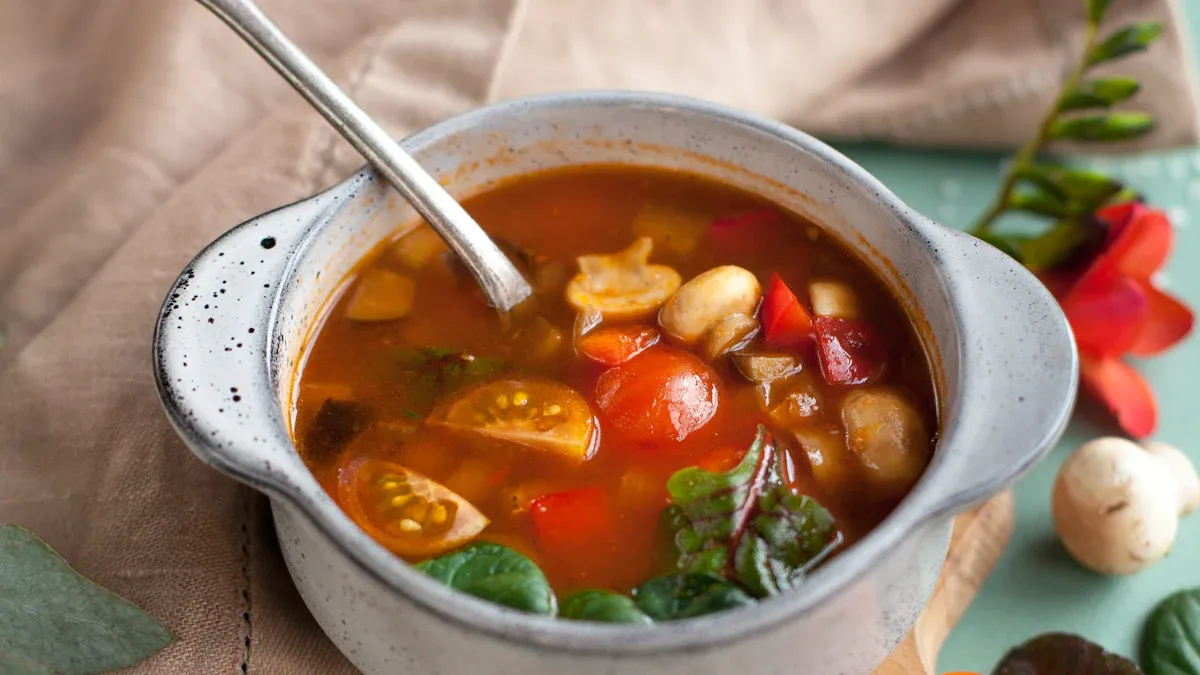
Benefits of Homemade Broth
Making your own broth is a game-changer for your soup. Here are some reasons why you should consider it:
Flavor: Homemade broth has a depth of flavor that store-bought options often lack. You can control the ingredients, ensuring a rich and satisfying taste.
Nutrition: Homemade broth is generally more nutritious. For example, it contains more protein and essential nutrients compared to many commercial broths. Check out this comparison:
Nutrient | Homemade Stock | Store-Bought Broth |
|---|---|---|
Calories | 86 | 17 |
Total Fat (g) | 2.88 | 0.24 |
Carbohydrates (g) | 8.47 | 0.9 |
Protein (g) | 6.05 | 2.4 |
Sodium (mg) | 343 | 379 |
Calcium (mg) | 7 | 7 |
Iron (mg) | 0.5 | 0.48 |
Magnesium (mg) | 10 | 2 |
Potassium (mg) | 252 | 192 |
Vitamin C (mg) | 0.5 | 16 |
Vitamin A (iu) | 7 | 0 |
Cost-Effective: You can make broth from scraps, making it cheaper than buying pre-packaged options. This is a great way to save money while enjoying nutritious homemade soup.
How to Make Homemade Broth
Making homemade broth is simple! Here’s a quick guide:
Gather Ingredients: Use bones (chicken, beef, or vegetable scraps), water, and your favorite aromatics like onions, garlic, and herbs.
Simmer: Place everything in a large pot. Cover with water and bring to a boil. Then, reduce the heat and let it simmer for several hours. This allows the flavors to meld beautifully.
Strain: Once done, strain the broth to remove solids. You’ll be left with a flavorful liquid that serves as a fantastic base for your soups.
By using homemade broth, you not only enhance the flavor of your soup but also support local farmers and enjoy the satisfaction of cooking from scratch.
Sauté Aromatics
Key Aromatics
Sautéing aromatics is a fantastic way to deepen the flavors in your soup. Aromatics are the building blocks of flavor, and using the right ones can elevate your dish significantly. Here’s a list of key aromatics that professional chefs often recommend for soups:
Aromatic | Usage in Soup Recipes |
|---|---|
Fresh Ginger | 2-inch piece |
Fresh Thyme | 4 sprigs |
Fresh Tarragon | 4 sprigs |
Garlic | 2 cloves, minced |
Yellow Onion | 1 medium |
Bay Leaves | 3 dried |
Whole Cloves | ½ teaspoon dried |
Allspice Berries | 1 teaspoon whole |
Sautéing Techniques
To maximize the flavors from your aromatics, you’ll want to use effective sautéing techniques. Here are some tips to get you started:
Start with a Flavor Base: Begin by sautéing shallots or garlic in a bit of oil. This releases their natural flavors and sets the stage for your soup.
Combine with Liquids: Adding wine or spirits during sautéing can enhance the flavor. The alcohol cooks off, leaving behind a concentrated taste.
Deglaze the Pan: After sautéing, pour in some wine or broth to deglaze the pan. This step captures all those flavorful bits stuck to the bottom, intensifying your soup’s richness.
Sautéing aromatics not only enhances flavor complexity but also contributes to a richer taste. Studies show that this technique can increase perceived richness by 63% compared to using raw ingredients. The Maillard reaction, which occurs when you cook aromatics at controlled temperatures, plays a significant role in developing deeper flavors.
So, next time you make soup, don’t skip the sautéing step! It’s a simple yet powerful way to create a bowl of soup that’s bursting with flavors.
Add Umami Ingredients
Umami is often called the “fifth taste,” and it can take your soup to a whole new level. By adding umami ingredients, you can create a savory depth that makes your soup irresistible. Here are some top umami ingredients you should consider:
Top Umami Ingredients
Tomato Paste: This concentrated form of tomatoes packs a punch of flavor. Just a spoonful can enhance your soup’s richness.
Miso: This fermented soybean paste adds a complex flavor that’s hard to beat. It’s perfect for miso soup or any broth-based dish.
Herbs: Fresh or dried herbs like thyme, oregano, and basil can boost umami while adding freshness.
Vinegar: A splash of vinegar can brighten flavors and add a subtle umami kick.
Lemon Juice: Like vinegar, lemon juice adds brightness and enhances the overall flavor profile.
Tip: Consider using Red Boat Salt, infused with fish sauce. This salt is pricey but concentrated. Just a scant half teaspoon in your soup can provide an instant blast of umami.
How Umami Enhances Soup
Adding umami ingredients not only boosts flavor but also enhances the overall experience of your soup. Research shows that incorporating natural umami-rich ingredients during cooking can elevate savory flavors, leading to greater enjoyment. This is especially true for those with heightened taste sensitivity.
For example, adding MSG (monosodium glutamate) can amplify savory flavors. Studies indicate that MSG significantly boosts taste intensity, making your soup richer and more complex. You might even find that a little ground shiitake mushroom powder can work wonders in thicker soups, like bean or potato soups.
By incorporating these umami ingredients, you create a soup that’s not just tasty but also deeply satisfying. So, don’t hesitate to experiment with these flavors in your next batch of soup!
Incorporate Dairy for Richness

Adding dairy to your soup can create a creamy texture that makes it more filling and satisfying. Dairy not only enhances the flavor but also contributes to a rich mouthfeel that elevates your meal. Here are some types of dairy you might consider:
Types of Dairy
Heavy Cream: This adds a luxurious, velvety texture to your soup. It’s perfect for creating a full-flavored soup that feels indulgent.
Milk: Full-fat milk can provide a lighter option while still adding creaminess. It works well in chowders and creamy vegetable soups.
Yogurt: This tangy option can add a unique flavor and a bit of acidity. It’s great for finishing soups, giving them a refreshing twist.
Cheese: Grated cheese, like Parmesan or cheddar, can melt into your soup, enhancing both flavor and texture.
Dairy’s Role in Flavor
Incorporating dairy can significantly boost the protein content of your soup, making it more filling. However, keep in mind that while dairy can enhance the texture and flavor, it also increases the calorie and fat content. Here are some points to consider:
Dairy products like heavy cream can lead to a richer flavor but may contribute to weight gain if consumed in excess.
Some dairy ingredients are high in saturated fats, which can pose risks for heart health when eaten in large amounts.
Enjoy creamy soups occasionally, but opt for healthier varieties more frequently.
By adding dairy, you not only create a creamy depth in your soup but also provide sustenance to your meal. So, don’t hesitate to experiment with different dairy options to find the perfect balance for your soup!
Use Acid to Brighten
Adding acid to your soup can make a world of difference. It brightens flavors and adds a refreshing zing that can elevate your dish. You might wonder how something as simple as a squeeze of lemon or a splash of vinegar can transform your soup. The answer lies in the way acid interacts with other flavors.
Types of Acid
Here are some common acids you can use to brighten your soups:
Lemon and Lime: These citrus fruits provide a bright acidity that complements many soups.
Apple Cider or White Wine Vinegar: These work well in lentil soups, adding both sweetness and acidity.
Vinegar-based Hot Sauce (e.g., Tabasco): This adds a tangy heat, perfect for creamy soups like cream of chicken or mushroom.
Lime-based Salsa (e.g., Salsa Verde): This pairs wonderfully with black bean soups, adding a fresh kick.
Balancing Flavors with Acid
Using acid in your soup can significantly impact the balance of flavors. Here’s how:
Impact of Acid in Soup Recipes | Description |
|---|---|
Enhances Brightness | Acidic ingredients elevate the overall taste profile, making dishes more vibrant. |
Cuts Through Richness | Acidity balances heavy or fatty flavors, providing a lighter mouthfeel. |
Adds Complexity | Incorporating acid introduces layers of flavor, making the dish more well-rounded. |
When you add acid, you help fix bland tasting soup. It cuts through richness and enhances the overall flavor. Just remember to start with a small amount and adjust to your taste. You want to brighten the soup, not overpower it.
So, next time you’re simmering a pot of soup, don’t forget to reach for that lemon or vinegar. A little acidity can go a long way in creating a deliciously balanced dish!
Roast Vegetables for Depth
Roasting vegetables is a fantastic way to deepen the flavors in your soup. When you roast, you bring out the natural sweetness and create a rich, caramelized taste that can transform your dish. The high heat causes certain flavor compounds to break down, enhancing some while diminishing others. For example, studies show that roasting increases the concentration of alkanes, which are significant flavor contributors. This means your soup can taste even better with roasted veggies!
Best Vegetables to Roast
Not all vegetables are created equal when it comes to roasting. Here are some of the best options to consider:
Carrots: Their natural sugars caramelize beautifully, adding sweetness.
Onions: Roasting brings out their sweetness and adds depth.
Bell Peppers: They become tender and flavorful, perfect for soups.
Garlic: Roasted garlic adds a rich, mellow flavor that enhances any soup.
Zucchini: This vegetable softens and absorbs flavors well when roasted.
Roasting Techniques
To get the most out of your roasted vegetables, follow these simple techniques:
Preheat Your Oven: Set it to around 425°F (220°C). A hot oven helps achieve that perfect caramelization.
Cut Evenly: Chop your vegetables into uniform pieces. This ensures they cook evenly.
Use Oil: Toss your veggies in olive oil before roasting. This helps them brown and adds flavor.
Season Well: Don’t forget to sprinkle salt and pepper. You can also add herbs like thyme or rosemary for extra flavor.
Roast Until Tender: Keep an eye on them. You want them to be golden brown and fork-tender, usually around 20-30 minutes.
By roasting vegetables, you create a depth of flavor that elevates your soup to new heights. So, next time you prepare a pot of soup, consider adding some roasted veggies for that extra richness!
Layer Flavors Gradually
When you make soup, layering flavors gradually is key to achieving a rich and satisfying taste. This technique allows you to build complexity, making each spoonful a delightful experience. Here’s how you can do it effectively.
Seasoning Techniques
To enhance your soup, consider these effective seasoning techniques:
Play with Salt: Use high-quality coarse salt. Season throughout the cooking process and taste regularly to enhance flavors.
Utilize Umami: Incorporate umami-rich ingredients like Parmesan, bacon, and mushrooms. These deepen the flavor and add richness.
Sprinkle in Sugar: Balance flavors by adding a pinch of sugar. It can counteract saltiness or acidity, creating a more rounded taste.
Time Your Seasoning: Season at different stages of cooking. This helps develop flavors optimally.
Use Up Every Scrap: Don’t toss those herb stems or fruit scraps! They can enhance seasoning and add depth.
Timing for Flavor Development
Timing is crucial when layering flavors. Start by adding your aromatics early in the cooking process. This allows their flavors to infuse the broth. As you progress, introduce other ingredients at strategic moments. For example, adding vegetables later can keep their texture intact while still contributing to the overall flavor.
The gradual layering of flavors creates a multi-dimensional experience. You’ll notice that the initial sip offers freshness, while subsequent flavors introduce richness and complexity. This dynamic interplay between flavors enhances the overall tasting experience. Each layer serves a specific purpose, transforming your soup into a carefully orchestrated dish.
So, as you prepare your next pot of soup, remember to season thoughtfully and layer those flavors. You’ll be amazed at how much more satisfying your soup can be!
Finish with Fresh Herbs
Fresh herbs can truly elevate your soup, adding a burst of flavor and aroma that makes each bowl feel special. They bring brightness and freshness, transforming a good soup into a great one. Here’s how you can make the most of fresh herbs in your cooking.
Best Fresh Herbs
When it comes to finishing your soup, some herbs stand out as favorites across various cuisines. Here are a few you should consider:
Parsley: This versatile herb adds a fresh, slightly peppery flavor.
Cilantro: Known for its bright taste, cilantro works wonders in soups with a Latin or Asian twist.
Dill: Its unique flavor pairs beautifully with creamy soups and seafood dishes.
Thyme: This herb adds earthy notes, perfect for hearty soups.
Rosemary: With its strong aroma, rosemary can enhance the flavor of rustic soups.
When to Add Fresh Herbs
Timing is everything when it comes to adding fresh herbs. You want to maximize their flavor without losing their vibrant qualities. Here are some tips:
Add at the End: Toss in fresh herbs just before serving. This preserves their essential oils and aromatic compounds, enhancing the soup’s aroma and flavor.
Chop or Tear: Cutting or tearing the herbs releases their oils, making them more potent. Just be gentle; you don’t want to bruise them too much.
Use as a Garnish: Consider using fresh herbs as a garnish. Not only does this add visual appeal, but it also gives a fresh burst of flavor with every spoonful.
Adding fresh herbs can also reduce the need for extra salt, sugar, or fat in your soup. They provide depth and complexity, making your dish more satisfying. So, don’t skip this step! A sprinkle of fresh herbs can make all the difference in your soup.
Experiment with Spices
Spices can transform your soup from bland to bold. They add layers of flavor that make each spoonful exciting. Don’t be afraid to experiment! Trying different spices can lead to unique and delicious results. Here are some popular spice combinations to consider:
Spice Combinations
Bay Leaves: These add depth to stocks and broths, making them a staple in many soups.
Paprika: This spice provides color and warmth, perfect for potato and tomato-based soups.
Turmeric: Known for its warm flavor, turmeric is ideal for lentil soups and adds a beautiful golden hue.
Cumin: This spice brings nuttiness and is essential in chili and bean soups.
Nutmeg: A hint of nutmeg enhances savory creamy soups with a touch of sweetness.
Thyme: This versatile herb complements chicken and vegetable soups beautifully.
Ginger: If you want a spicy kick, ginger is perfect for Asian-style soups.
These spices not only enhance the flavors but also add nutritional benefits. For example, turmeric is known for its anti-inflammatory properties, while ginger can aid digestion.
Flavor Profiles to Explore
When experimenting with spices, think about the flavor profiles you want to create. Here are a few ideas to inspire you:
Mediterranean: Combine oregano, basil, and thyme for a fresh and aromatic soup. This works well with chicken or vegetable bases.
Spicy Asian: Use ginger, garlic, and chili flakes for a warming soup. This combination is fantastic in miso or noodle soups.
Smoky and Savory: Add smoked paprika and cumin for a rich, hearty flavor. This profile shines in bean or sausage soups.
Herbaceous and Bright: Mix parsley, dill, and lemon zest for a refreshing finish. This works well in light chicken or fish soups.
Feel free to mix and match spices to find your perfect blend. The beauty of cooking is that you can adjust flavors to suit your taste. So, grab your spice rack and start experimenting! You might just discover a new favorite soup recipe.
You’ve learned some fantastic flavor-boosting techniques to elevate your soup game! From using homemade broth to experimenting with spices, each method adds depth and richness. Remember, adding acidity and umami-rich ingredients can significantly enhance your soup’s flavor complexity.
Trying these techniques can lead to higher satisfaction levels. In fact, studies show that optimizing herb infusion timing correlates with greater satiety. So, don’t hesitate to mix and match these tips in your next pot of soup. Enjoy the delicious journey of flavor exploration!
FAQ
What’s the best way to store leftover soup?
Store leftover soup in an airtight container in the fridge for up to three days. For longer storage, freeze it in portions. Just remember to leave some space in the container, as soup expands when frozen! ❄️
Can I use store-bought broth instead of homemade?
Yes, you can! While homemade broth offers richer flavor, store-bought options are convenient. Look for low-sodium varieties to control salt levels. You can always enhance it with aromatics or umami ingredients for a boost!
How do I know when my soup is seasoned enough?
Taste your soup as you cook. Start with a small amount of salt and gradually add more. Remember, you can always add more, but you can’t take it out! Balance flavors with acid or sweetness if needed.
Can I make soup in advance?
Absolutely! Many soups taste even better the next day as flavors meld. Just cool it completely before refrigerating or freezing. Reheat gently on the stove, adding a splash of broth or water if it thickens too much.
What are some quick ways to enhance flavor?
Try adding a splash of vinegar or lemon juice for brightness. Fresh herbs can also elevate your soup. If you’re short on time, a dash of hot sauce or a sprinkle of cheese can work wonders too!