


Oranges play a vital role in supporting immune health, offering numerous Orange Benefits. These juicy fruits are packed with nutrients that help your body fight off infections and stay healthy. One of the key nutrients found in oranges is vitamin C. A typical serving of an orange provides about 92% of your daily value for vitamin C. This nutrient is essential for promoting healthy immune function. However, it’s important to remember that vitamin C isn’t the only nutrient that contributes to immune system support. Other nutrients, such as folate and potassium, also play significant roles. So, eating oranges can be a delicious way to enjoy the Orange Benefits and boost your immune health!
Key Takeaways
Oranges are rich in vitamin C, which is vital for immune cell function and can reduce the duration of colds.
Eating one medium orange daily meets about 92% of your daily vitamin C needs, making it an easy way to support your immune health.
Oranges contain fiber that promotes digestive health and helps maintain a healthy gut microbiome, essential for overall immunity.
Antioxidants in oranges, like flavonoids, help reduce inflammation and protect your body from oxidative stress.
Choosing whole oranges over orange juice provides more fiber and nutrients, supporting better health outcomes.
Vitamin C Benefits

Immune Role
Vitamin C plays a critical role in supporting your immune system. This powerful nutrient enhances the production and function of immune cells, particularly white blood cells. These cells are essential for fighting off infections and keeping you healthy. Research shows that vitamin C can significantly improve immune function. For instance, a Cochrane review analyzed 29 studies and found that vitamin C supplementation reduced the incidence of colds by 52% in individuals under heavy physical stress. Although this effect was less significant in the general population, it highlights the importance of vitamin C in boosting your immune system.
Moreover, therapeutic trials indicate that vitamin C can shorten the duration of colds. Children experienced a 14% reduction in cold duration, while adults saw an 8% decrease. This demonstrates how vitamin C contributes to an improved immune response. An 8-ounce glass of orange juice provides more than 100% of the recommended daily value of vitamin C, making it a fantastic source for supporting your immune health.
Daily Intake
Understanding your daily vitamin C needs is essential for maintaining a healthy immune system. According to health authorities, the recommended daily intake varies by age and gender:
Group | Recommended Intake (mg) |
|---|---|
Adult Men | 90 |
Adult Women | 75 |
Smokers | +35 |
A medium-sized orange contains approximately 83 milligrams of vitamin C, which meets about 92% of your daily value. Other varieties, like a medium navel orange, can provide around 91 milligrams, while a medium blood orange offers about 72 milligrams. This high vitamin content makes eating oranges an excellent choice for fulfilling your vitamin C needs.
In comparison to other fruits, oranges are a solid source of vitamin C, though some fruits contain even higher amounts. For example, kiwis provide about 161.3 milligrams, and guavas offer between 140-146 milligrams. However, the health benefits of oranges extend beyond just vitamin C. They also contain antioxidants that help combat inflammation and protect your cells from damage.
Incorporating oranges into your diet can help you meet your vitamin C needs while enjoying their delicious taste. Eating an orange not only satisfies your cravings but also supports your immune system with its immune-boosting properties.
Other Nutrients for Health
Folate
Folate is another important nutrient found in oranges. This B-vitamin plays a crucial role in your body. It helps with DNA creation and cell division. A lack of folate can lead to serious health issues, including blood diseases, cancer, and birth defects. Oranges serve as a natural source of folate, making them especially beneficial for pregnant individuals. Here are some key points about folate in oranges:
Folate supports the production of red blood cells.
It helps maintain a healthy immune system.
Consuming adequate folate can reduce the risk of certain health problems.
The average folate content in orange juice is approximately 12.75 µg 5-MTHF per 100 mL. This amount can vary, with some commercial orange juices containing as little as 3.850 to 6.790 µg 5-MTHF per 100 mL. Including oranges in your diet can help you meet your folate needs while enjoying their delicious taste.
Antioxidants
Oranges are rich in antioxidants, which are vital for maintaining a healthy immune system. These compounds help protect your body from oxidative stress and inflammation. Here are some key antioxidants found in oranges:
Antioxidant Type | Examples | Contribution to Immune Health |
|---|---|---|
Flavonoids | Hesperetin, Naringenin | Protect against oxidative stress and inflammation |
Carotenoids | Xanthophylls, Cryptoxanthins | Support overall immune function |
Vitamin C | – | Enhances immune response and protects against infections |
Flavonoids in oranges have antioxidant properties. They help reduce inflammation and protect against oxidative stress. These effects are linked to a lower risk of diseases such as diabetes and heart disease. Research shows that consuming 100% orange juice may have small beneficial effects on certain inflammation markers. However, the overall strength of evidence is low due to small sample sizes in studies.
Incorporating oranges into your diet not only provides you with essential vitamins but also boosts your immune health through these powerful antioxidants. Eating an orange can be a simple yet effective way to enhance your body’s defenses.
Orange Hydration and Fiber

Hydration Benefits
Oranges are not only tasty but also excellent for hydration. A typical orange contains about 87% water, making it a great choice for increasing your daily water intake. Fruits and vegetables with over 80% water content, like oranges, are recommended for staying hydrated. Here are some key points about hydration from oranges:
Oranges provide essential nutrients like vitamin C, potassium, and antioxidants that support hydration and overall health.
Research indicates that consuming 100% orange juice can enhance hydration status. In one study, participants who drank orange juice had lower urine output and a higher net fluid balance compared to those consuming water and sports drinks.
This shows that oranges can effectively quench your thirst while providing vital nutrients.
Digestive Health
Fiber is another important benefit of eating oranges. Oranges contain about 2 grams of fiber per 100 grams, which helps keep your digestive system healthy. Here’s how the fiber in oranges supports your gut:
Fruit | Fiber per 100g | Fiber per Cup |
|---|---|---|
Oranges | 2g | 4g |
Kiwifruit | 3g | N/A |
Pears | 3g | N/A |
Blueberries | 2g | 4g |
Strawberries | N/A | 4g |
Tangerines | 2g | N/A |
Orange fiber comes from the byproducts of orange juice production. It contains cellulose, hemicellulose, pectin, and bioactive compounds. Studies show that this fiber promotes beneficial gut bacteria and enhances short-chain fatty acid production.
In a clinical trial, participants who consumed an orange-fiber snack showed increased levels of beneficial compounds in their stool. This indicates that orange fiber can help improve digestion and support gut health.
Incorporating oranges into your diet can boost your hydration and digestive health, making them a delicious and nutritious choice.
Phytonutrients and Immune Support
Types of Phytonutrients
Phytonutrients are natural compounds found in plants. They play a significant role in promoting health and supporting your immune system. Oranges contain several types of phytonutrients that contribute to their health benefits. Here are the main types found in oranges:
Phytonutrient Type | Amount |
|---|---|
Carotenoids | 428.4 μg |
Polyphenols | 441.5 mg |
Phytosterols | 31.7 mg |
These phytonutrients work together to enhance your body’s defenses against illness.
Health Benefits
The phytonutrients in oranges can significantly boost your immune function. For instance, flavonoids, a type of polyphenol, have shown promising results in reducing the frequency of colds. A study by Crişan et al. (1995) found that children who consumed flavonoids experienced fewer colds, with a significance level of p < 0.01. This indicates a strong link between these compounds and a healthy immune system.
Additionally, catechins, another phytonutrient, can help reduce the severity of influenza viral infections. Matsumoto et al. (2011) reported that individuals consuming catechins had fewer influenza-related health issues, with a significance level of p = 0.022. Furthermore, EGCG, a compound found in oranges, has been shown to alleviate allergic symptoms, such as runny noses and itchy eyes, with significance levels of p < 0.05 and p < 0.01, respectively.
Incorporating oranges into your diet not only provides essential vitamins like vitamin C but also delivers powerful phytonutrients that enhance your immune response. By enjoying these fruits regularly, you can support your overall health and strengthen your immune system.
Whole Oranges vs. Juice
Nutritional Comparison
When you choose between whole oranges and orange juice, understanding their nutritional differences is essential. Here’s a comparison of key nutrients:
Nutrient | Whole Orange | Orange Juice |
|---|---|---|
Calories | 73 | 112 |
Protein | 1 gram | 2 grams |
Carbohydrates | 17 grams | 26 grams |
Fiber | 3 grams (12% DV) | 0 grams |
Potassium | 232 milligrams (9% DV) | 400 milligrams (11% DV) |
Vitamin C | 83 milligrams (110% DV) | 124 milligrams (138% DV) |
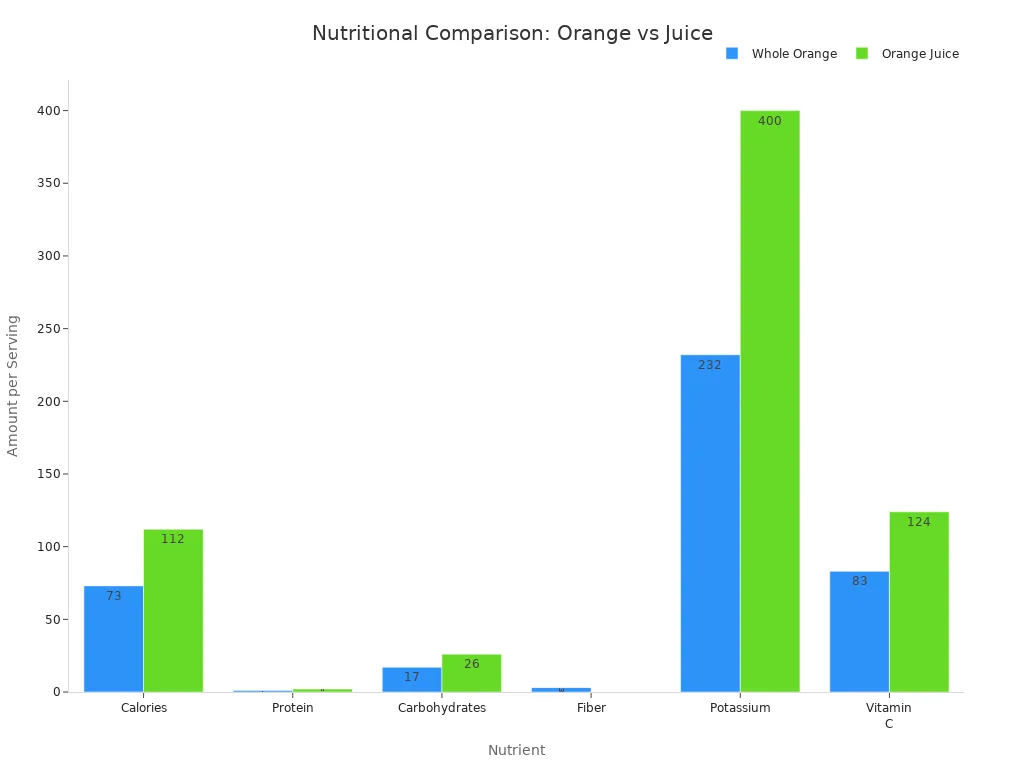
Whole oranges provide more fiber than orange juice. Fiber aids digestion and helps regulate blood sugar levels. A medium orange contains about 3.1 grams of fiber, while orange juice has only about 0.2 grams. This difference is significant because fiber plays a crucial role in maintaining a healthy digestive system.
Health Implications
Choosing whole oranges over orange juice can lead to better health outcomes. Whole oranges contain more dietary fiber, which supports gut health and helps you feel full longer. In contrast, orange juice lacks this fiber, which can lead to quicker spikes in blood sugar levels due to its higher sugar content.
While 100% orange juice offers some health benefits, such as increased bioaccessibility of certain nutrients, it also poses risks. Long-term consumption of orange juice has been linked to higher sugar intake, which may increase the risk of type 2 diabetes and cardiovascular diseases.
A recent review published in Frontiers in Immunology highlights that both whole oranges and 100% orange juice contain essential nutrients that enhance immune function. However, the study emphasizes the importance of fiber found in whole oranges, which contributes to overall health and well-being.
Oranges are a powerhouse of nutrients that support your immune health. Key nutrients include:
Vitamin C: Essential for immune cell function and protection against oxidative damage.
Fiber: Supports a healthy gut microbiome, crucial for a healthy immune system.
Antioxidants: Compounds like hesperidin and naringenin help reduce inflammation.
A review of nearly 200 studies shows that these nutrients significantly impact immune health. Regularly including oranges in your diet can enhance your body’s defenses against illness. So, enjoy this delicious fruit daily to maintain a healthy immune system!
FAQ
What are the main nutrients in oranges that boost immunity?
Oranges are rich in vitamin C, folate, fiber, and antioxidants. These nutrients work together to enhance your immune system and protect against infections.
How many oranges should I eat daily for immune support?
Eating one medium orange daily can help you meet your vitamin C needs. You can enjoy more if you like, but balance is key.
Can orange juice provide the same benefits as whole oranges?
While orange juice offers vitamin C and some nutrients, it lacks fiber. Whole oranges provide more fiber, which is essential for digestive health.
Are there any side effects of eating too many oranges?
Eating too many oranges can lead to digestive issues, such as diarrhea, due to their high fiber and acidity. Moderation is important.
How can I incorporate oranges into my diet?
You can enjoy oranges as a snack, add them to salads, or blend them into smoothies. Get creative with recipes to enjoy their benefits!