
Potatoes are a vital part of a balanced diet, offering essential nutrients, as highlighted in the Potato Nutrition Facts. They rank as the third most important food crop globally, consumed by over a billion people. Despite their popularity, many misunderstand their health effects. For example, some believe potatoes are unhealthy and cause weight gain, while they actually provide vital potassium and fiber. Understanding both the benefits and potential risks of potato consumption is crucial for making informed dietary choices.
Misconception | Clarification |
|---|---|
Potatoes are grouped with unhealthy foods | Potatoes are often misclassified alongside non-vegetable foods. |
Potatoes cause weight gain and poor health | According to Potato Nutrition Facts, they are nutrient-dense and help provide essential nutrients often lacking. |
Key Takeaways
Potatoes are nutrient-dense, providing essential vitamins and minerals like vitamin C and potassium, which support overall health.
Eating potatoes with the skin boosts fiber intake, aiding digestion and promoting a feeling of fullness, which can help with weight management.
Cooking methods matter; steaming, boiling, and baking preserve more nutrients compared to frying, making them healthier options.
Proper storage is key; keep potatoes in a cool, dark place to prevent sprouting and reduce toxin formation.
Despite misconceptions, potatoes can be part of a healthy diet and may even support heart health when consumed in moderation.
Potato Nutrition Facts
Macronutrients
Potatoes are primarily composed of carbohydrates, making them a great source of energy. Here are the average macronutrient values per 100 grams of raw potatoes:
Carbohydrates: 17 grams
Protein: 2 grams
Fat: 0.1 grams
The predominant type of carbohydrate in potatoes is starch, which consists of amylopectin and amylose in a ratio of 3:1. This starch provides a steady release of energy, making potatoes a filling food choice.
When you compare potatoes to other starchy vegetables, you can see how they stack up. Here’s a quick comparison of potatoes with sweet potatoes and yams:
Nutrient | Sweet Potato (1 medium (130g)) | Potato (1 medium (150g)) |
|---|---|---|
Calories | 103 | 161 |
Protein | 2.3g | 4.3g |
Carbs | 24.0g | 37.0g |
Fat | 0.1g | 0.2g |
Fiber | 3.8g | 3.8g |
Micronutrients
Potatoes are not just about macronutrients; they also pack a punch with essential vitamins and minerals. Here’s a breakdown of key micronutrients found in potatoes, along with their amounts per 100 grams:
Micronutrient | Amount per 100g | Percentage of Daily Value |
|---|---|---|
Magnesium | 45 mg | 11% |
Zinc | 0.6 mg | 6% |
Niacin | 2.3 mg | 11% |
Riboflavin | 0.1 mg | 6% |
Thiamin | 0.2 mg | 13% |
Phosphorus | 132 mg | 11% |
Selenium | 1 mcg | 1% |
Manganese | 0.3 mg | 13% |
Copper | 0.2 mg | 27% |
Choline | 23 mg | 4% |
Pantothenic acid | 0.6 mg | 12% |
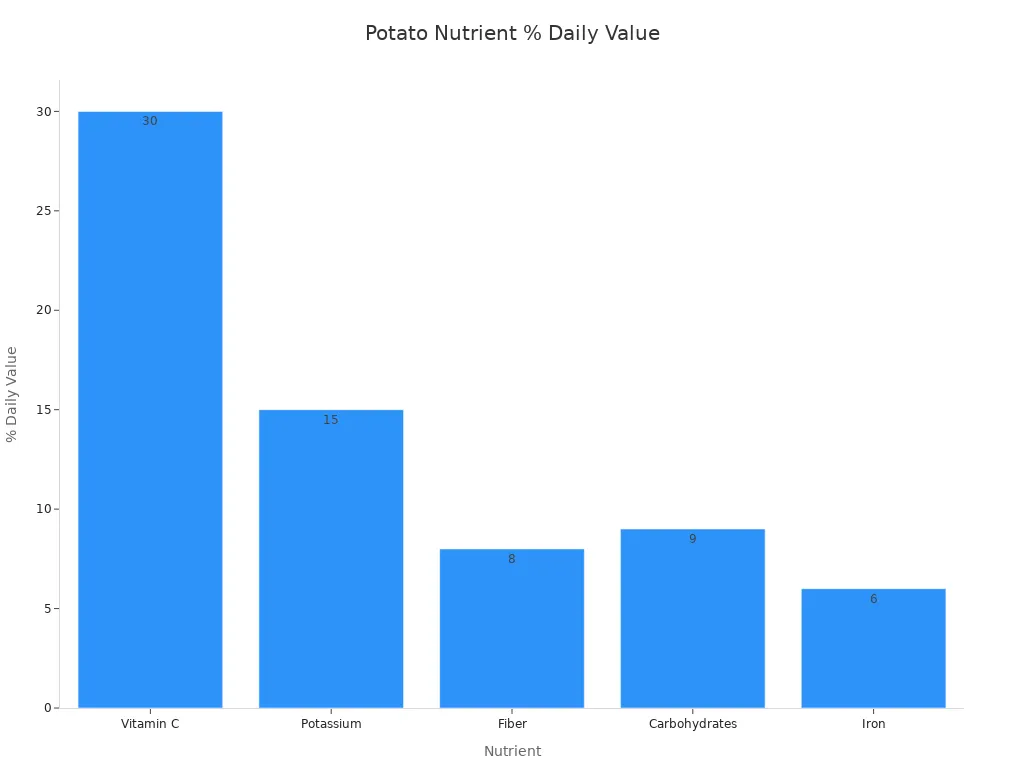
Potatoes are also a significant source of vitamin C, providing about 19% of the daily value needed for a healthy diet per baked potato. They are high in potassium, which is essential for muscle and nerve function and helps regulate blood pressure.
Moreover, potatoes are naturally fat-free, cholesterol-free, and sodium-free. They contain both soluble and insoluble fibers that can help manage cholesterol levels. A medium-sized potato with skin has just under 5 grams of fiber, primarily found in the skin.
Health Benefits of Potatoes
Blood Pressure and Stroke
Potatoes can play a significant role in managing blood pressure and supporting heart health. Their high potassium content helps regulate blood pressure levels. A study published in Nutrients found that regular consumption of boiled or baked potatoes significantly reduces systolic blood pressure. This reduction occurs because potassium helps decrease sodium retention in the body. When you include potatoes in your diet, you may experience better cardiovascular health.
Here’s a summary of studies examining the relationship between potato consumption and cardiovascular health:
Study | Findings | Association with CVD/Stroke |
|---|---|---|
Meta-analysis of seven cohorts | No significant association between total potato consumption and CVD | RR = 1.0 (95% CI: (0.97–1.02)) |
Swedish cohorts | No association of total potato consumption with CVD risk | RR = 1.0 |
Nurses’ Health Study | No association of potato intake with ischemic stroke | N/A |
Norwegian study | No association with fatal myocardial infarction and CVD death | N/A |
Meta-analysis of five studies | No association with coronary heart disease | RR = 1.02 (95% CI: 0.95–1.09) |
Meta-analysis of six studies | No association with stroke | RR = 0.98 (95% CI: 0.88–1.08) |
National Heart, Lung, and Blood Institute Family Heart Study | No association of baked/mashed potatoes with coronary artery calcification | N/A |
Million Veteran Program | 27% higher risk for 5+ cups/week of combined baked, boiled, and mashed potatoes | 27% higher risk (95% CI: 9% to 47%) |
Larsson et al. | No association between fried potato consumption and total CVD | Hazard ratio (95% CI) = 0.90 (0.71–1.14) |
Digestive Health
Potatoes are also beneficial for digestive health. They contain dietary fiber, which promotes a healthy digestive system and helps you feel full longer. The fiber in potatoes, such as FiberBind and RG-I, enhances satiety and reduces hunger sensations. This can be particularly helpful for weight management. Here are some key points about how dietary fiber from potatoes contributes to digestive health:
Dietary fibers can influence glucose and insulin responses, which are crucial for metabolic health.
Increased satiety is linked to microbial fermentation of fibers, leading to the production of short-chain fatty acids (SCFAs) in the gut. These SCFAs help regulate appetite hormones.
Fiber can delay gastric emptying and prolong small intestine transit time, contributing to a feeling of fullness.
A medium potato provides about 2 grams of fiber, which is approximately 8% of the recommended daily intake. This makes potatoes a great addition to your meals if you aim to increase your fiber intake.
Food Item | Fiber Content | Percentage of Daily Value |
|---|---|---|
Medium Potato | 2 grams | 8% |
1/2 Grapefruit | 2 grams | 8% |
1 Raw Carrot | 2 grams | 8% |
Antioxidant Properties
Potatoes are rich in antioxidants, which help combat oxidative stress and inflammation in the body. These antioxidants include carotenoids, phenolic compounds, and flavonoids. Here’s a breakdown of the types of antioxidants found in potatoes:
Antioxidant Type | Concentration (μg or mg per 100 g FW) | Notes |
|---|---|---|
Carotenoids | 50 – 100 (white-fleshed) | Primarily lutein, zeaxanthin, and violaxanthin; not a source of pro-vitamin A carotenes. |
2000 (yellow/orange-fleshed) | ||
Phenolic Compounds | N/A | Predominantly chlorogenic acid (80% of total phenolic acids). |
Flavonoids | Up to 30 | More in red/purple-fleshed potatoes; catechin and epicatechin are predominant. |
Anthocyanins | Up to 40 mg | Present in red/purple potatoes; varies by pigmentation. |
Vitamin C | 20 | Accounts for up to 13% of total antioxidant capacity. |
Research shows that these antioxidants can reduce inflammation markers and protect against DNA damage. For example, studies indicate that purple potatoes have higher antioxidant concentrations, which may lower inflammation levels in the body.
Risks and Safety of Potatoes
Allergies
While potato allergies are rare, they can affect some individuals. The prevalence of these allergies is not well-defined, but studies indicate that a small percentage of the population may be sensitive. For example:
About 10% of 20,000 subjects in a French study were sensitized to raw or cooked potatoes.
A German study found that 19.3% of individuals with food allergies reacted positively to skin prick tests for raw potatoes.
Common symptoms of potato allergies include:
Itchy mouth
Swelling in the mouth area
Hives
Breathing problems
In severe cases, anaphylaxis
The main allergens in potatoes include:
Allergen Type | Description |
|---|---|
Patatins | Most prevalent allergens, stable to heat and digestion, potent elicitors of allergic reactions. |
Protease Inhibitors | Another group of allergenic proteins found in potatoes. |
Glycoalkaloids | Includes solanine and chaconine, contributing to allergic responses. |
Toxins
Potatoes can contain toxins, particularly solanine, which can be harmful in high amounts. Here are some key points about solanine:
Farmers aim to keep solanine levels below 0.2 mg/g.
Toxicity symptoms can occur with concentrations between 0.1 and 0.4 mg/g.
The average potato contains about 0.075 mg/g of solanine.
Toxic doses for humans are estimated at 2 to 5 mg/kg of body weight.
Symptoms of solanine toxicity can appear with as little as 1 mg/kg of consumption. Documented cases of solanine poisoning include:
Year | Incident Description | Outcome |
|---|---|---|
1948 | A 9-year-old girl consumed nightshade berries related to potatoes, leading to symptoms and death. | Died two days later due to solanine poisoning. |
1952 | In North Korea, 382 people consumed rotting potatoes during food shortages, resulting in severe health issues. | 22 died, with symptoms including heart failure. |
Cooking Methods
How you prepare potatoes can affect their safety and nutrient content. Here are some recommended cooking methods:
Boiling and microwaving whole potatoes with skin do not create harmful compounds like acrylamide.
Soaking raw potato slices in water for 15-30 minutes before cooking can reduce acrylamide formation.
Cooking potatoes to a golden yellow color instead of brown minimizes acrylamide accumulation.
Different cooking methods also impact nutrient retention. For example:
Cooking Method | Vitamin C Content (mg/100 g DW) | Effect on Nutrients |
|---|---|---|
Microwaving | Minor loss | |
Roasting | Significant loss | |
Frying | Significant loss | |
Steaming | Minor loss |
By following these guidelines, you can enjoy potatoes safely while maximizing their health benefits.
Practical Tips for Potatoes
Storage Tips
To keep your potatoes fresh and safe, follow these storage guidelines:
Temperature: Store potatoes in a cool, dark place with a temperature between 45–50°F. This range helps prevent sprouting and reduces the risk of acrylamide formation, a potential carcinogen.
Light Exposure: Keep potatoes in total darkness. Light exposure can lead to solanine synthesis, which is toxic.
Humidity: Aim for a humidity level of 60–65%. Too low humidity can cause shriveling, while too high can promote rot.
Ventilation: Use breathable storage solutions like open-weave baskets or slatted crates. Proper ventilation prevents CO₂ buildup and mold growth.
Improper storage conditions can significantly increase the levels of solanine and other harmful substances in potatoes. Factors such as exposure to light and physical damage contribute to the synthesis of solanine, which can be toxic.
Best Cooking Methods
Cooking methods can greatly affect the nutritional value of potatoes. Here are some of the healthiest ways to prepare them:
Steaming: This method preserves nutrients effectively and enhances flavor.
Boiling: Use minimal water and cover the pot to retain vitamins. Boiling can be effective if done properly.
Baking: Baking keeps nutrients intact, especially when you eat the skin.
Microwaving: This method preserves more vitamins and minerals compared to boiling.
Cooking Method | Nutritional Benefits |
|---|---|
Boiling | Retains nutrients effectively when done properly. |
Steaming | Enhances flavor and retains more nutrients than boiling. |
Baking | Keeps nutrients intact, especially when the skin is consumed. |
Microwaving | Preserves more vitamins and minerals compared to boiling. |
By following these tips, you can enjoy delicious and nutritious potatoes while maximizing their health benefits.
Potatoes offer numerous nutritional benefits that can enhance your diet. They are rich in vitamin C, potassium, and dietary fiber. The skin contains more fiber than the flesh, making it essential to eat the skin for maximum health benefits. Potatoes provide more vitamin C than tomatoes or sweet potatoes, which supports your immune system.
You can prepare potatoes in various ways, such as boiling, baking, or steaming, making them a versatile food option. When you include potatoes in your meals, you enjoy their health benefits while adding variety to your diet. Remember, when prepared properly, potatoes can be a healthy addition to your meals.
FAQ
What are the health benefits of potatoes?
Potatoes offer several health benefits. They provide essential nutrients like vitamin C and potassium. Their fiber content aids digestion and promotes satiety, helping you manage your weight effectively.
Can potatoes be part of a weight loss diet?
Yes, potatoes can fit into a weight loss diet. Their high fiber content keeps you full longer. Choose healthy cooking methods like baking or steaming to maximize their benefits.
Are there any risks associated with eating potatoes?
While potatoes are generally safe, some people may have allergies. Additionally, avoid consuming green or sprouted potatoes, as they can contain harmful toxins like solanine.
How should I store potatoes for freshness?
Store potatoes in a cool, dark place with good ventilation. This helps prevent sprouting and maintains their quality. Avoid exposure to light to reduce toxin formation.
What is the best way to cook potatoes?
The healthiest cooking methods include steaming, boiling, and baking. These methods preserve nutrients better than frying. Eating the skin also boosts fiber intake.