


Chicken breast stands out as one of the most popular protein sources among health-conscious individuals. You can enjoy its impressive nutritional profile, which includes high protein and low fat. This makes chicken breast an excellent choice for those aiming to build muscle or maintain a healthy weight. Packed with essential vitamins and minerals, chicken breast nutrition supports various bodily functions. In this post, you will discover the key health benefits of including chicken breast in your diet.
Key Takeaways
Chicken breast is a lean protein source, providing 31 grams of protein per 100 grams, which supports muscle growth and repair.
Incorporating chicken breast into your diet can aid in weight management by keeping you full longer and reducing overall calorie intake.
Chicken breast is heart-healthy, containing lower levels of saturated fat and cholesterol compared to red meat, making it a better choice for cardiovascular health.
Essential vitamins and minerals in chicken breast, like vitamin B6 and zinc, boost immune function and overall health.
Its versatility in cooking allows for a variety of delicious meals, making chicken breast a staple for healthy eating.
Chicken Breast Nutrition

Macronutrients
Chicken breast is a powerhouse of macronutrients, making it a top choice for those seeking lean protein. Here’s a breakdown of the key macronutrients found in a standard serving of cooked, skinless chicken breast:
Nutrient | Amount |
|---|---|
Protein | 31g |
Fat | 3.6g |
Carbohydrates | 0g |
With only about 165 calories in chicken breast per 100 grams, it provides a high protein content with minimal fat. This makes chicken breast nutrition particularly beneficial for muscle growth and weight management. The protein in chicken breast contains all essential amino acids, which your body needs for various functions, including muscle repair and immune support.
Micronutrients
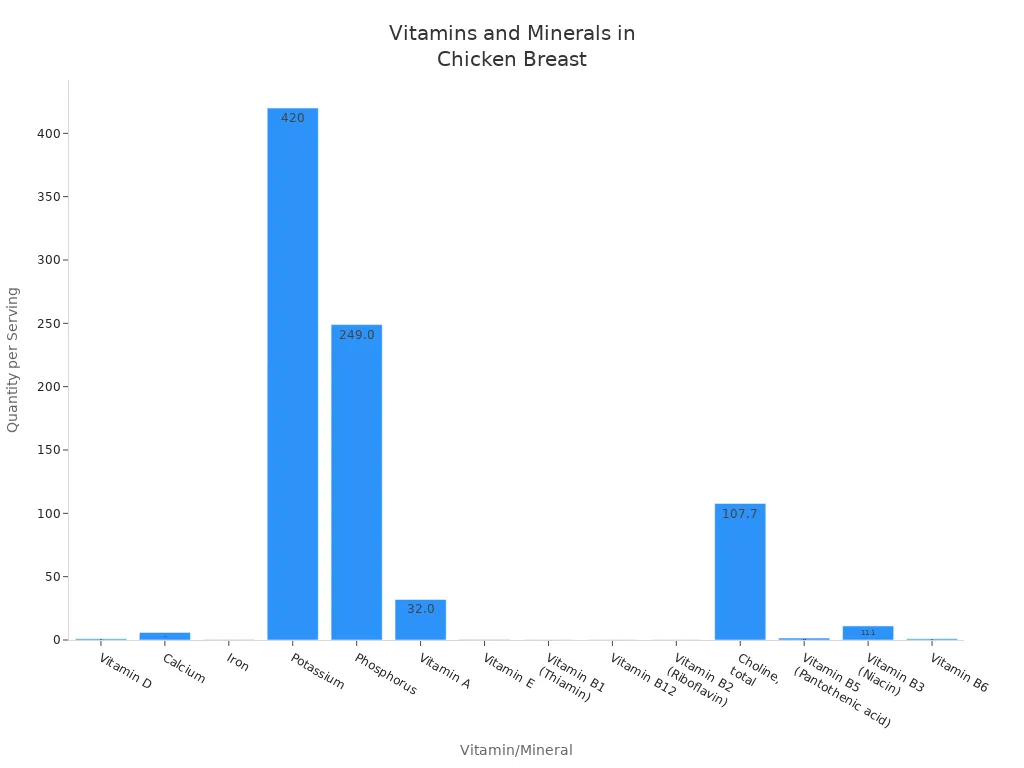
In addition to macronutrients, chicken breast is rich in essential vitamins and minerals. These micronutrients play vital roles in maintaining your overall health. Here’s a summary of some key vitamins and minerals found in chicken breast:
Vitamin/Mineral | Quantity per Serving | % Daily Value |
|---|---|---|
Vitamin D | 1.0 IU | 0% |
Calcium | 6.0 mg | 0% |
Iron | 0.4 mg | 2% |
Potassium | 420 mg | 11% |
Phosphorus | 249.0 mg | 24% |
Vitamin B3 (Niacin) | 11.1 mg | 69% |
Vitamin B6 | 1.0 mg | 76% |
Chicken breast also contains important nutrients like selenium, which acts as an antioxidant, and phosphorus, essential for bone health. The vitamins and minerals in chicken breast contribute significantly to your daily recommended intake values, helping you maintain energy levels and support bodily functions.
Health Benefits of Chicken Breast

Supports Muscle Growth
Chicken breast is an excellent choice for those looking to build and maintain muscle mass. Its high protein content, approximately 31 grams per 100 grams, provides the essential amino acids your body needs for muscle repair and growth. Research shows that chicken breast contributes to muscle development at a cellular level. For instance, a study titled Temporal RNA-seq atlas of breast muscle development in purebred and crossbred broilers highlights the mechanisms of muscle growth through myofiber hyperplasia and hypertrophy. Another study found that chicken consumption is associated with increased muscle strength and mass, especially when combined with resistance training.
Aids Weight Management
Incorporating chicken breast into your diet can significantly aid in weight management. Its low-fat content and high protein levels help you feel full longer, reducing overall calorie intake. A study published in the Journal of the American College of Nutrition found that postmenopausal women on a calorie-restricted, chicken-based diet lost more fat while preserving muscle compared to those on a higher-carb plan. Additionally, chicken breast is a low-calorie, high-protein food that supports a healthy metabolism, making it ideal for maintaining a calorie deficit.
Study | Findings |
|---|---|
Journal of the American College of Nutrition (2007) | Women on a chicken-based diet lost more fat and preserved muscle. |
Nutrients (2023) | Lean chicken supports healthy weight management and heart health. |
Promotes Heart Health
Choosing chicken breast over red meat can benefit your heart health. Chicken breast contains lower levels of saturated fat and cholesterol compared to fatty cuts of red meat. Current dietary guidelines recommend limiting saturated fat intake due to its impact on LDL cholesterol levels. Lean chicken may have neutral or beneficial effects on cardiovascular health, making it a healthier option for your heart.
Boosts Immune Function
Chicken breast is rich in essential vitamins and minerals that support your immune system. Nutrients like arginine, vitamin E, and zinc play crucial roles in enhancing immune responses. For example, arginine supports nitric oxide production, which is vital for immune function. Vitamin E acts as an immune booster by preventing oxidative damage, while zinc is important for thymic function and lymphocyte proliferation.
Arginine: Essential for immune function.
Vitamin E: Prevents oxidative damage.
Zinc: Aids in immune response.
Enhances Bone Health
The phosphorus and calcium found in chicken breast contribute to strong bones. Phosphorus plays a vital role in bone formation and maintenance, while calcium is essential for bone density. Including chicken breast in your diet can help ensure you receive these important nutrients for optimal bone health.
Provides Energy
Chicken breast serves as a great source of sustained energy. Its high protein content helps keep you feeling full and energized throughout the day. With zero carbohydrates, chicken breast stabilizes blood sugar levels, preventing energy crashes. This makes it an ideal choice for maintaining a healthy metabolism.
Contains 31 g of protein per 100 g.
Low-calorie, lean source of high-quality protein.
Glycemic index of 0 helps maintain stable blood sugar levels.
Supports Brain Function
The nutrients in chicken breast, such as choline and vitamin B6, are linked to improved brain health. Choline is essential for synthesizing acetylcholine, a neurotransmitter crucial for memory and cognitive function. Vitamin B6 helps synthesize neurotransmitters that regulate mood and memory, making chicken breast a smart choice for brain health.
Nutrient | Benefit |
|---|---|
Choline | Essential for memory and cognitive function. |
Vitamin B6 | Important for synthesizing neurotransmitters that regulate mood and memory. |
Improves Mood and Sleep
Chicken breast can positively impact your mood and sleep quality. It contains tryptophan, an amino acid that supports serotonin production, which regulates mood and appetite. Higher-protein diets have been linked to improved sleep indexes, making chicken breast a beneficial addition to your evening meals.
Study | Findings |
|---|---|
Zhou et al. (2016) | Higher-protein diets improve sleep indexes in overweight adults. |
Lowers Chronic Disease Risk
While chicken breast is generally considered a healthy food, moderation is key. Some studies suggest that excessive poultry consumption may be linked to increased health risks. However, when consumed as part of a balanced diet, chicken breast can help reduce the risk of chronic diseases such as diabetes and heart disease.
Versatile in Cooking
Chicken breast is incredibly versatile in the kitchen. You can prepare it in various ways, from grilling to baking, making it suitable for a wide range of dishes. Its ability to absorb flavors from marinades enhances its taste, ensuring you never get bored with your meals. This versatility makes chicken breast a staple in many households.
Serves as a blank canvas for marinades.
Affordable compared to other meats.
Suitable for pasta, casseroles, sandwiches, and tacos.
Chicken breast offers numerous nutritional benefits that can enhance your health. It provides high-quality protein, essential vitamins, and minerals, making it a smart choice for your meals. Here’s a quick summary of its key nutrients:
Nutrient | Amount per 3 oz (85 g) | Daily Value (%) |
|---|---|---|
Calories | 122 | N/A |
Protein | 24 grams | N/A |
Niacin | 51% | 51% |
Selenium | 36% | 36% |
Phosphorus | 17% | 17% |
Incorporating chicken breast into your diet can support muscle growth, aid weight management, and promote overall health. Consider adding this versatile protein source to your meals for a healthier lifestyle! 🍗
FAQ
What are the best chicken breast recipes for beginners?
You can start with simple recipes like grilled chicken breast, baked chicken with herbs, or stir-fried chicken with vegetables. These dishes are easy to prepare and allow you to enjoy the health benefits of chicken breast.
How can I store cooked chicken breast?
Store cooked chicken breast in an airtight container in the refrigerator. It can last for 3 to 4 days. For longer storage, freeze it in a freezer-safe bag for up to 4 months.
Is chicken breast healthier than other meats?
Yes, chicken breast is generally healthier than red meats. It has lower saturated fat and cholesterol levels, making it a better choice for heart health and weight management.
Can I eat chicken breast every day?
Yes, you can eat chicken breast daily as part of a balanced diet. It provides essential nutrients and protein. Just ensure you vary your meals with other protein sources and vegetables.
How do I know if chicken breast is cooked properly?
Use a meat thermometer to check the internal temperature. Chicken breast should reach 165°F (75°C) to ensure it is safe to eat. The meat should also be white and juices should run clear.