
Pulling a warm loaf from your own oven ranks among cooking’s most quietly satisfying rituals. A good cookbook turns that ritual into a routine, walking you through shaping, proofing, and baking with enough guidance to build real skill. The eight books below cover a wide swath of home bakers, from gluten-free kitchens to sourdough obsessives, no-knead minimalists, and anyone who wants a sturdy everyday reference on the shelf.
The Picks In Brief

Small-Batch Breads: 50 Recipes with One Cup of Flour

Simple Everyday Sourdough Cookbook for Beginners

Tartine: Revised Edition Cookbook

Bread Toast Crumbs: No-Knead Loaves & Meals

Cannelle et Vanille Bakes Simple (Gluten-Free)
King Arthur Big Book of Bread

My No-Knead Turbo Bread Cookbook (Hands-Free)

The Savory Baker: 150 Creative Recipes
Why These Options Stand Out
Baking for one or two often means tossing out a half-stale loaf, and that’s exactly the problem Small-Batch Breads sets out to solve. The 50 recipes are scaled around a single cup of flour, producing petite loaves, buns, and flatbreads that disappear before they go dry.
Coverage runs from tiny sandwich loaves and dinner rolls to twists, braids, crackers, biscuits, and quickbreads, so a small household still gets real variety. For an apartment dweller or empty-nester who wants fresh bread several times a week without waste, this is one of the more thoughtful niche books on the shelf.
Useful Highlights
- Recipes built around a single cup of flour minimize leftovers.
- Wide variety spans loaves, buns, flatbreads, biscuits, and quickbreads.
- Twists, sticks, and braids add weekend-project options beyond plain loaves.
- Approachable for bakers without stand mixers or specialty equipment.
Worth Noting
- Small yield may feel tedious for households of three or more.
- Less suited to anyone wanting large artisan boules or sourdough projects.
Best Suited To
Singles, couples, and small households who bake often and hate wasting bread.
Look Elsewhere When
You want deeply developed sourdough or larger artisan loaves, in which case the Simple Everyday Sourdough Cookbook for Beginners is the more useful pick.
Sourdough intimidates a lot of new bakers, and this book answers that fear with structure rather than mystique. A starter guide walks you through building and maintaining a wild yeast culture, then the 200-plus recipes break into same-day no-knead loaves for weeknights and enriched doughs for slow weekends.
Whole grain, rye, and einkorn variations keep things from getting repetitive, and troubleshooting tables help you diagnose dense crumbs, flat loaves, or sour flavors that miss the mark. For a first-time sourdough baker, the scaffolding here is genuinely useful, and it pairs well with the leaner focus of Small-Batch Breads if you want to bake smaller loaves too.
A Strong Showing
- Starter guide lowers the entry barrier for new sourdough bakers.
- Same-day no-knead options help busy weeknight bakers still get fresh bread.
- Troubleshooting tables cover common dense-crumbs and flat-loaf problems.
- Whole grain, rye, and einkorn recipes keep the rotation interesting.
Trade Offs
- Beginner focus may feel basic for seasoned bakers chasing complex builds.
- Starter maintenance requires daily attention for the first week or two.
Feature Snapshot
Who It Suits Best
First-time sourdough bakers and home cooks who want a guided path into wild-yeast bread.
Where Another Pick Suits Better
Experienced bakers chasing restaurant-level artisan builds will get more from the Tartine Revised Edition Cookbook.
Rooted in the Tartine Bakery tradition out of San Francisco, this revised edition is a serious bread book for people who want to level up. The 68 brand-new recipes sit alongside 55 classics that have been reworked, so the book feels current without losing its identity.
Beginners will find a clear path, while advanced bakers can chase the long-fermented, high-hydration builds that made the original famous. A clear example in the text spells out the ratio of bread flour to water (1 cup or 130 g of flour paired with ½ cup or 130 ml of cold water), which gives you a feel for the precision Tartine asks of you. It’s a fitting contrast to the looser, smaller-batch approach in Small-Batch Breads.
Practical Advantages
- Combines 68 new recipes with 55 revisited classics for real depth.
- Detailed hydration ratios (130 g flour to 130 ml water) support precise baking.
- Approachable for motivated beginners and rewarding for advanced bakers.
- Strong gift appeal for anyone interested in the San Francisco baking scene.
Honest Caveats
- Many recipes demand long ferments and active shaping time.
- Some bakes rely on specialty equipment like bannetons and Dutch ovens.
Made For
Devoted home bakers who want to dig into serious artisan techniques.
Swap It Out When
You want simpler weekday loaves, in which case Bread Toast Crumbs is a friendlier fit.
This book treats stale bread as an ingredient, not a problem. Alexandra Stafford builds around no-knead loaves you can mix in minutes, then layers in salads, toasts, and full meals that use every last slice. The tone feels practical, the kind of book you prop open on the counter while cooking.
For someone baking on a schedule, the no-knead method removes the biggest barrier to a homemade loaf. It plays nicely with the Simple Everyday Sourdough Cookbook for Beginners if you want both no-knead and wild-yeast options in rotation, and it slots in as a less fussy alternative to the long ferments in the Tartine Revised Edition Cookbook.
The Value In It
- No-knead method suits bakers with limited time each day.
- Recipes for leftover bread help stretch a single bake into multiple meals.
- Approachable voice reads like a friend sharing kitchen notes.
Some Limits To Know
- Less focus on sourdough or long-fermented artisan builds.
- Meals section assumes you already have leftover bread on hand.
Right Fit For
Busy home cooks who want easy loaves plus smart ways to use them up.
Not Your Match When
You want high-hydration artisan boules, where the Tartine Revised Edition Cookbook delivers more.
Aran Goyoaga takes the intimidation out of gluten-free baking with recipes that read more like home cooking than laboratory work. Most recipes include a vegan option, so the book is friendly to households juggling multiple dietary needs at once.
The “simple” framing matters: technique steps are short, ingredient lists are manageable, and the visual tone encourages you to actually bake. For anyone with celiac disease or gluten sensitivity who’s tired of crumbly loaves, this is one of the more reliable options on the shelf. It also opens up bread baking to people who’ve avoided wheat-based books like Small-Batch Breads altogether.
A Few Highlights
- Most recipes offer a vegan option alongside the gluten-free base.
- Streamlined techniques keep the learning curve reasonable for new bakers.
- Approach feels more like everyday cooking than strict diet baking.
Points To Keep In Mind
- Requires gluten-free flour blends that can be pricey to keep stocked.
- Crumb texture differs from wheat loaves, which may take some adjusting to.
Quick Facts
Who Will Love This
Gluten-free households and anyone baking for mixed-diet families.
Reach For A Different Pick When
You want traditional wheat-based sourdough, where the Simple Everyday Sourdough Cookbook for Beginners is a better fit.
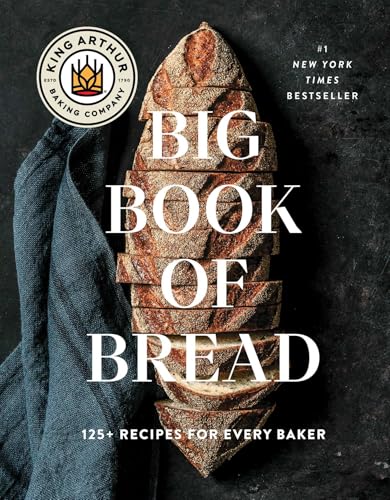
The King Arthur name carries weight in home baking, and this big book leans into that reputation with a wide, dependable catalog of 125-plus recipes. Sandwich loaves, dinner rolls, flatbreads, and enriched breads all sit side by side.
It works as a true reference: pick the style you want, follow the method, and trust the result. For a household that bakes across categories rather than specializing in one, this is the kind of book you keep within arm’s reach of the flour canister. It also complements the looser, meal-focused approach of Bread Toast Crumbs by filling in the structured loaf recipes.
The Practical Payoff
- 125+ recipes cover a broad range of styles and skill levels.
- Backed by King Arthur’s well-known flour and baking expertise.
- Works as a long-term reference rather than a one-off read.
Worth Bearing In Mind
- Heft and breadth may feel overwhelming to brand-new bakers.
- Less focused on specialty diets or strict no-knead methods.
Feature Rundown
Perfect Match For
All-skill home bakers who want one well-rounded book on the shelf.
Consider Something Else When
You bake mostly gluten-free, in which case Cannelle et Vanille Bakes Simple is the better fit.
Steve Gamelin’s “hands-free” technique aims to remove the messiest, most time-consuming step in home baking: the knead. Mix, wait, shape, bake, with very little handling in between. The result is a book built for people who want fresh bread without committing a full afternoon.
You give up some of the craft nuance you’d find in the Tartine Revised Edition Cookbook, but you gain speed and simplicity. The black-and-white printing keeps the cost accessible too, which matters if you’re testing a new method without committing to a hardcover. For a busy parent or weeknight cook, the trade-off usually feels worth it.
Positive Takeaways
- Hands-free technique cuts out kneading time and cleanup.
- B&W printing keeps the book more affordable than most baking titles.
- Approachable for bakers who’ve struggled with traditional methods.
Points To Note
- B&W photos are less helpful for visual learners than color editions.
- Single-technique focus offers less variety than broader cookbooks.
Spec Overview
Who Should Grab It
Low-effort bakers and anyone put off by kneading or long cleanup.
A Better Fit Elsewhere
Bakers wanting deep, varied collections will prefer the King Arthur Big Book of Bread.
Most home bakers default to sweet, so a savory-focused book fills a real gap. The Savory Baker from America’s Test Kitchen brings 150 recipes that lean into cheese, herbs, seeds, and spices across quick breads, scones, pastries, tarts, galettes, crackers, flatbreads, batters, rolls, and breadsticks.
It sits well next to Small-Batch Breads if you want smaller yields, and it gives the gluten-free cook something different to try alongside Cannelle et Vanille Bakes Simple. The variety is the selling point: instead of one bread, you get a whole savory baking repertoire in a single volume.
The Upside
- Savory focus breaks up the typical sweet-leaning baking library.
- 150 recipes span quick breads, pastries, crackers, rolls, and flatbreads.
- Backed by America’s Test Kitchen’s testing-driven approach.
Honest Caveats
- Few traditional yeasted sandwich loaves compared to bread-first books.
- Salt and cheese heavy in many recipes, so flavor fatigue is possible.
Feature Card
Built With In Mind
Home cooks who bake for dinner parties, brunches, or cheese boards rather than breakfast toast.
Where Another Pick Suits Better
You want everyday sandwich loaves, in which case the King Arthur Big Book of Bread is the stronger reference.
What To Weigh Before Choosing A Bread Cookbook
Start with your household size and how fast bread disappears. A single person or couple wastes less with the small-batch approach in Small-Batch Breads, while a family of four leans toward fuller loaves from the King Arthur Big Book of Bread or the Tartine Revised Edition Cookbook.
Skill level matters just as much. First-time bakers tend to do well with structured beginner guides like the Simple Everyday Sourdough Cookbook for Beginners, while those with some experience can chase more demanding builds. The hands-free method in My No-Knead Turbo Bread Cookbook also helps anyone who’s allergic to kneading.
Finally, think about your dietary reality. Gluten-free households will find Cannelle et Vanille Bakes Simple more relevant, while savory-focused cooks will pull The Savory Baker off the shelf weekly. Busy weeknight bakers may end up reaching for Bread Toast Crumbs most often, even with other books on the shelf.
Picking The Right Bread Book For Your Kitchen
- How much time can you give a bake? Short on time? No-knead and hands-free methods save hours.
- What’s your household size? Smaller homes waste less with one-cup recipes.
- Do you have dietary restrictions? Gluten-free and vegan options narrow the field fast.
- What style of bread do you actually eat? Sandwich loaves, dinner rolls, and flatbreads each point to different books.
Key Considerations Across These Picks
Where Shoppers Go Wrong
A common slip is choosing a book by its cover reputation rather than your actual baking habits. A serious artisan book like Tartine can gather dust in a kitchen that really needs quick weekday loaves. Match the book to the loaves you’ll realistically bake, not the loaves you wish you’d bake.
Another trap is ignoring dietary needs until the second bake. Gluten-free cooks often buy wheat-heavy books first, then realize the recipes don’t translate. If gluten is off the table, start with Cannelle et Vanille Bakes Simple rather than retrofitting later.
Where The Extra Money Goes
Books like the Tartine Revised Edition Cookbook and the King Arthur Big Book of Bread cost more because of the development, photography, and testing behind each recipe. For committed bakers who’ll use a book weekly, that testing is worth paying for. For casual weeknight bakers, the value of an affordable hands-free book like My No-Knead Turbo Bread Cookbook often wins.
Frequently Asked Questions
Which book is best for a complete beginner? The Simple Everyday Sourdough Cookbook for Beginners includes a starter guide and troubleshooting tables, which makes the early learning curve gentler than most. Bread Toast Crumbs is another friendly starting point if you’d rather skip sourdough.
What’s the best option for gluten-free households? Cannelle et Vanille Bakes Simple is built around gluten-free baking from the start, with most recipes including a vegan option. The recipes are simplified enough that you don’t need prior gluten-free experience.
Do I need special equipment for these books? Some recipes in the Tartine Revised Edition Cookbook use bannetons and Dutch ovens, but most recipes in books like Small-Batch Breads, Bread Toast Crumbs, and My No-Knead Turbo Bread Cookbook need only basic bowls, a sheet pan, and an oven.
How do I choose between no-knead and traditional methods? No-knead and hands-free methods trade some crust and crumb development for convenience. For weeknight baking or small kitchens, hands-off methods shine. For weekend projects where texture matters most, traditional kneading earns its place.
Are these books good gifts for home bakers? The Tartine Revised Edition Cookbook, the King Arthur Big Book of Bread, and the Simple Everyday Sourdough Cookbook for Beginners all carry strong gift appeal thanks to their name recognition and visual presentation.
