


Calcium plays a crucial role in promoting bone health and overall wellness. You need enough calcium to maintain strong bones and support various bodily functions. Cheese serves as a delicious source of calcium, making it easier for you to meet your daily needs, and its Cheese Nutrition Facts highlight its benefits.
Did you know that around 3.5 billion people globally face dietary calcium deficiency? This underscores the importance of including calcium-rich foods like cheese in your diet. Which types of cheese provide the most calcium according to their Cheese Nutrition Facts? How can you incorporate them into your daily meals to enhance your health?
Key Takeaways
Hard cheeses like Parmesan and Cheddar are the richest sources of calcium, providing significant amounts per serving.
Soft cheeses contain moderate calcium levels, while fresh cheeses have lower calcium content but can still be nutritious.
Incorporating cheese into your meals can support bone health, muscle function, and weight management.
Always check nutrition labels to choose cheeses that meet at least 20% of your daily calcium needs per serving.
Pair cheese with other calcium-rich foods to enhance absorption and maximize health benefits.
Calcium in Cheeses

Cheese comes in various types, each with different calcium levels. Understanding these differences helps you choose the best options for your dietary needs.
Hard Cheeses
Hard cheeses typically contain the highest calcium levels. They undergo a longer aging process, which concentrates their nutrients. For example, Parmesan and Cheddar are popular hard cheeses known for their calcium content. Here’s a quick look at some hard cheeses and their calcium levels:
Cheese | Calcium (mg/100g) |
|---|---|
Parmesan | 1200 |
Cheddar | 720 |
Gouda | 740 |
Emmental | 970 |
Parmesan cheese provides about 38% of your daily calcium needs in just one ounce.
Cheddar cheese offers around 72% of your daily value in a cup.
These hard cheeses not only enhance your meals but also help protect your teeth from cavities due to their calcium content.
Soft Cheeses
Soft cheeses have moderate calcium levels compared to hard cheeses. Their moisture content affects their calcium concentration. For instance, Brie and Camembert are well-known soft cheeses. Here’s how they stack up:
Cheese | Type | Calcium (mg) |
|---|---|---|
Brie | Semi-Soft | 540 |
Camembert | Semi-Soft | 350 |
Brie contains approximately 52 mg of calcium per ounce, while Camembert has about 110 mg. The moisture in soft cheeses can dilute calcium levels, but they still provide valuable nutrients.
Fresh Cheeses
Fresh cheeses generally have lower calcium content. They are less aged and retain more moisture. Examples include cottage cheese and ricotta. Here’s a comparison of their calcium levels:
Cottage cheese (1/2 cup): 80 mg of calcium (6% of daily value)
Ricotta cheese (1/4 cup): 150 mg of calcium (15% of daily value)
The production method significantly impacts the calcium content in fresh cheeses. Adding calcium compounds during production can enhance protein retention and overall calcium levels. This means that fresh cheeses can still be a good source of calcium, especially when prepared with care.
Health Benefits of Cheese

Cheese offers several health benefits, primarily due to its calcium content and other essential nutrients. Understanding these benefits can help you make informed dietary choices.
Bone Health
Calcium plays a vital role in maintaining strong bones. You need adequate calcium to prevent conditions like osteoporosis. Cheese provides a rich source of calcium, which, along with vitamin D and proteins, supports bone structure. Studies show that optimizing calcium intake during childhood and adolescence can increase bone mineral density (BMD) by 4–8%. This increase is crucial for developing strong bones.
Additionally, dairy products, including cheese, contain caseinophosphopeptides (CPPs). These compounds enhance calcium absorption, making it more available for bone calcification. Regular cheese consumption can help you maintain bone health and reduce the risk of fractures as you age.
Muscle Function
Calcium also plays a significant role in muscle function. When your brain sends signals to your muscles to contract, calcium is released from muscle cells. This process allows muscle fibers to interact and produce contraction. Here’s how it works:
Nerve Signal: Your brain sends a signal to the muscles to contract.
Calcium Release: Calcium stored in muscle cells is released in response.
Binding to Troponin: Calcium binds to troponin, allowing muscle fibers to interact and produce contraction.
Muscle Contraction: This binding generates the force necessary for muscle contraction.
Incorporating cheese into your diet can support muscle health, especially for those who engage in regular physical activity. Nutrient-rich dairy proteins found in cheese can enhance muscle strength and mass, particularly in older adults.
Weight Management
Cheese can also aid in weight management. Its protein and fat content can enhance metabolism, helping regulate appetite and prevent overeating. Studies indicate that high-fat cheese consumption is linked to a lower likelihood of being overweight or obese.
Moreover, cheese contains conjugated linoleic acid (CLA), which may support weight management by reducing body fat. A clinical study from the University of Tennessee found that participants on a diet rich in dairy lost significantly more weight and body fat compared to those on low-calcium diets. This suggests that calcium from cheese can enhance fat-burning potential and help regulate fat storage.
Daily Calcium Needs and Cheese
Understanding your daily calcium needs is essential for maintaining strong bones and overall health. The recommended daily intake varies by age and life stage. Here’s a breakdown of the recommended calcium intake for different age groups:
Age Group | Recommended Daily Calcium Intake (mg) |
|---|---|
0–6 months | 200 mg |
7–12 months | 260 mg |
1–3 years | 700 mg |
4–8 years | 1,000 mg |
9–13 years | 1,300 mg |
14–18 years | 1,300 mg |
19–50 years | 1,000 mg |
51–70 years (males) | 1,000 mg |
51–70 years (females) | 1,200 mg |
>70 years | 1,200 mg |
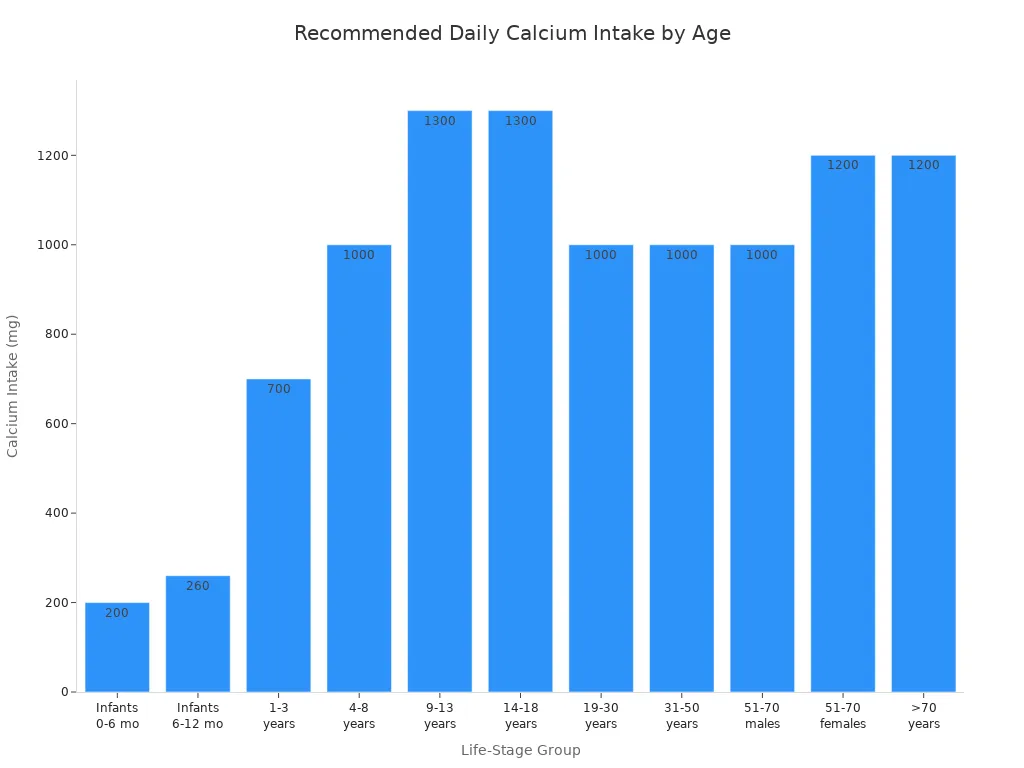
Cheese can significantly contribute to meeting these calcium needs. For example, a serving of Cheddar cheese (1.5 oz) provides about 307 mg of calcium, while Swiss cheese offers 272 mg per ounce. This means that just a small amount of cheese can help you reach your daily calcium goals.
Recommended Intake
To ensure you get enough calcium, consider your age and dietary habits. If you are an adult, aim for 1,000 mg daily. If you are a teenager or a child, your needs may be higher. Incorporating cheese into your meals can help you achieve these targets.
Serving Sizes
Portion control is crucial when it comes to cheese. Here are some standard serving sizes and their calcium content:
Cheese Type | Calcium (mg) per serving |
|---|---|
Swiss cheese | 272 mg/1 oz. |
Cheddar cheese | 307 mg/1.5 oz. |
Being mindful of serving sizes can help you incorporate cheese into a balanced diet while still obtaining necessary nutrients, including calcium.
Choosing Calcium-Rich Cheeses
Nutrition Facts
When selecting cheeses, focus on their calcium content and nutritional value. Hard cheeses like Swiss, Gouda, and Cheshire typically offer higher calcium levels. Research shows that these cheeses have a narrow range of pH and calcium concentration, making them excellent choices. In contrast, Cheddar has a wider range, which can affect its calcium content. Understanding these differences helps you choose cheeses that are a good source of nutrients.
To make informed choices, always read the nutrition labels. Look for cheeses that provide at least 20% of your daily calcium needs per serving. This ensures you get enough calcium to support your health.
Pairing with Other Foods
Pairing cheese with certain foods can enhance calcium absorption. Here are some great combinations:
Cheese with milk and eggs
Broccoli or turnip greens with vitamin D-rich foods like tofu, mushrooms, salmon, and fish
Soy milk with scrambled eggs
Salmon and yogurt dressing
These pairings not only boost calcium intake but also improve overall nutrient absorption. For example, a study found that consuming a meal with mineral water alongside cheese significantly increased calcium absorption. This means that what you eat with cheese matters!
Incorporating calcium-rich cheeses into your diet can be both delicious and beneficial. By choosing the right types and pairing them wisely, you can enhance your calcium intake and support your overall health.
Cheese serves as a valuable source of calcium, contributing to your overall health. Here are the key takeaways:
Hard cheeses provide the highest calcium content, with about 245 mg per 30g serving.
Soft cheeses offer moderate calcium levels, around 122.5 mg per 30g.
Low-fat and fat-free cheeses can still contribute to your calcium intake but vary in content.
To enhance your calcium intake, consider these tips:
Always check Nutrition Facts labels for calcium content.
Understand how well your body absorbs calcium from different sources.
Balance cheese consumption with other calcium-rich foods.
By making informed choices about cheese, you can support your bone health and overall wellness.
FAQ
What types of cheese are highest in calcium?
Hard cheeses like Parmesan, Cheddar, and Gouda contain the most calcium. They provide significant amounts per serving, making them excellent choices for boosting your calcium intake.
How can I incorporate cheese into my diet?
You can add cheese to salads, sandwiches, or pasta dishes. Pair it with fruits or whole-grain crackers for a nutritious snack.
Is cheese suitable for lactose-intolerant individuals?
Many lactose-intolerant people can enjoy aged cheeses like Cheddar and Parmesan. These cheeses have lower lactose levels due to the aging process.
Can I get enough calcium without cheese?
Yes, you can obtain calcium from other sources like leafy greens, almonds, tofu, and fortified plant-based milks. However, cheese remains a tasty option.
How much cheese should I eat daily for calcium?
Aim for 1-2 servings of cheese daily. This can help you meet your calcium needs while enjoying its flavor and health benefits.