
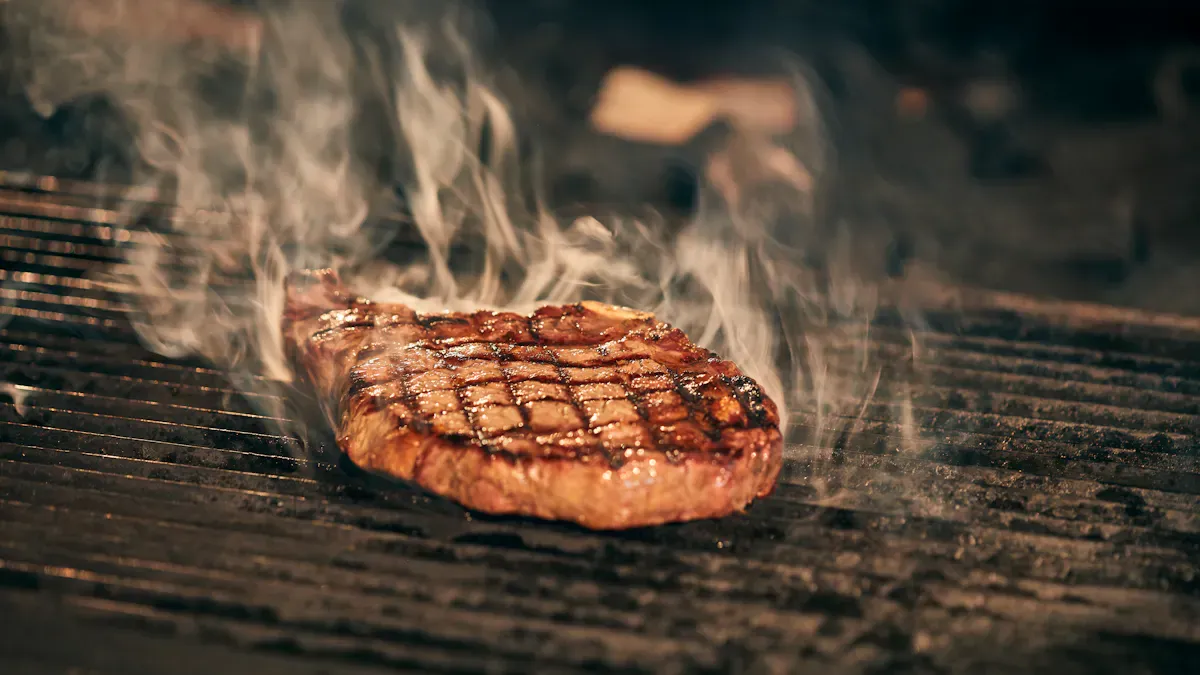
Are you ready to elevate your grilling game? There’s nothing quite like the sizzle of grilling steak perfectly. Achieving juicy and flavorful results requires more than just throwing meat on the grill. Mastering a few key techniques can make all the difference.
Remember, don’t make the mistake of adding steaks to your grill before it’s hot enough. A properly heated grill ensures that your steak sears beautifully, locking in those delicious juices.
Let’s dive into the essential tips that will transform your grilling experience!
Key Takeaways
Choose the right cut of steak, like ribeye for rich flavor or filet mignon for tenderness, to enhance your grilling experience.
Climatize your steak by letting it sit at room temperature for about an hour before grilling. This ensures even cooking and juiciness.
Use a meat thermometer to check the internal temperature of your steak. This prevents overcooking and guarantees your desired doneness.
Rest your steak for 5-10 minutes after grilling. This allows juices to redistribute, resulting in a more flavorful and juicy steak.
Keep the grill lid closed while cooking to maintain heat and ensure even cooking. Open it only for extra char at the end.
Best Cuts for Grilling
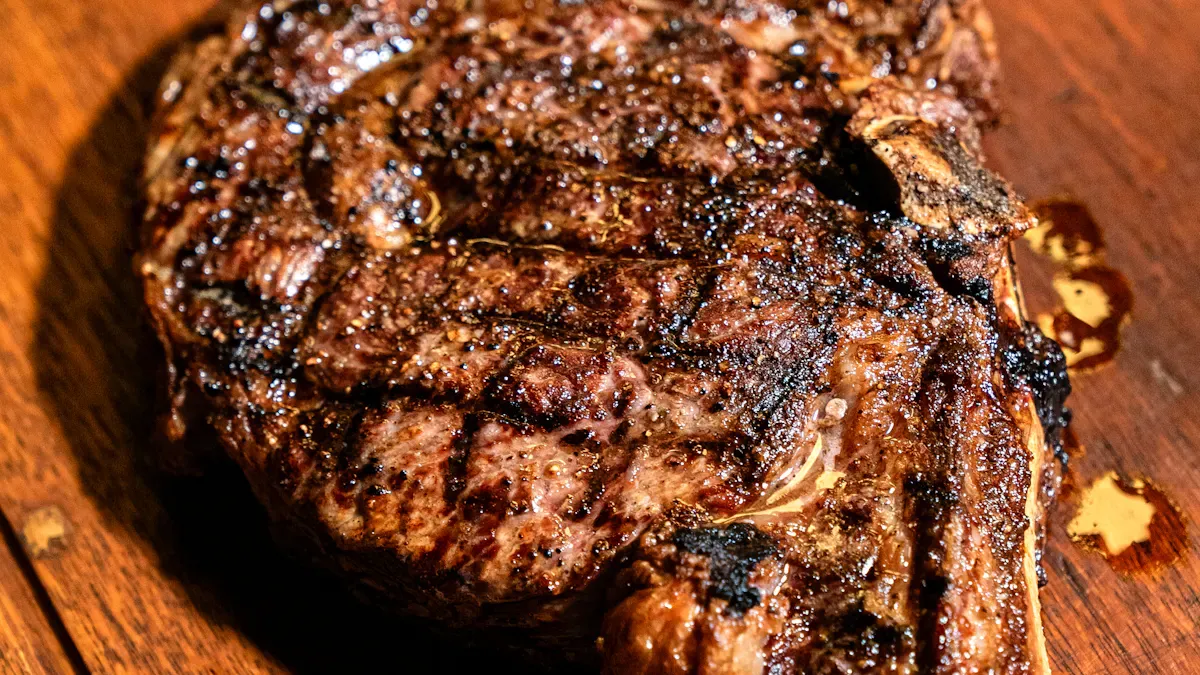
When it comes to grilling steak, choosing the right cut is essential. The cut you select can significantly impact the flavor and tenderness of your steak. One key factor to consider is marbling, which refers to the small flecks of fat within the muscle. This fat melts during cooking, adding flavor and juiciness to your steak.
Understanding Marbling
Marbling plays a crucial role in how your steak turns out. Steaks with higher marbling tend to be more tender and flavorful. For instance, a ribeye steak, known for its abundant marbling, delivers an intense, rich flavor. In contrast, leaner cuts like sirloin may lack the same depth of flavor but can still be delicious when cooked properly.
Here’s a quick look at how different levels of marbling affect tenderness and flavor:
Steak Type | Tenderness Rating | Flavor Rating | Overall Acceptability (%) |
|---|---|---|---|
Prime | High | High | 92.92 |
High Choice | High | High | 92.34 |
Standard | Low | Low | 61.16 |
Popular Cuts
Now, let’s explore some popular cuts that you should consider for your next grilling session:
Ribeye: Known for its rich flavor and tenderness due to high marbling.
Sirloin: Offers a balanced beef flavor and is slightly leaner than ribeye.
Filet Mignon: Renowned for its tenderness, this cut is perfect for special occasions.
Strip Steak: A great choice for its balance of marbling and flavor.
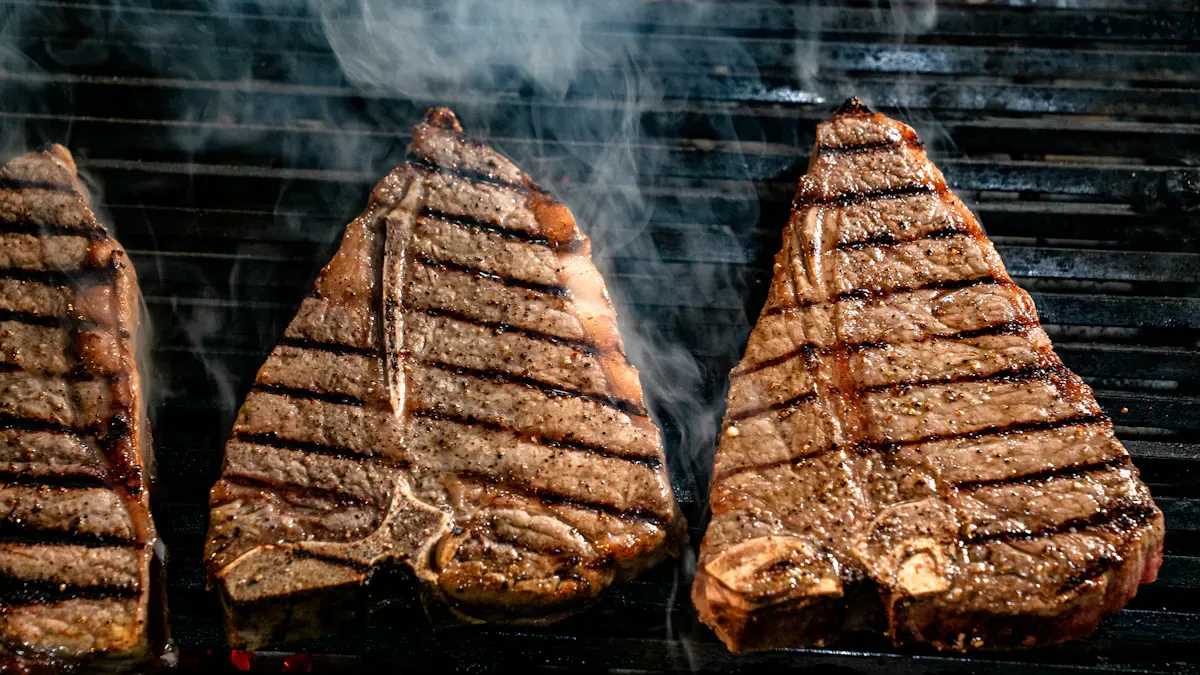
Porterhouse and T-bone: These cuts combine strip and tenderloin, providing a delightful flavor profile.
Choosing the right cut can elevate your grilling experience. Whether you prefer the richness of a ribeye or the tenderness of a filet mignon, understanding marbling and the characteristics of each cut will help you grill the perfect steak every time.
Steak Preparation Techniques
Before you fire up the grill, it’s crucial to prepare your steak properly. Two key techniques can make a significant difference: climatizing the steak and seasoning or marinating it. Let’s break these down.
Climatizing the Steak
Climatizing your steak is all about bringing it to room temperature before grilling. This step is essential for even cooking. When you take a cold steak straight from the fridge and place it on the grill, the outside cooks much faster than the inside. This can lead to a steak that’s overcooked on the outside and undercooked in the center.
To climatize your steak, let it sit at room temperature for about an hour before grilling. This simple technique helps ensure that your steak cooks evenly, resulting in a juicy and flavorful meal.
Seasoning and Marinating
Now that your steak is at the right temperature, it’s time to enhance its flavor. Seasoning and marinating are two effective methods to achieve this.
Seasoning involves applying salt and spices directly to the steak. A good rule of thumb is to season generously. Salt not only adds flavor but also helps to draw out moisture, creating a delicious crust when grilled. Here are some effective seasoning blends to consider:
Ingredient | Role in Flavor Enhancement |
|---|---|
Kosher Salt | Essential for seasoning and enhancing flavor. |
Black Pepper | Provides a spicy kick and enhances overall seasoning. |
Garlic Powder | Adds savory depth to the flavor profile. |
Smoked Paprika | Contributes a smoky flavor reminiscent of open-fire cooking. |
Onion Powder | Adds sweetness and umami to the seasoning. |
Dried Rosemary | Provides aromatic notes that complement the beef. |
Dried Thyme | Adds earthiness and depth to the flavor. |
Marinating is another excellent technique. A good marinade can infuse your steak with flavor and help tenderize it. The acids or enzymes in marinades start breaking down proteins, making the meat more tender and reducing cooking time. This process enhances the texture and helps retain moisture, ensuring the meat remains juicy and flavorful.
However, be careful not to over-marinate. While acids can tenderize, too much time in an acidic marinade can toughen the meat. Aim for a balance to get the best results.
Incorporating these preparation techniques will set you up for success on the grill. By climatizing your steak and using the right seasoning or marinade, you’ll enhance the flavor and tenderness, leading to a truly mouthwatering experience.
Grilling Tips for Perfect Cooking
When it comes to grilling, a few simple tips can help you achieve perfect results every time. Let’s start with the importance of oiling your grill.
Oiling the Grill
Before you place your steak on the grill, make sure to oil the grates. This step prevents sticking and helps create those beautiful grill marks. Use a high smoke point oil for the best results. Here are some great options:
Coratina: Perfect for lean steaks, it adds a peppery flavor.
Koroneiki: A mild oil that works well for chicken.
Arbequina: Ideal for pork, offering a delicate taste.
Taggiasca: Light and great for fish and seafood.
Infused oils: Garlic or rosemary oils can enhance the flavor of your beef.
Oiling the grill not only keeps your steak from sticking but also helps it cook evenly.
The 60/40 Rule
Now, let’s talk about the 60/40 rule. This rule is all about timing. When grilling, aim to cook your steak for 60% of the time on one side and 40% on the other. This method allows for a better sear and helps lock in juices. Here’s how to apply it:
Start by placing your steak on the grill and let it cook for 60% of the total cooking time on one side.
Flip the steak and cook for the remaining 40%. This ensures even cooking and a delicious crust.
Always check the temperature in multiple spots to get an accurate reading of doneness.
Using a high-quality thermometer, like the Thermapen, can help you achieve perfect results.
By following these grilling tips, you’ll be well on your way to serving up juicy, flavorful steak that impresses everyone at your next barbecue!
How to Grill a Steak to Perfection
Using a Meat Thermometer
When you want to grill a steak perfectly, using a meat thermometer is a game changer. This handy tool helps you check the internal temperature of your steak, ensuring it reaches your desired doneness without overcooking.
To get the most accurate reading, insert the thermometer into the thickest part of the steak, avoiding any bone or fat pockets. This way, you can confidently determine if your steak is rare, medium rare, or medium. Here’s a quick reference for the recommended internal temperatures for different levels of steak doneness:
Steak Doneness | Temperature (°F) | Temperature (°C) |
|---|---|---|
Bleu Steak | 110°F | 43°C |
Rare Steak | 120–130°F | 49–54°C |
Medium Rare Steak | 130–135°F | 54–57°C |
Medium Steak | 135–145°F | 57–63°C |
Medium Well Steak | 145–155°F | 63–68°C |
Well Done Steak | 155°F and up | 68°C and up |
Using a meat thermometer not only provides precise temperature readings but also helps prevent overcooking. You’ll enjoy consistent results every time you grill.
Keeping the Lid Closed
Another essential tip for grilling steak perfectly is to keep the grill lid closed during most of the cooking time. This simple action locks in heat and ensures that the center of your steak cooks evenly without charring the outside too quickly.
Keep the lid closed for most of the cooking time. This locks in heat and ensures the center cooks evenly without charring the outside too fast. Crack it open only if you’re chasing a bit of extra char at the end.
Opening the grill lid frequently can lead to heat loss, which extends cooking time and disrupts even cooking. By keeping the lid closed, you maintain a consistent temperature, leading to faster cooking and a juicier steak.
Resting and Serving the Steak
Importance of Resting
Resting your steak is a crucial step that many people overlook. After grilling, let your steak sit for about 5–10 minutes. This resting period allows the juices to redistribute throughout the meat, enhancing its juiciness. If you slice into a steak right off the grill, you’ll lose those flavorful juices, leaving you with a dry piece of meat.
Culinary experts recommend resting your steak for:
5 minutes for each inch of thickness
10 minutes per pound
This simple step can make a big difference in the final result. In fact, a rested steak releases about 0.85 ounces of juice, while an unrested one can lose up to 1 ounce. That’s a small but significant difference when it comes to flavor!
Serving Tips
Once your steak has rested, it’s time to serve it up right. Presentation matters, and a well-served steak can impress your guests. Here are some effective serving techniques:
Warm your plates: Place them in a low oven to keep your steak at the perfect temperature.
Slice strategically: Arrange steak slices in an overlapping pattern. This showcases the juicy interior and caramelized exterior beautifully.
Leave space: Avoid crowding the plate. This gives your dish a clean look and allows room for sides.
Highlight the best slices: Position the most attractive pieces prominently for visual appeal.
By following these tips, you’ll not only enhance the flavor but also the presentation of your steak. Remember, a well-rested and beautifully served steak is sure to impress everyone at your table!
Grilling steak perfectly is all about mastering a few key techniques. Remember to choose the right cut, like ribeye for its rich flavor or flank steak for its great taste. Embrace the magic of salt to enhance your steak’s juiciness. Don’t forget to climatize your steak and use a meat thermometer for precise cooking.
For your next grilling session, try these tips to impress your friends and family. You’ll be amazed at how delicious your steaks can be!
We’d love to hear about your grilling adventures. Share your experiences or ask any questions you have!
FAQ
What is the best cooking temperature for steak?
For the best results, aim for a cooking temperature of around 130°F for medium-rare and 140°F for medium. Use a meat thermometer to check the internal temperature accurately.
How long should I cook a steak?
Cooking time varies based on thickness and desired doneness. Generally, cook a 1-inch steak for about 4-5 minutes per side for medium-rare and 6-7 minutes for medium.
Can I grill frozen steak?
Yes, you can grill frozen steak, but it will take longer to cook. Ensure you check the internal temperature to avoid undercooking or overcooking.
Should I marinate my steak?
Marinating your steak can enhance flavor and tenderness. However, avoid over-marinating, as it can make the meat mushy. A few hours is usually sufficient.
How do I know when my steak is done?
Use a meat thermometer to check the internal temperature. For medium-rare, look for 130°F, and for medium, aim for 140°F. This ensures perfect doneness every time.