


Coffee is a popular choice for many adults seeking a boost in energy and focus, and the coffee benefits are numerous. Studies show that caffeine enhances cognitive performance, improving memory, attention, and concentration. You might find that moderate coffee consumption helps combat those mid-morning dips or post-lunch crashes.
Here are some common coffee benefits:
It maintains alertness during long tasks.
Caffeine speeds up neural signaling, leading to quicker reactions.
It blocks fatigue signals, keeping you awake and engaged.
Understanding these coffee benefits can help you make informed choices about your daily coffee habits.
Key Takeaways
Moderate coffee consumption boosts energy and focus, helping you stay alert during long tasks.
Caffeine enhances memory and cognitive performance, making it easier to tackle daily challenges.
Regular coffee drinkers may lower their risk of cognitive decline and neurodegenerative diseases.
Coffee’s antioxidants combat inflammation, supporting long-term health and reducing disease risk.
Enjoying three to five cups of coffee daily can maximize benefits while minimizing side effects.
Alertness
Caffeine’s Role
Caffeine plays a crucial role in boosting your alertness. When you consume coffee, caffeine enters your bloodstream and quickly reaches your brain. It blocks adenosine receptors, which are responsible for promoting feelings of fatigue. By preventing these signals, caffeine increases neural activity in your brain. This heightened activity leads to the release of neurotransmitters like dopamine and norepinephrine, which enhance your alertness and focus. Here are some key points about caffeine’s effects:
Caffeine prevents the brain from receiving signals that induce sleepiness.
It increases your energy levels by stimulating the central nervous system.
The effects of caffeine can last from 4 to 6 hours after consumption.
Short-term Effects
The short-term effects of caffeine on your daily activities can be quite noticeable. After consuming coffee, you may experience increased alertness, improved concentration, and a boost in mood. Studies show that caffeine can enhance memory and attention span, making it easier for you to tackle tasks. However, it’s essential to be mindful of your intake, as excessive caffeine can lead to feelings of edginess or anxiety. Here are some typical short-term effects you might notice:
Increased heart rate and blood pressure.
Enhanced problem-solving skills and quicker reaction times.
A sense of wakefulness that can help you power through long tasks.
Cognitive Benefits

Memory Improvement
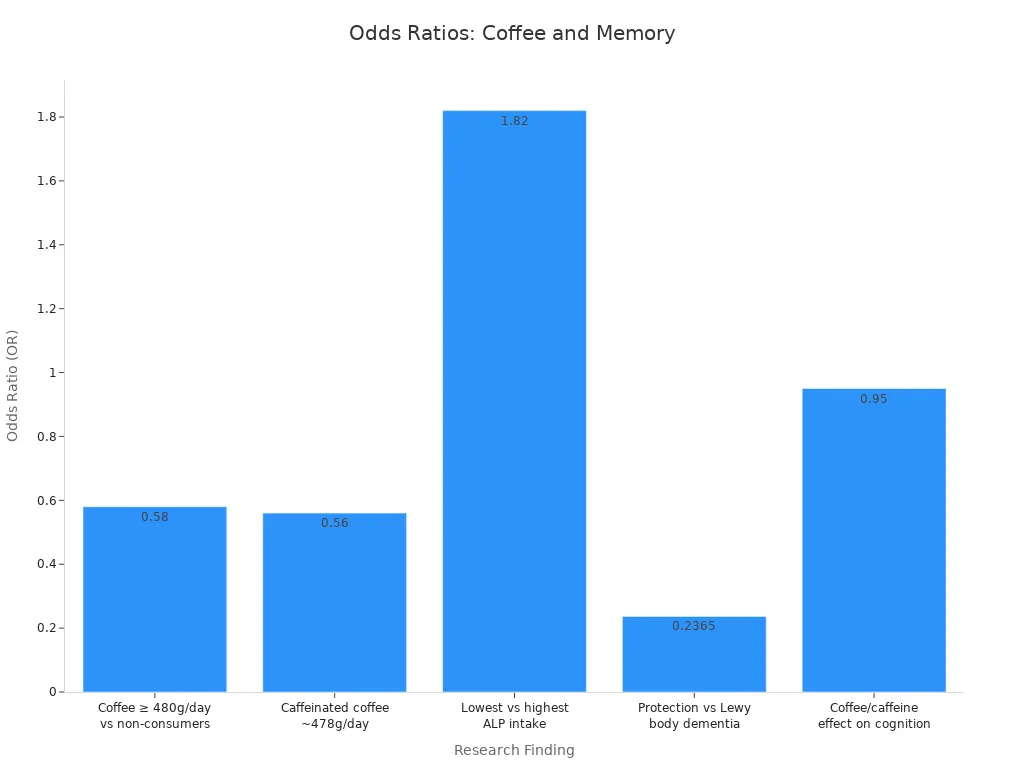
Coffee consumption can significantly enhance your memory performance. Research indicates that caffeine improves both short-term and long-term memory. For instance, individuals who consume higher amounts of coffee show better memory retention compared to non-coffee drinkers. A study found that those consuming at least 480 grams of coffee daily had a lower odds ratio for low memory scores. This suggests that coffee may help support brain health and protect against cognitive decline.
Here’s a summary of findings related to coffee and memory improvement:
Finding | Description |
|---|---|
Odds Ratio (OR) for coffee consumers | Individuals consuming ≥ 480 g/day of coffee had an OR of 0.58 (95% CI: 0.41–0.82) for low CERAD scores compared to non-coffee consumers. |
Odds Ratio for caffeinated coffee | Those consuming caffeinated coffee (477.9 g/day) had an OR of 0.56 (95% CI: 0.34–0.92). |
Protection against dementia | Coffee consumption may protect against Lewy body dementia with an OR of 0.2365 (95% CI: 0.0582–0.9610). |
Focus and Concentration
Caffeine also plays a vital role in enhancing your focus and concentration. It helps you maintain alertness during prolonged tasks and improves your ability to switch between tasks efficiently. Studies show that caffeine increases dopamine production, which boosts your motivation and engagement in activities. Here are some cognitive benefits associated with caffeine:
Improved vigilance: Caffeine helps maintain alertness during long work sessions.
Faster reaction time: Neural signaling speeds up, allowing quicker responses to stimuli.
Better task switching: Caffeine enhances your efficiency in shifting between different tasks.
Support for working memory: It aids in holding and manipulating information over short periods.
Research indicates that caffeine can create a more positive mood, which further enhances your concentration. This effect is particularly noticeable during late-night study sessions or early mornings after limited sleep.
Mood Enhancement
Reduced Fatigue
Coffee can significantly help you reduce fatigue. When you drink coffee, caffeine acts as a psychostimulant. It enhances your cognitive function, concentration, and alertness, especially when you feel tired. Research shows that caffeine can improve your attention and alertness, particularly in low-energy situations. For example, the European Food Safety Authority established a clear link between a 75mg serving of caffeine and increased attention.
Here are some key findings about caffeine and fatigue:
Caffeine enhances cognitive function in fatigued individuals.
A 2020 meta-analysis found that caffeine improves response time and accuracy on attention tests.
Regular coffee consumption can lead to a noticeable reduction in feelings of fatigue.
Increased Motivation
Drinking coffee can also boost your motivation. Studies indicate that many people increase their caffeine intake during stressful times, such as exams. In fact, 63% of students reported drinking more coffee when facing academic pressure. This increase in caffeine consumption correlates with improved mood and cognitive performance.
Here’s a summary of research findings on coffee and motivation:
Evidence Type | Description |
|---|---|
Motivations for Caffeine Consumption | 63% of students increased caffeine consumption during stressful periods, particularly around exams. |
Cognitive Effects | 67% of students reported higher caffeine intake during exams to boost cognitive function. |
Mood Improvement | A study indicated that caffeine consumption is linked to improved mood and academic performance. |
Additionally, a 2023 meta-analysis found that increasing coffee intake by 240ml per day can reduce the risk of depression by 4%. Drinking at least four cups of coffee daily significantly lowers the risk of depression compared to those who drink less than one cup.
However, it’s essential to be mindful of your coffee consumption. High doses of caffeine can lead to side effects such as anxiety, irritability, and restlessness. These effects can counteract the mood-enhancing benefits of coffee. Therefore, moderation is key to enjoying the positive impacts of coffee on your mood and motivation.
Research also highlights that caffeine enhances cognitive functions like memory and problem-solving abilities. A study published in Nutrition found that caffeine consumption leads to improved short-term memory and better reasoning skills. This suggests that coffee can significantly boost your productivity in both workplace and academic settings.
Physical Performance

Endurance Boost
Coffee can significantly enhance your physical performance, especially during endurance activities. Caffeine acts as an antagonist to adenosine receptors in your brain. This action leads to increased adrenaline production, which helps improve blood flow to your muscles and heart. As a result, you may experience enhanced endurance during workouts. Here are some key physiological mechanisms that explain this effect:
Caffeine increases central drive, allowing you to push harder during exercise.
It decreases the perception of effort and pain, making workouts feel easier.
Enhanced blood flow helps deliver more oxygen to your muscles, improving overall performance.
Many athletes rely on coffee to boost their endurance. Studies show that around 74% of monitored athletes consume caffeine, especially after it was removed from the banned substances list. This indicates that coffee is widely accepted for performance enhancement in sports.
Reaction Time
Caffeine also plays a crucial role in improving your reaction time. Research indicates that consuming caffeine can lead to faster responses in both cognitive and physical tasks. The following table summarizes findings from various studies on caffeine’s impact on reaction time:
Study | Caffeine Dose (mg·kg−1) | Effect on Reaction Time | Notes |
|---|---|---|---|
Ali et al. | 6 | Improved | Reduced perceived exertion in cognitive tests |
Stojanović et al. | 3 | Moderate improvement | Significant decrease in RPE during physical tests |
Bougrine et al. | 6 | Improved | Enhanced attention task performance among athletes |
In addition to boosting endurance and reaction time, coffee can aid in weight management. Regular coffee consumption enhances fat utilization during aerobic exercise. It activates your sympathetic nervous system, increasing fatty acid release and lipolysis. This means that coffee not only helps you perform better but also supports your weight loss efforts.
To maximize these benefits, consider drinking coffee about 45–60 minutes before exercising. This timing allows caffeine to reach its peak effectiveness, helping you achieve your fitness goals.
Long-term Health Benefits
Disease Prevention
Regular coffee consumption may help you lower the risk of several chronic diseases. Research shows that drinking coffee can protect against cognitive decline and neurodegenerative diseases. For instance, studies indicate that moderate coffee drinkers, consuming three or more cups daily, experience protective effects against conditions like Alzheimer’s and Parkinson’s disease. Here are some key findings:
Two prospective studies found no link between coffee consumption and cognitive decline.
Six studies showed protective effects in adults over 65, especially with moderate intake.
A study with over 7,000 older adults linked three or more cups of coffee daily to better cognitive test scores.
Lindsay et al. discovered that regular coffee drinkers had a 30% lower risk of developing Alzheimer’s over five years.
The CAIDE study indicated that moderate coffee consumption during mid-life correlated with a 65% reduction in the risk of Alzheimer’s.
Antioxidant Properties
Coffee is rich in antioxidants, particularly chlorogenic acids. These compounds help combat oxidative stress and inflammation, which are key factors in many chronic diseases. By neutralizing free radicals, antioxidants in coffee protect your cells from damage. This protection can lower your risk of conditions such as cardiovascular disease and cancer.
A study by Andersen et al. confirmed that coffee’s high antioxidant content plays a significant role in reducing inflammatory responses. They concluded that coffee consumption likely helps prevent death from inflammatory diseases, especially cardiovascular diseases.
In fact, coffee often ranks as one of the highest sources of antioxidants in the diet. The antioxidant potential varies by brewing method, with the Aeropress method yielding the highest content. This means that your choice of brewing method can impact the health benefits you receive from your coffee.
By incorporating coffee into your daily routine, you not only enjoy its immediate benefits but also contribute to your long-term health.
In summary, coffee offers numerous benefits that enhance your energy and focus. Regular consumption can improve cognitive performance, boost mood, and reduce fatigue. Research shows that caffeine intake correlates with better attention and alertness, especially in the morning. Health organizations recommend enjoying three to five cups of coffee daily for optimal benefits. However, moderation is key to avoiding potential side effects. By incorporating coffee into your routine, you can enjoy its positive impacts on your daily life.
Remember, a balanced approach to coffee consumption can lead to improved productivity and overall well-being!
FAQ
What is the best time to drink coffee for maximum benefits?
Drinking coffee in the morning or early afternoon works best. This timing helps you avoid caffeine’s potential interference with sleep later in the day.
How much coffee should I consume daily?
Moderate consumption of three to five cups daily is ideal. This amount provides health benefits without excessive side effects.
Can coffee improve my workout performance?
Yes! Coffee can enhance endurance and reaction time during workouts. It helps you push harder and feel less fatigue.
Does coffee affect sleep quality?
Caffeine can disrupt sleep if consumed too close to bedtime. Aim to finish your last cup at least six hours before sleeping.
Are there any side effects of drinking too much coffee?
Excessive coffee intake can lead to anxiety, restlessness, and insomnia. Moderation is key to enjoying its benefits without negative effects.
